

TL;DR:
- EdTech encompasses digital tools, hardware, and pedagogy to enhance teaching and learning.
- Successful integration depends on evidence-based adoption, teacher training, and pedagogical alignment.
- Equity and meaningful use are crucial; technology alone cannot bridge educational gaps.
The EdTech market is projected to grow from roughly $142 billion to over $470 billion by 2035, yet most parents and educators still struggle to explain what EdTech actually is. That gap between scale and understanding is a real problem. If you cannot evaluate a tool, you cannot choose the right one. And with schools under pressure, budgets stretched, and students disengaging at alarming rates, choosing wisely has never mattered more. This article cuts through the noise. We will define EdTech clearly, explore the types of tools available, examine what the evidence actually says, and give you practical guidance you can act on today.
Table of Contents
- Defining EdTech: what it means and how it works
- Types of EdTech tools and their core mechanics
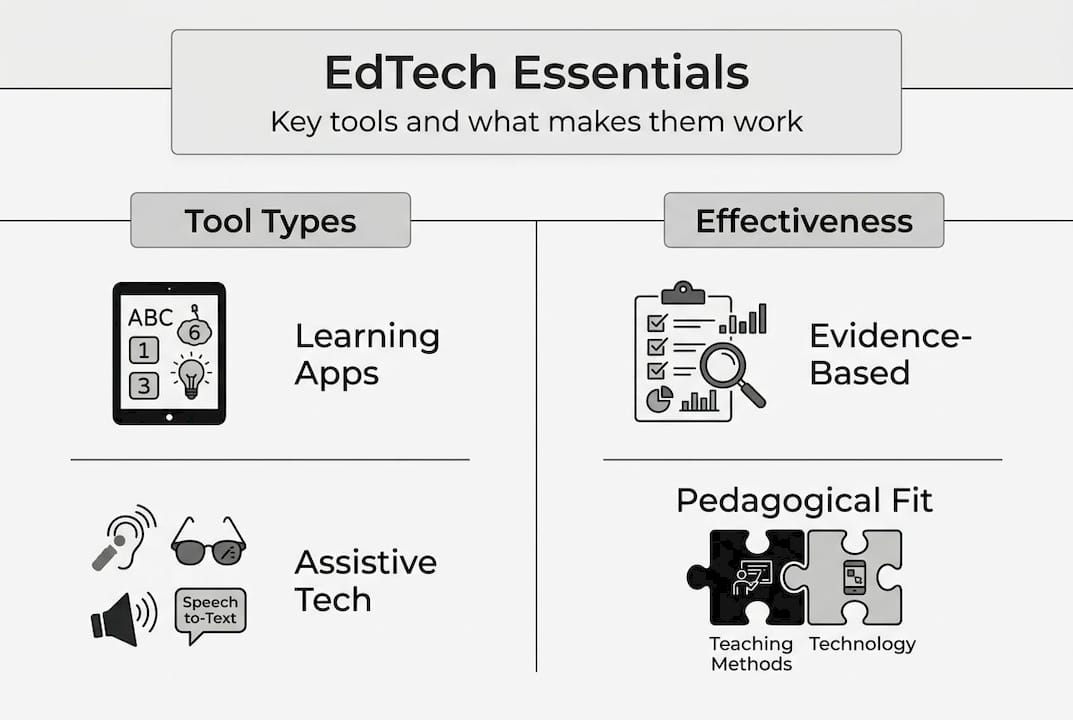
- Pedagogical integration and evidence: what makes EdTech effective
- Challenges, controversies and practical advice for parents, educators and policymakers
- The hidden truth: it's not about the tech, it's about meaningful integration
- Next steps: explore tools that support meaningful learning
- Frequently asked questions
Key Takeaways
| Point | Details |
|---|---|
| Clear EdTech definition | EdTech encompasses all digital technologies used to enhance teaching and learning. |
| Tool categories explained | Learning Management Systems, adaptive platforms, and content tools form the backbone of EdTech. |
| Evidence matters most | Positive student outcomes depend on pedagogical integration and professional development, not tool choice alone. |
| Equity is a challenge | Benefits are smaller for disadvantaged students unless access and support are prioritised. |
| Practical advice for all | Parents, educators, and policymakers should check privacy, efficacy, and alignment before adopting any solution. |
Defining EdTech: what it means and how it works
EdTech, short for educational technology, is broader than most people realise. It is not just tablets in classrooms or YouTube revision videos. EdTech refers to the integration of digital tools, hardware, software, and pedagogical practices to enhance teaching and learning. That last part matters enormously. Pedagogy, meaning the method and practice of teaching, is what separates genuinely useful EdTech from expensive distraction.
At its core, EdTech includes several overlapping categories:
- Learning Management Systems (LMS): Platforms like Google Classroom or Moodle that organise coursework, assignments, and communication between teachers and students.
- Adaptive learning platforms: Tools that adjust difficulty and content in real time based on how a student is performing, personalising the experience automatically.
- Digital curriculum tools: Interactive textbooks, video lessons, and simulations that replace or supplement traditional classroom materials.
- Collaborative infrastructure: Video conferencing, shared documents, and discussion boards that connect learners and educators regardless of location.
Understanding how AI transforms education gives you a clearer picture of where these tools are heading. The best modern platforms do not just deliver content; they respond to the learner. They notice when a student is stuck, adjust the pace, and present information differently. That is a fundamentally different experience from reading a textbook.
You will also hear terms like blended learning (combining face-to-face and online instruction) and gamification (using game mechanics to motivate learners). These are not gimmicks. When applied thoughtfully, they address real problems like boredom and disengagement. Keeping up with education technology trends helps you spot which approaches have genuine research support and which are simply marketing.
Pro Tip: Before adopting any EdTech tool, ask one question: does this support how students actually learn, or does it just make content easier to access? Access is not the same as learning.
Types of EdTech tools and their core mechanics
With EdTech defined, it helps to see the landscape laid out clearly. The core mechanics of EdTech span four main categories: LMS platforms, adaptive learning engines, content creation tools, and collaboration infrastructure. Each serves a different purpose.
| Tool category | What it does | Best for | Typical cost |
|---|---|---|---|
| Learning Management System | Organises lessons, tracks progress | Schools, educators | Free to £10/month |
| Adaptive learning platform | Adjusts content to individual needs | Students, parents | £5 to £30/month |
| Content creation tools | Builds interactive lessons and quizzes | Educators, tutors | Free to £20/month |
| Collaboration infrastructure | Enables remote learning and group work | Schools, remote learners | Free to £15/month |
Choosing the right tool is a process, not a single decision. Here is a practical sequence to follow:
- Identify the learning gap. Is the student struggling with comprehension, motivation, or access to quality content? Different problems need different solutions.
- Match the tool to the need. An adaptive platform suits a student who needs personalised pacing. A collaboration tool suits a school running hybrid lessons.
- Check evidence and alignment. Does the tool have independent research behind it? Does it align with the school curriculum?
- Pilot before committing. Most platforms offer free trials. Use them. A tool that works brilliantly for one student may frustrate another.
- Review regularly. EdTech is not set-and-forget. Monitor whether the tool is actually improving outcomes.
Exploring learning companion AI tools can help you understand how the most advanced adaptive platforms work in practice. Equally, pairing EdTech with active learning strategies dramatically increases its impact. Technology works best when it supports active thinking, not passive consumption.

Pedagogical integration and evidence: what makes EdTech effective
Here is where many schools and parents go wrong. They choose a tool because it looks impressive, then wonder why results do not improve. The research tells a more nuanced story.
Meta-analyses show moderate positive effects on attainment when EdTech is integrated with constructivist and blended learning methodologies, with effect sizes typically ranging from 0.2 to 0.5. That is meaningful progress, but it is not automatic. The methodology matters as much as the tool.
| Approach | Effect size | Population | Key condition |
|---|---|---|---|
| Adaptive learning | 0.3 to 0.5 | Secondary students | Requires teacher oversight |
| Blended learning | 0.2 to 0.4 | Mixed ages | Needs curriculum alignment |
| Gamified instruction | 0.2 to 0.3 | Primary and secondary | Motivation-dependent |
| AI-driven tutoring | 0.4 to 0.6 | Secondary and higher | Strongest with Socratic methods |
"Success requires pedagogical alignment, not just access."
That quote captures the single most important insight in EdTech research. A school that hands every student a tablet without training teachers or aligning content to learning objectives will see little improvement. Possibly a decline.
Expert recommendations for effective EdTech integration include:
- Choose tools with independent evidence, not just vendor claims.
- Invest in teacher training before rolling out any new platform.
- Use differentiated instruction approaches to adapt tools for students with special educational needs.
- Monitor data regularly and adjust based on actual outcomes, not assumptions.
- Prioritise tools that support personalised learning strategies rather than one-size-fits-all delivery.
The evidence is clear that EdTech can genuinely improve outcomes. But only when it is chosen wisely, implemented carefully, and supported by skilled educators. Expanding online education access is important, but access alone is never enough.
Challenges, controversies and practical advice for parents, educators and policymakers
EdTech is not without its critics. And some of those criticisms are entirely valid. Understanding the challenges helps you make smarter decisions.
The most pressing issues include:
- Cost and equity: Many of the best tools are expensive. Schools in lower-income areas often lack the devices, broadband, or budgets to implement them effectively.
- Data privacy: Most EdTech platforms collect significant data on children. Parents and schools must scrutinise privacy policies carefully before signing up.
- Screen time concerns: Overuse of screens is a genuine issue, particularly for younger students. More technology is not always better technology.
- Implementation gaps: Even well-designed tools fail when teachers are not trained to use them or when they are adopted without a clear pedagogical rationale.
The controversy around EdTech bans is growing. Some US legislators have proposed restricting technology in schools due to concerns about screen time and declining attainment scores following large-scale mandates. Experts argue, rightly, that blanket bans miss the point. The problem is rarely the technology itself. It is poor implementation.
Pro Tip: Parents, always check three things before choosing any EdTech tool: the privacy policy, whether it aligns with your child's school curriculum, and whether it encourages active thinking rather than passive consumption. Free does not always mean safe or effective.
For parents, the most useful resource is a conversation with your child's school. Ask which tools they already use and whether there are free options that complement classroom learning. Reviewing affordable EdTech advice can help you identify cost-effective options that do not compromise on quality.
For educators, the priority is training. A well-trained teacher using a modest tool will outperform an untrained teacher using the most sophisticated platform available. Understanding the AI tutoring process helps you evaluate which AI-driven tools genuinely support your students. And for exam preparation specifically, AI exam prep support is an area where the evidence is particularly strong.
For policymakers, the challenge is resisting both uncritical adoption and reflexive bans. Evidence-based procurement, equity-focused funding, and mandatory teacher training are the levers that actually move outcomes.
The hidden truth: it's not about the tech, it's about meaningful integration
Here is what most articles about EdTech will not tell you. The tool is almost never the deciding factor. We have seen schools spend millions on devices and platforms, only to see no measurable improvement. We have also seen a single well-trained teacher using a free adaptive tool transform a student's confidence and results.
Success requires pedagogical alignment, not just access. That means the technology must serve a clear learning objective, be supported by a skilled human, and be accessible to every student regardless of their background or postcode.
The digital divide is real. Nearly 800 million children globally have no access to education at all. For those who do have access, the quality gap between wealthy and underprivileged learners is vast. EdTech has the potential to close that gap, but only if equity is built into every decision from procurement to implementation.
What most conversations miss is this: scalable solutions that ignore equity do not democratise education. They widen the gap. The most powerful EdTech is the kind that puts an empowering student learning experience within reach of every learner, not just those whose parents can afford £150-an-hour private tutors. That is the standard worth holding every tool to.
Next steps: explore tools that support meaningful learning
If this article has clarified one thing, it is that EdTech works best when it is evidence-based, affordable, and built around genuine learning rather than passive content delivery.
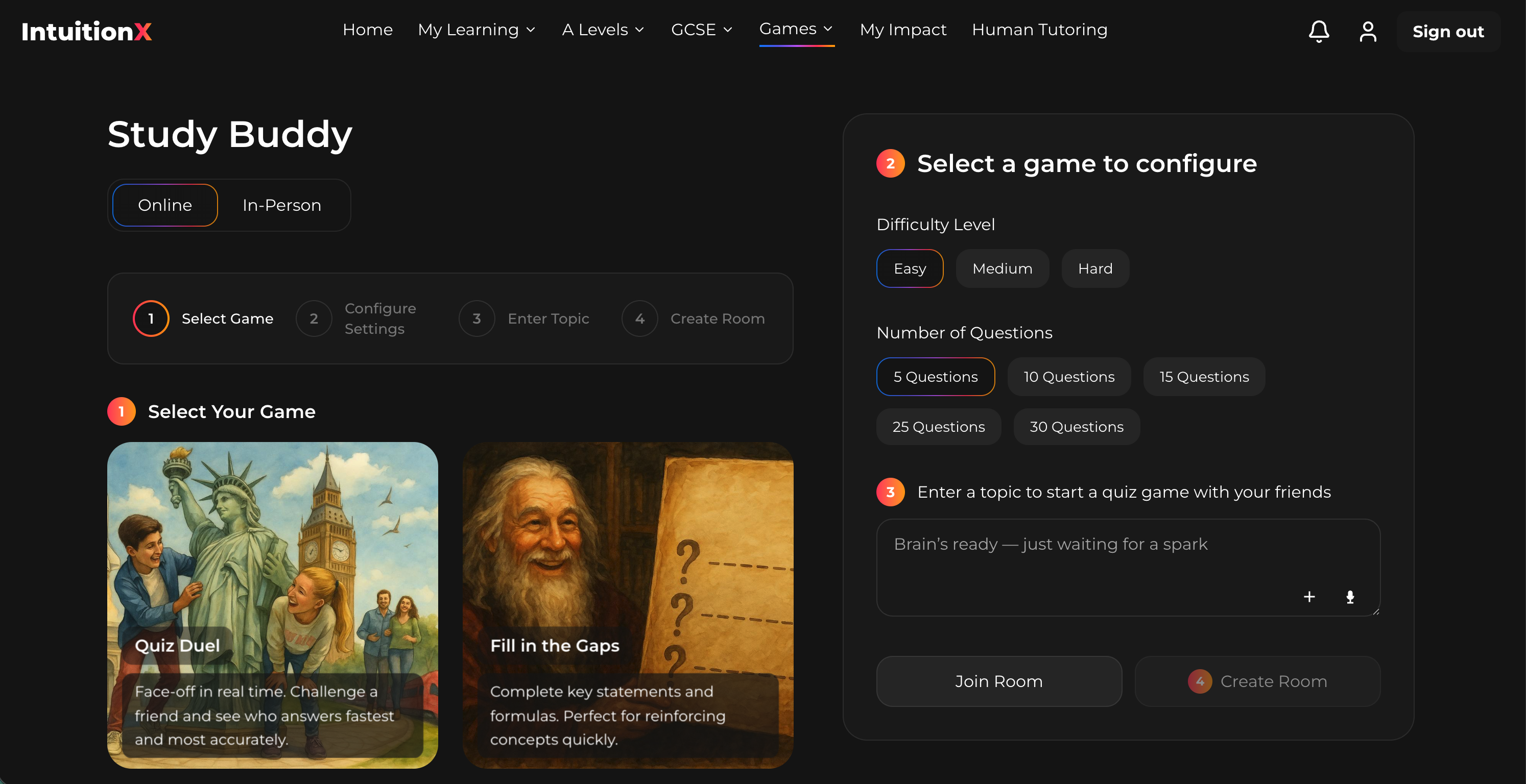
IntuitionX is built on exactly those principles. As an educational AI companion with Oxbridge-pedigree intelligence, it uses Socratic questioning to make students think rather than just receive answers. It is available 24/7, costs a fraction of private tutoring, and is designed to support differentiated instruction across subjects. Whether you are a parent seeking affordable support, an educator evaluating AI tools, or a policymaker exploring scalable solutions, the IntuitionX platform is worth exploring. It meets the criteria the evidence demands: pedagogically aligned, equity-focused, and genuinely effective.
Frequently asked questions
What are the most affordable EdTech solutions for high school students?
Open Educational Resources and free LMS platforms offer cost-effective supplements to classroom learning, but always verify privacy policies and curriculum alignment before use.
Do EdTech platforms improve student attainment?
Meta-analyses confirm moderate positive effects with effect sizes of 0.2 to 0.5, but meaningful improvement depends on evidence-based integration and active teacher involvement.
What should educators prioritise when adopting EdTech?
Educators should prioritise tools with research backing and invest in proper teacher training before rolling out any new platform to students.
Does EdTech address equity gaps in education?
EdTech can reduce inequity, but research shows its benefits are smaller for disadvantaged learners unless access, device availability, and targeted support are all addressed together.
Why are some regions banning EdTech?
Some proposed bans cite concerns around excessive screen time and poor implementation outcomes, but experts argue nuanced, evidence-led policy is far more effective than blanket restrictions.