
Choosing the right active learning strategies for high school students can feel overwhelming when you're faced with endless options and competing advice. Teachers and parents alike want methods that genuinely boost engagement and understanding, not just trendy techniques that sound impressive but deliver little. This article cuts through the noise by presenting a clear criteria framework for evaluating active learning strategies, followed by a curated list of proven methods tailored to high school contexts. You'll discover how to match strategies to your students' needs, compare their strengths and limitations, and make informed decisions that transform passive learners into active participants who truly grasp complex concepts.
Table of Contents
- Key Takeaways
- Criteria for selecting active learning strategies
- Top active learning strategies for high school students
- Comparing active learning strategies: benefits and challenges
- Choosing the right active learning strategies for your students
- Discover intuitive AI tools for active learning
- FAQ
Key Takeaways
| Point | Details |
|---|---|
| Alignment with goals | The most effective strategies align directly with curriculum goals and learning objectives, creating clear pathways from activity to understanding. |
| Learning style diversity | Diverse learning styles and abilities require adaptable strategies that can be tailored for advanced pupils and scaffolded for those who need extra support. |
| Resource considerations | Practical constraints such as time, space, technology and teacher expertise determine which methods are realistically implementable. |
| Collaborative and reflective practices | Collaborative tasks and opportunities for reflection promote deeper understanding and sustained engagement. |
Criteria for selecting active learning strategies
Selecting active learning strategies requires more than intuition or following the latest educational trends. You need a systematic approach that considers multiple factors to ensure your chosen methods genuinely serve your students' learning needs. The most effective strategies align directly with your curriculum goals and learning objectives, creating clear pathways from activity to understanding. When a strategy supports specific outcomes, students grasp why they're engaging in particular tasks rather than viewing them as disconnected exercises.
Diversity in learning styles and abilities demands adaptable strategies. Your classroom likely contains visual learners, kinaesthetic learners, and auditory learners, each requiring different engagement approaches. Effective active learning strategies must be adaptable to different subjects and student abilities, allowing you to modify activities for advanced students whilst providing scaffolding for those who need additional support. This flexibility ensures no student gets left behind or held back by a one size fits all approach.
Resource availability significantly impacts which strategies you can realistically implement. Consider these practical constraints:
- Time requirements for preparation and execution
- Physical space limitations in your classroom or home
- Access to technology and materials
- Your own expertise and comfort level with different methods
Collaboration and critical thinking opportunities separate truly transformative strategies from superficial engagement tactics. Methods that encourage students to work together, challenge assumptions, and construct knowledge collectively tend to produce deeper understanding than passive listening. Look for strategies that prompt students to explain concepts to peers, debate ideas, or solve problems as teams. These collaborative elements mirror real world scenarios where professionals must communicate complex ideas and work across disciplines.
Formative feedback and reflection capabilities matter enormously for sustained learning. The best strategies incorporate natural checkpoints where you can assess understanding and students can evaluate their own progress. This ongoing feedback loop allows you to adjust instruction before misconceptions solidify, whilst students develop metacognitive skills that serve them throughout their educational journey.
Pro Tip: Start by selecting one or two strategies that align strongly with your current curriculum unit, then gradually expand your repertoire as you gain confidence and observe what resonates with your students.
Top active learning strategies for high school students
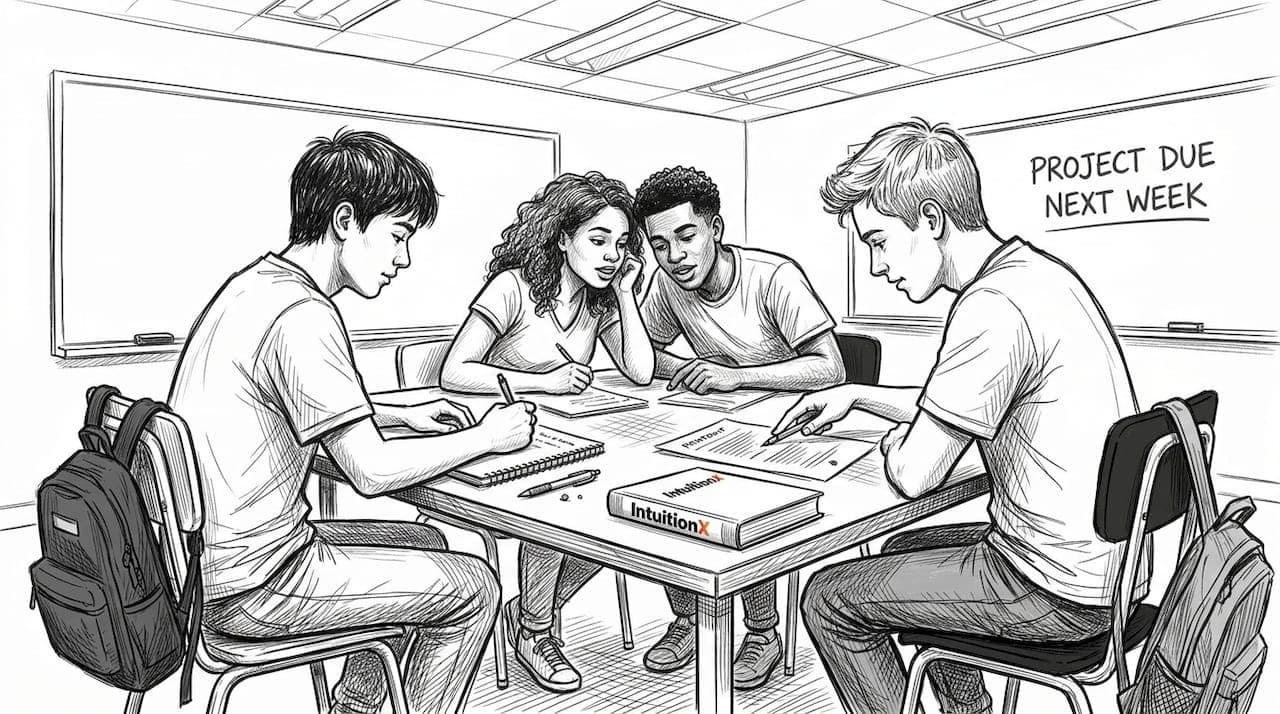
Project based learning stands out as one of the most powerful approaches for high school contexts because it connects abstract concepts to tangible real world applications. Students tackle complex questions or problems over extended periods, developing solutions that require research, collaboration, and creative thinking. A history class might investigate local heritage sites and create digital archives, whilst a science class could design sustainable solutions for community environmental challenges. Project based learning and peer teaching effectively boost engagement and comprehension among high schoolers, particularly when projects address issues students genuinely care about. The extended timeline allows for deeper exploration than traditional lessons permit, and the tangible end product gives students pride in their accomplishments.
Peer teaching transforms students from passive recipients of knowledge into active instructors who must truly master material to explain it effectively. When students prepare to teach concepts to classmates, they engage in higher order thinking that consolidates understanding far beyond what listening or reading alone achieves. You might assign pairs to become experts on specific topics, then rotate through stations where they teach other groups. This strategy works brilliantly across subjects, from mathematics problem solving techniques to literary analysis frameworks. The social element reduces anxiety compared to traditional presentations, whilst the teaching role builds confidence and communication skills.
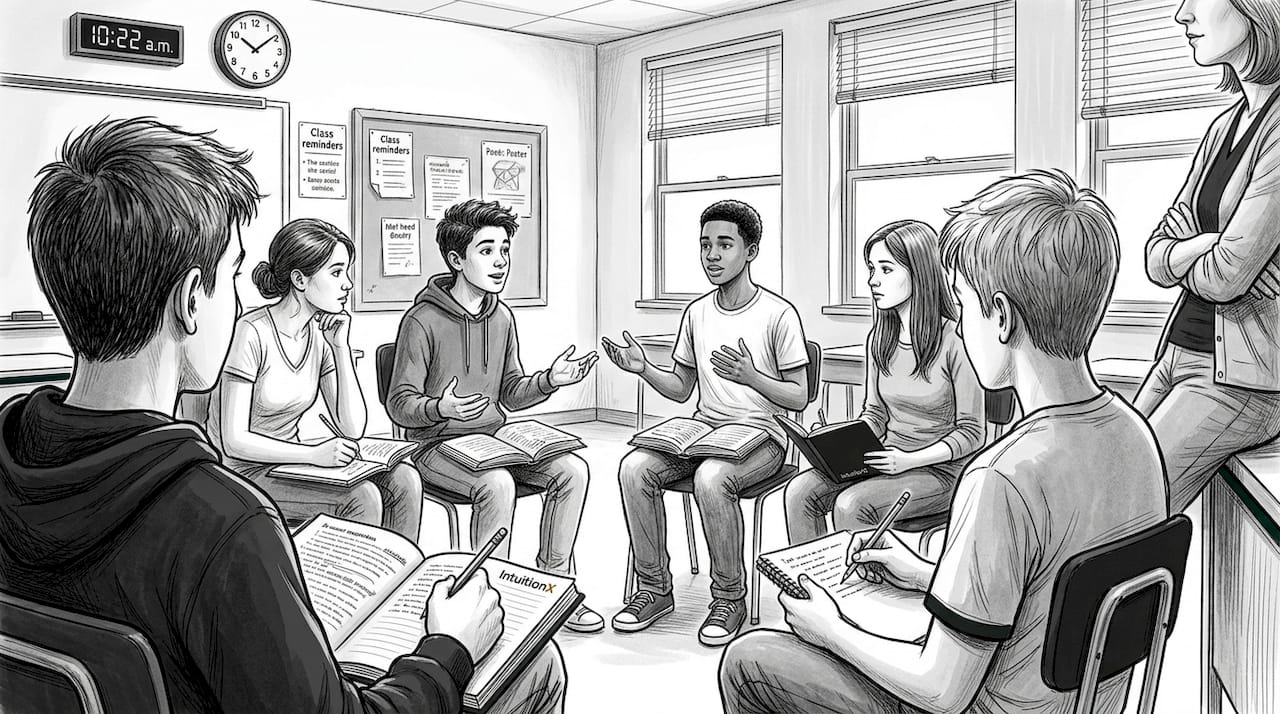
Socratic seminars create structured dialogue where students explore complex texts, questions, or problems through thoughtful discussion rather than lecture. You pose open ended questions that lack single correct answers, then facilitate as students build on each other's ideas, challenge assumptions, and construct collective understanding. These seminars work exceptionally well for literature, philosophy, ethics, and social sciences, though creative teachers adapt them for scientific theories or mathematical proofs. The key lies in careful question design and establishing norms that ensure respectful, inclusive participation. Students develop critical thinking, active listening, and articulate argumentation skills that serve them throughout their academic and professional lives.
Flipped classrooms reverse traditional instruction by moving content delivery outside class time through videos or readings, then using face to face time for active application and problem solving. Students arrive having encountered foundational concepts, ready to engage in discussions, experiments, or collaborative work with your guidance. This model maximises the value of your expertise by focusing it where students need support most, during the challenging application phase rather than passive information transfer. An educational AI tutor can enhance flipped learning by providing personalised support as students work through preparatory materials at home, ensuring they arrive ready to participate fully.
Gamification leverages competition, achievement systems, and game mechanics to boost motivation and engagement. You might award points for completing challenges, create leaderboards for class competitions, or design quest based learning journeys where students unlock new content by demonstrating mastery. Digital platforms make gamification easier than ever, but low tech versions work equally well with physical badges, progress charts, or team challenges. The key lies in balancing competition with collaboration, ensuring all students can succeed through effort rather than innate ability alone.
Pro Tip: Combine multiple strategies for maximum impact. A flipped classroom approach works beautifully with peer teaching, where students who grasp preparatory material quickly can support classmates during application activities.
Comparing active learning strategies: benefits and challenges
| Strategy | Engagement level | Resource intensity | Best for class size | Assessment ease |
|---|---|---|---|---|
| Project based learning | Very high | High (time, materials) | Small to medium | Moderate (rubrics needed) |
| Peer teaching | High | Low to moderate | Any size | High (observe interactions) |
| Socratic seminars | High | Low | Small to medium | Moderate (participation tracking) |
| Flipped classrooms | Moderate to high | Moderate (prep videos) | Any size | High (formative checks) |
| Gamification | Very high | Moderate (platform setup) | Any size | High (built in metrics) |
Each active learning strategy brings distinct advantages and limitations that influence its suitability for particular contexts. No single active learning strategy works best in all contexts; understanding trade offs is crucial for making informed decisions that serve your students effectively. Project based learning delivers exceptional depth and real world relevance but demands substantial time investment for both planning and execution. Teachers must scaffold complex projects carefully to prevent students from becoming overwhelmed or losing focus, whilst ensuring all group members contribute meaningfully rather than allowing some to coast on others' efforts.
Peer teaching excels at reinforcing understanding through the act of explanation, and it scales beautifully across different class sizes with minimal resource requirements. However, you must monitor carefully to ensure student teachers convey accurate information and that all students receive quality instruction regardless of which peer they learn from. Some students initially resist teaching roles due to confidence issues, requiring encouragement and structured support to participate fully. The strategy works best when you provide clear frameworks and check understanding before students begin teaching peers.
Socratic seminars create intellectual excitement and develop sophisticated thinking skills, but they require careful facilitation to prevent dominant voices from monopolising discussion whilst quieter students withdraw. Class size significantly impacts effectiveness, as groups beyond 15 to 20 students struggle to maintain the intimate dialogue that makes seminars powerful. You might divide larger classes into concurrent smaller seminars or rotate participation across multiple sessions. Cultural factors also influence comfort with open debate, necessitating gradual introduction and explicit teaching of discussion norms.
Flipped classrooms maximise face to face time for active learning but assume students complete preparatory work independently, which proves challenging for those lacking home support, internet access, or self regulation skills. You must plan contingencies for students who arrive unprepared, perhaps through brief catch up sessions or peer support systems. The initial video creation or content curation requires significant upfront investment, though materials become reusable resources. An educational AI companion can bridge gaps by providing on demand support as students work through preparatory materials, ensuring equitable access to help regardless of home circumstances.
Gamification generates tremendous enthusiasm and can motivate reluctant learners through achievement systems and friendly competition. However, poorly designed game mechanics risk prioritising points over learning, encouraging students to game the system rather than engage deeply with content. Some students feel stressed by competitive elements or disengaged if they fall behind early, requiring careful balance between individual and team challenges. The strategy works best when integrated thoughtfully with other approaches rather than used as a standalone solution.
Choosing the right active learning strategies for your students
Selecting appropriate active learning strategies begins with understanding your specific students rather than adopting methods because they worked elsewhere or sound innovative. Assess their current learning preferences through surveys, observations, or simple conversations about how they learn best. You might discover your students thrive on social interaction, suggesting collaborative strategies like peer teaching or Socratic seminars, or perhaps they prefer structured independence, pointing toward flipped classrooms or individual projects. Student input provides valuable insights whilst building buy in for new approaches.
Evaluate your available resources honestly before committing to particular strategies. Tailoring active learning strategies increases their effectiveness and student buy in, but only when implementation remains sustainable given your constraints. Consider these practical factors:
- Calculate realistic time requirements for both preparation and execution
- Inventory available materials, technology, and physical space
- Assess your own expertise and identify areas needing professional development
- Determine class size limitations for different strategies
- Consider school or home environment factors that enable or constrain certain approaches
Start small rather than attempting wholesale transformation overnight. Choose one or two strategies that align well with upcoming curriculum units and your available resources, then implement them thoroughly rather than superficially trying everything. This focused approach allows you to refine your technique, troubleshoot challenges, and build confidence before expanding your repertoire. Document what works and what doesn't, noting specific adjustments that improved outcomes. This reflective practice accelerates your development and prevents repeating unsuccessful approaches.
Seek regular student feedback through brief surveys, exit tickets, or informal check ins about which strategies help them learn most effectively. Students often provide surprisingly insightful observations about what engages them and why certain activities succeed or fall flat. Their feedback might reveal unexpected preferences or highlight implementation issues you hadn't noticed. This collaborative approach to strategy selection empowers students as partners in their education whilst providing you with actionable data for continuous improvement.
Incorporate educational AI tools strategically to enhance active learning rather than replace human interaction. Technology works best when it handles routine tasks like initial content delivery or practice exercises, freeing you to focus on facilitating discussions, providing feedback, and supporting students during challenging applications. AI tutors can offer personalised support that adapts to individual learning pace and style, complementing your classroom strategies by ensuring every student receives appropriate scaffolding.
Pro Tip: Create a strategy rotation calendar that exposes students to different active learning approaches throughout the term, preventing monotony whilst allowing you to observe which methods produce the strongest engagement and understanding for your particular group.
Discover intuitive AI tools for active learning
Implementing active learning strategies becomes significantly more effective when you have the right support tools. IntuitionX offers an intuitive educational AI companion designed specifically to enhance personalised learning for high school students through Socratic dialogue and adaptive support. Unlike generic AI that simply provides answers, IntuitionX guides students through reasoning processes that deepen understanding, making it ideal for supporting flipped classrooms, independent projects, and peer teaching preparation.
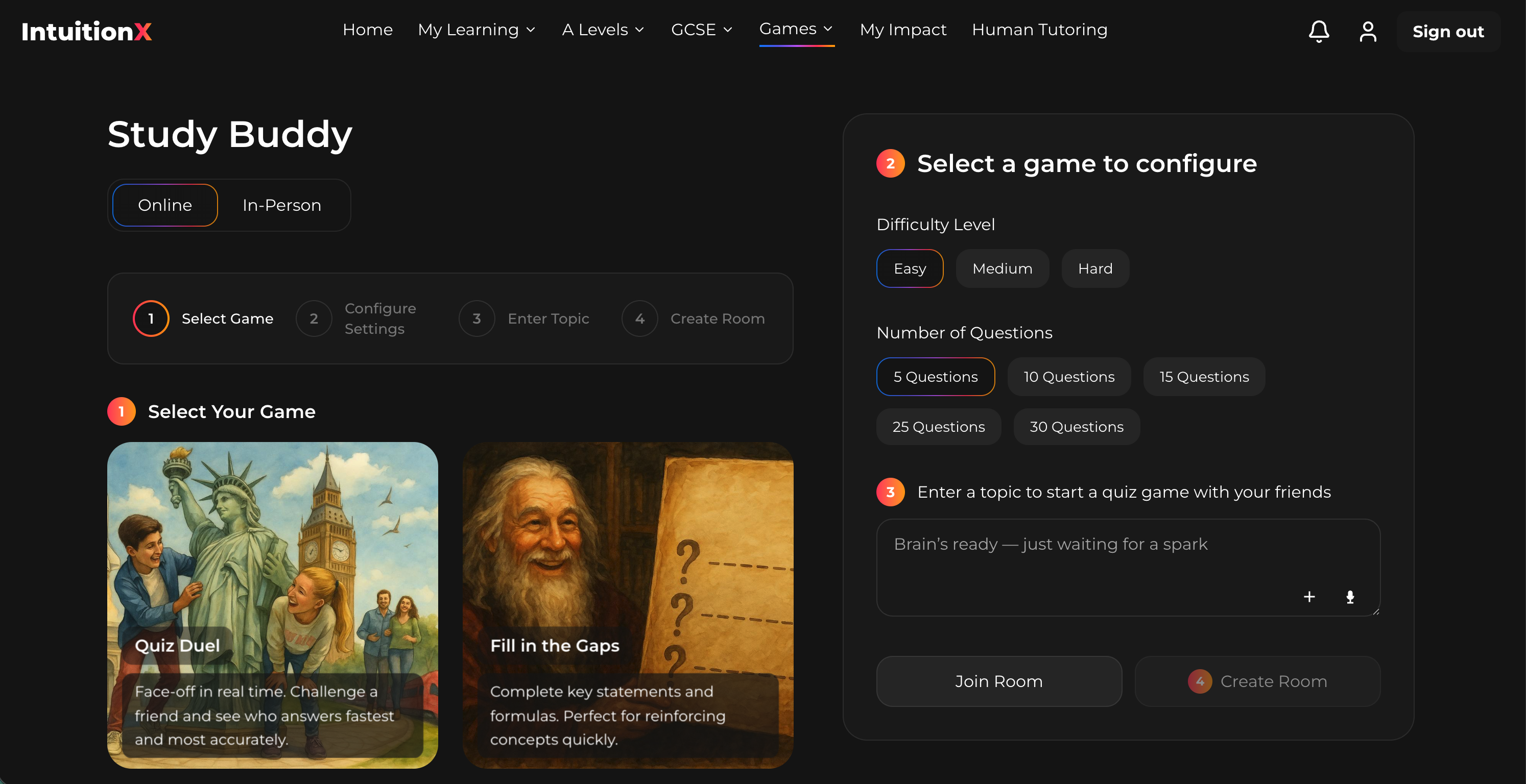
Our Oxbridge pedigree AI tutor adapts to individual learning styles and paces, providing the kind of personalised attention that transforms passive studying into active engagement. Whether you're a teacher seeking to differentiate instruction across diverse learners or a parent supporting home learning, IntuitionX bridges the gap between elite educational support and accessible technology, ensuring every student can learn like the top 1% regardless of background or resources.
FAQ
What are some examples of active learning strategies?
Active learning strategies include project based learning where students tackle real world problems, peer teaching that transforms learners into instructors, and Socratic seminars that foster critical dialogue. Flipped classrooms reverse traditional instruction by moving content delivery outside class time, whilst gamification uses game mechanics to boost motivation. Each method actively engages students in constructing knowledge rather than passively receiving information.
How can parents support active learning at home?
Parents can encourage discussions about school projects and assignments, asking open ended questions that prompt deeper thinking rather than simple recall. Provide a dedicated learning space with necessary resources, and engage in interactive educational activities together such as experiments, research projects, or educational games. Supporting rather than directing allows students to develop independence whilst knowing help is available when needed.
What challenges might teachers face implementing these strategies?
Teachers often encounter time constraints for both planning complex activities and executing them within limited class periods. Resource limitations including technology access, materials, and appropriate physical space can restrict which strategies work in particular settings. Varying student engagement levels and resistance to unfamiliar methods require patience and gradual implementation. Professional development, peer collaboration, and starting with manageable pilot projects help overcome these challenges effectively.
How do I know which strategy works best for my students?
Observe student engagement levels, assess learning outcomes through formative and summative assessments, and gather direct feedback from students about their experiences. Track which strategies produce the deepest understanding and longest retention, noting patterns across different topics and student groups. Experimentation combined with systematic reflection reveals what works best for your specific context rather than relying on generalised recommendations.
Can active learning strategies work in large classes?
Many active learning strategies adapt effectively to large classes with thoughtful planning. Peer teaching and gamification scale particularly well regardless of class size, whilst flipped classrooms actually become more valuable in large groups by maximising limited face to face time. Divide large classes into smaller discussion groups for Socratic seminars, or rotate which students participate in intensive activities whilst others engage in complementary independent work. Technology and structured protocols make large class active learning entirely feasible.