

TL;DR:
- Elite education remains highly unequal due to systemic factors like legacy admissions and networks.
- Online learning often widens achievement gaps for disadvantaged students without proper support.
- Personalized, supported interventions like mentoring and adaptive AI tools improve access for low-income students.
Online learning promised to be the great equaliser. The idea was simple: put world-class resources on the internet, and every student, regardless of postcode or income, gets a fair shot at elite education. But the reality is far more complicated. Disadvantaged students in the UK and US consistently face lower rates of admission to top universities, even when their grades match those of wealthier peers. So what is actually going on? And more importantly, what can parents and educators do about it? This guide breaks it all down.
Table of Contents
- Why elite education remains out of reach for many
- The digital divide: does online learning help or hinder access?
- Personalised learning and targeted interventions: what works?
- Building an equitable pathway: practical strategies for parents and educators
- Why online education alone won't break elite barriers — and what really does
- How IntuitionX can support equitable education access
- Frequently asked questions
Key Takeaways
| Point | Details |
|---|---|
| Inequality persists | Top universities remain more accessible to wealthy students regardless of similar academic performance. |
| Online learning increases gaps | Digital resources boost high achievers but hurt disadvantaged learners without added support. |
| Personalised support works | Mentorship and targeted, adaptive learning help close the access gap for underrepresented students. |
| Best results are blended | Combining technology with structured human help provides the fairest route to elite education. |
Why elite education remains out of reach for many
When we talk about elite education, we mean institutions like Oxford, Cambridge, Harvard, and Yale, as well as top private schools that serve as feeder pipelines into those universities. These places carry enormous weight. They shape careers, networks, and life outcomes in ways that are hard to overstate.
Yet access to them is deeply unequal. Research from the NBER Working Paper 31492 shows that students from the top 1% of income families are more than twice as likely to attend Ivy-Plus colleges compared to students with identical academic records from lower-income backgrounds. Read that again. Same grades. Vastly different outcomes.
Why does this happen? Several structural factors are at play:
- Legacy admissions: Children of alumni receive significant boosts in selective admissions, a practice that inherently favours wealthy, established families.
- Athletic recruitment: Elite sports scholarships disproportionately benefit students who have had access to expensive private coaching from a young age.
- Network effects: Knowing the right people, attending the right events, and receiving insider guidance on applications gives affluent students a quiet but powerful advantage.
- Unpaid internships and enrichment activities: These signal ambition on applications but are only accessible to those who can afford to work for free.
Understanding educational access as a systemic issue, rather than a matter of individual effort, is the first step toward addressing it meaningfully.
"The preferences for legacies and athletes at elite universities are not small. They are large enough to meaningfully displace academically qualified applicants from less privileged backgrounds." — NBER researchers on admissions practices at selective US institutions.
Academic ability matters, of course. But it is far from the only currency in elite admissions. Social background, connections, and institutional familiarity carry enormous weight too.
The digital divide: does online learning help or hinder access?
So can online learning fix this? Many people assume it can. After all, free courses, YouTube tutorials, and AI tools are available to anyone with a smartphone. But the evidence tells a more nuanced story.
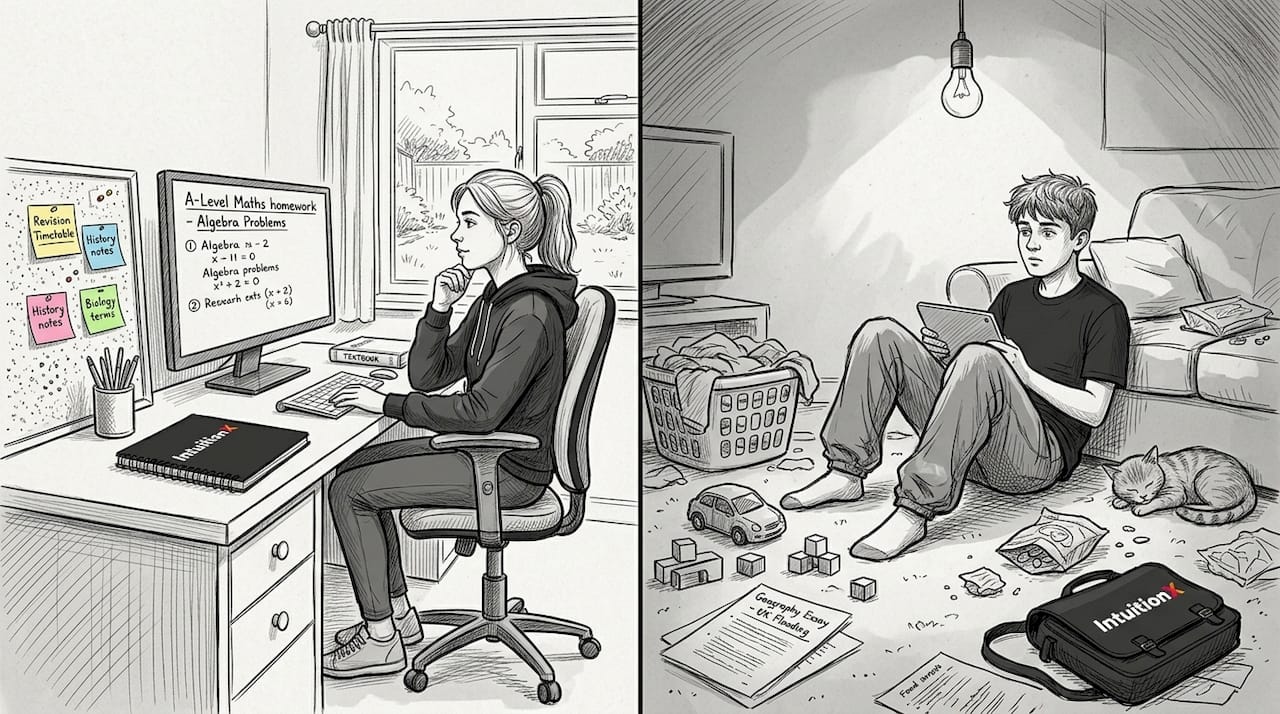
Online learning worsens outcomes for low-performing or disadvantaged students while improving results for high achievers. This is not a minor effect. Studies tracking GPA shifts found drops of up to 0.44 grade points for struggling learners in fully online environments. The gap between the strongest and weakest students actually widens.
| Student group | In-person learning outcome | Online learning outcome |
|---|---|---|
| High-performing students | Strong | Stronger |
| Low-performing students | Moderate | Significantly weaker |
| Disadvantaged students | Moderate | Weakest |
| Students with strong home support | Strong | Strong |
Why does online learning benefit some and harm others? The reasons are clear once you look closely:
- Independent study skills: High achievers already know how to manage their time and stay motivated. Struggling students often need structured prompts and accountability that online formats rarely provide.
- Home digital environment: A quiet room, a reliable device, and fast broadband are not universal. Many disadvantaged students study on shared devices in noisy homes.
- Support structures: Affluent students have parents who can assist with coursework, hire tutors, and monitor progress. Others are largely on their own.
- Engagement design: Generic online content is often passive. Watching a video is not the same as being challenged by a skilled teacher.
This research on online learning effects reinforces what educators on the ground already know: technology is not neutral. It amplifies existing advantages unless deliberately designed otherwise.
Looking at equity benchmarks in education reveals that the most effective online programmes pair digital content with human facilitation. Similarly, efforts to democratise learning show that structured hybrid models, where a facilitating adult guides the online experience, can significantly narrow the gap for lower-skilled students.
Pro Tip: If you are a parent or educator supporting a struggling learner online, do not leave them to navigate content alone. Schedule regular check-ins, set weekly goals together, and treat the online tool as a shared activity rather than a babysitter.
Personalised learning and targeted interventions: what works?
The good news is that we know what works. The challenge is scaling it.
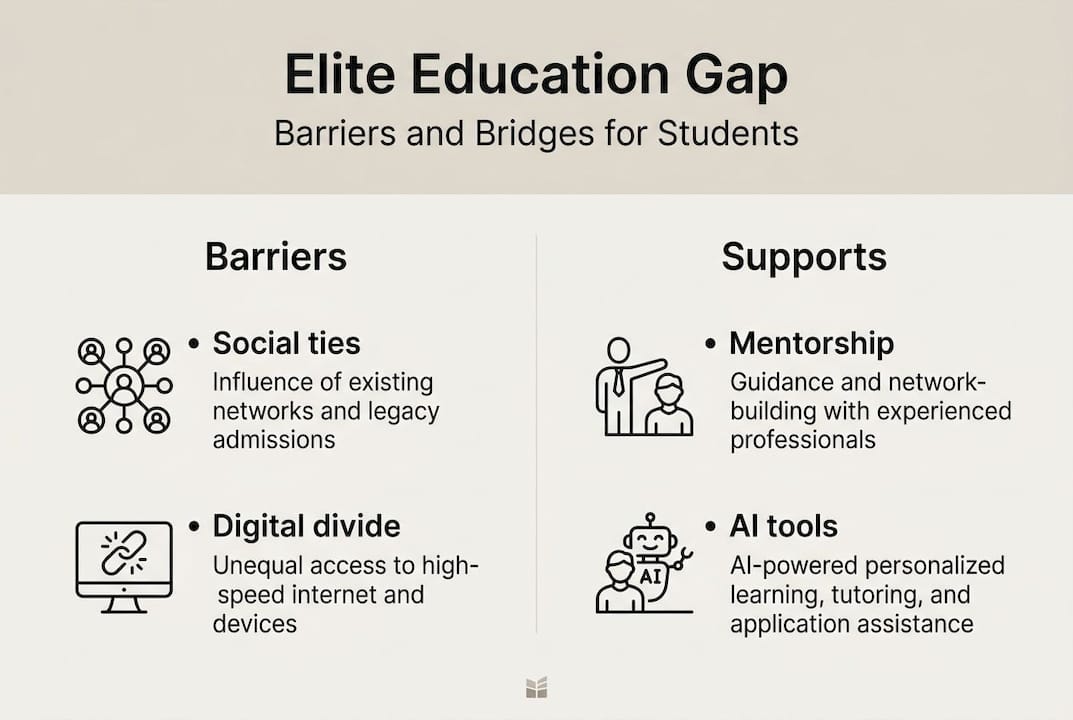
The core problem with most online resources is that they are built for the average student. But there is no average student. A Year 10 pupil who is confident in maths but anxious about essay writing needs something completely different from a student who is the other way around. Generic platforms cannot respond to that. Personalised and adaptive approaches can.
| Generic online resource | Personalised/adaptive approach |
|---|---|
| Same content for all learners | Adjusts to individual pace and gaps |
| Passive video or reading | Active questioning and feedback |
| No progress tracking | Real-time performance data |
| No emotional support | Encouragement and confidence-building |
| One-off sessions | Ongoing, cumulative learning |
Effective interventions for disadvantaged students typically include:
- Mentorship programmes: Connecting students with near-peers or professionals who have navigated elite admissions themselves.
- Adaptive AI tutoring: Tools that respond to a student's specific answers, not just their grade level.
- Collaborative learning: Study groups and peer accountability structures that replicate the social learning environment of elite schools.
- Assisted study sessions: Structured blocks of guided work, not just open access to resources.
Project Access is a strong real-world example. It pairs state school students with mentors who attended Oxford, Cambridge, and other top universities, offering free one-to-one guidance through the application process. Students supported by programmes like this are far more likely to apply to and receive offers from elite institutions.
The research is clear: low-skilled students need structure and targeted support when learning online. Dropping them into a library of content and hoping for the best simply does not work.
Pro Tip: Use AI-powered education tools as a supplement to human feedback, not a replacement for it. The best results come when an AI tutor handles practice and explanation while a teacher, mentor, or parent provides emotional support and accountability. Explore personalised learning strategies and learning companion tools to find the right combination for your student.
Building an equitable pathway: practical strategies for parents and educators
Knowing the problem is one thing. Taking action is another. Here is a practical framework you can start using today.
Step-by-step for parents and educators:
- Assess baseline digital access. Does your student have a reliable device, stable internet, and a quiet space to work? If not, address this first. Many UK councils and US school districts offer device loan schemes.
- Choose the right online resources. Look for platforms that are adaptive, interactive, and designed with equity in mind, not just content libraries. Passive resources rarely move the needle for struggling learners.
- Add support systems. Pair any online tool with a mentor, tutor, or structured study group. Targeted interventions consistently narrow gaps between disadvantaged and high-achieving students.
- Monitor progress actively. Set clear, measurable goals and review them weekly. Use data from the platform where available, and ask your student to explain what they are learning in their own words.
What to look for in an equitable online learning platform:
- Adaptive content that responds to individual performance
- Built-in feedback mechanisms, not just answer keys
- Encouragement and confidence-building features
- Transparent progress tracking for parents and educators
- Accessibility features for students with additional needs
"Technology alone cannot close the opportunity gap. What closes it is intentional design, skilled facilitation, and the kind of genuine human connection that tells a young person: you belong here." — Education equity researcher on blended learning models.
Realistic barriers exist too. Time is short for working parents. Tech literacy varies. Costs add up. But starting small works. Even one structured online session per week, with a brief check-in afterwards, is more effective than daily unguided browsing. Explore active learning strategies to make every session count.
Why online education alone won't break elite barriers — and what really does
Here is the uncomfortable truth that most guides skip over: the barriers to elite education are not primarily digital. They are structural. Admissions practices, social networks, and institutional cultures were built over centuries to serve a particular type of student. Putting more content online does not dismantle those structures.
What actually moves the needle is a combination of things. Transparent admissions reform. Mentorship at scale. Personalised support that meets students where they are. And advocacy from parents, educators, and policymakers who refuse to accept that privilege should determine potential.
AI can play a powerful role here, but only if it is designed with equity as a core value, not an afterthought. A tool that simply generates essays on demand does not teach anyone anything. A tool that asks the right questions, challenges thinking, and builds genuine understanding is a different matter entirely.
We believe the most important shift is this: stop treating online resources as a solution in themselves, and start treating them as one component of a broader, intentional support system. Schools, parents, and technology providers all have a role to play. Explore wide-reaching learning reforms to understand what that looks like in practice. Demand better from the tools you use and the institutions you engage with.
How IntuitionX can support equitable education access
If you are serious about giving your student a genuine advantage, the right tool makes a real difference.
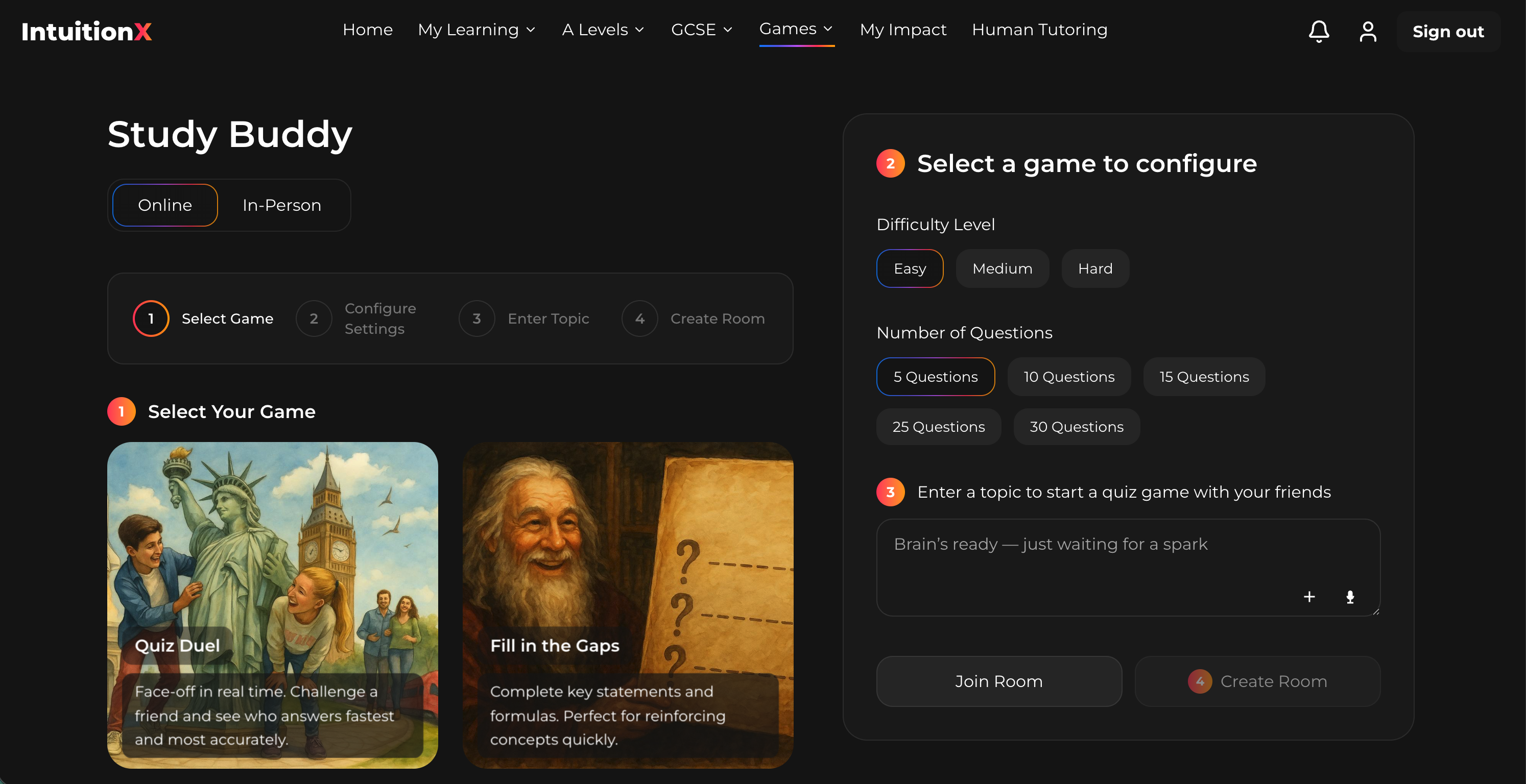
IntuitionX is a 24/7 AI tutor built on Oxbridge-level intelligence, designed to make elite-quality education accessible to every student, not just those whose families can afford £150-an-hour private tutors. It uses Socratic questioning to build real understanding, not just surface-level answers. It adapts to each learner's pace, gaps, and confidence level. And it is backed by Sir Anthony Seldon, one of Britain's most respected educationalists. IntuitionX fits naturally into the kind of blended, supported learning approach that research shows actually works. Try it today and see what learning like the 1% really feels like.
Frequently asked questions
What is elite education access?
Elite education access means the ability for students of all backgrounds to attend prestigious institutions like Oxbridge or Ivy League schools. As NBER research confirms, significant structural barriers currently prevent disadvantaged students from accessing these opportunities even with strong academic records.
How does online learning impact disadvantaged students?
Online learning often widens the achievement gap for disadvantaged students, with studies showing GPA drops of up to 0.44 points in fully online environments unless structured adult support is provided alongside digital content.
What are proven strategies to improve elite education access?
Mentorship, tailored interventions, and AI-powered support are proven strategies. Project Access demonstrates that pairing students with near-peer mentors who have navigated elite admissions dramatically improves application rates and outcomes.
Are free high-quality resources available for elite education preparation?
Yes. Project Access offers free one-to-one mentoring for students applying to top universities, connecting them with current students and graduates from Oxford, Cambridge, and other leading institutions.
Can AI tutors help disadvantaged students succeed?
AI tutors can significantly enhance learning outcomes, but evidence shows they work best when paired with structured adult guidance rather than used as a standalone solution for students who need additional support.