

Most schools still teach every student in exactly the same way, at exactly the same pace, using exactly the same materials. But every child is different. Their strengths, gaps, interests, and learning styles vary enormously. Personalised learning tailors instruction to individual students' strengths, needs, skills, and interests, and it is quietly transforming how high school students progress in both the UK and US. This article explains what personalised learning actually is, how it works in practice, what the research says about its benefits and pitfalls, and how you can apply it affordably at home.
Table of Contents
- What is personalised learning?
- Core approaches and tools for personalised learning
- Benefits and potential pitfalls: evidence and expert insights
- Applying personalised learning at home: affordable resources
- Ensuring equitable access and ongoing assessment
- Next steps: engage with personalised education solutions
- Frequently asked questions
Key Takeaways
| Point | Details |
|---|---|
| Tailored education | Personalised learning adapts teaching to each student’s strengths, needs, and interests for optimal progress. |
| Accessible resources | Parents can use affordable platforms like Seneca and Khan Academy to start personalised learning at home. |
| Hybrid approaches | Blending technology with teacher guidance ensures better outcomes and prevents educational fragmentation. |
| Expert oversight | Careful monitoring and ongoing assessment help avoid pitfalls and maximise the impact of personalised learning. |
| UK and US pathways | Personalised learning is used for flexible GCSE/A-Level routes in the UK and adaptive platforms for US college prep. |
What is personalised learning?
Personalised learning is not simply letting students choose what they want to study. It is a structured educational approach that adapts lessons, pace, and resources to suit each individual learner. Think of it as the opposite of a one-size-fits-all curriculum. Rather than every student moving through the same content at the same speed, personalised learning meets each child where they actually are.
Personalised learning is an educational approach tailored to individual strengths, needs, interests, and learning styles. In practice, this often involves:
- Individual learning plans (ILPs): Structured roadmaps that outline a student's goals, current level, and next steps.
- Diagnostic assessments: Tools that identify where a student is strong and where they need support before instruction begins.
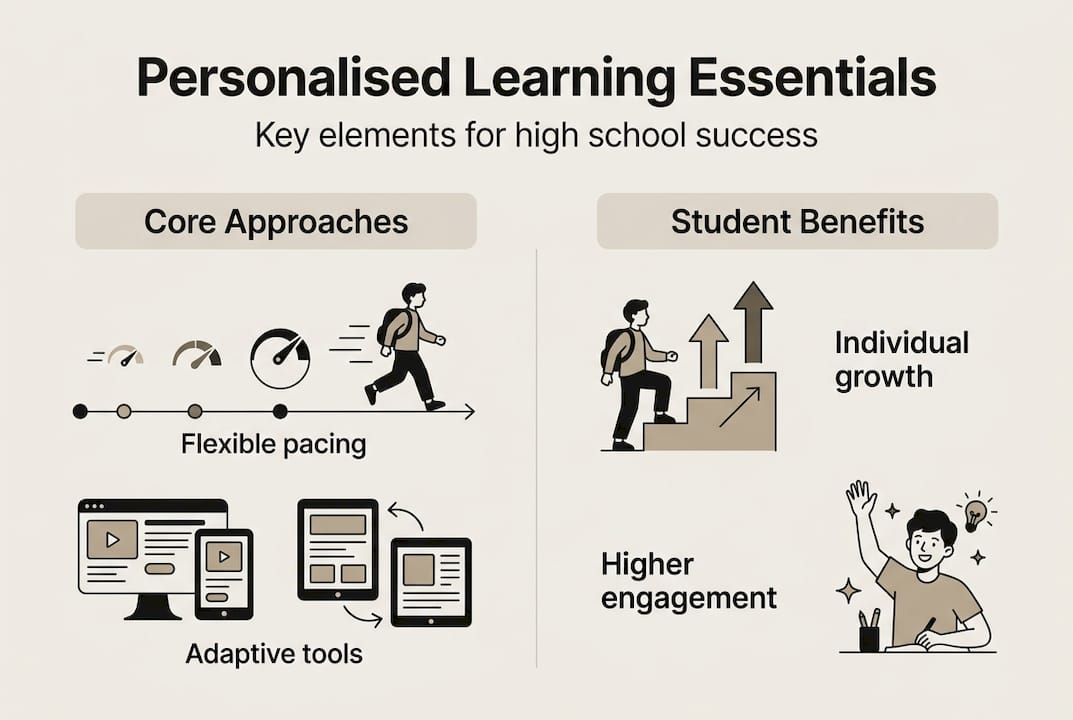
- Flexible pacing: Students move through content at a speed that suits their understanding, not the class average.
- Adaptive technologies: Software that adjusts difficulty and content based on student responses in real time.
- Targeted feedback: Specific, actionable guidance rather than generic grades.
"Personalised learning shifts the focus from teaching the curriculum to teaching the child."
In the UK, this often means tailoring pathways towards GCSE and A-Level success. In the US, it frequently involves edtech platforms that adapt content for college preparation. Both contexts share the same core goal: helping every student reach their potential. Explore how personalised education with AI is already making this a reality for thousands of students.
Core approaches and tools for personalised learning
Knowing what personalised learning is and knowing how to implement it are two very different things. Here is how it actually looks in real classrooms and homes.
Flexible pacing and adaptive technologies are core to personalised learning, and the tools available to support them have never been more accessible. Here is a comparison of popular platforms used by UK and US families:
| Platform | Best for | Cost | UK or US focus |
|---|---|---|---|
| Seneca Learning | GCSE and A-Level revision | Free | UK |
| Khan Academy | Maths, science, humanities | Free | US and global |
| IntuitionX | Socratic AI tutoring, all subjects | Subscription | UK and US |
| Yourway | Adaptive coursework | Free trial | US |
| TeachSuite | Blended classroom learning | Free trial | US |
Beyond platforms, the most effective approaches combine technology with human guidance. Here are the key strategies worth knowing:
- Hybrid models: Blending AI tools with teacher or parental oversight produces better outcomes than either alone.
- Diagnostic-first approach: Always start with an assessment to identify gaps before choosing resources.
- Subject-specific tools: Use platforms built for the subject. Maths benefits enormously from adaptive software; essay subjects need more dialogue and feedback.
- Regular review cycles: Revisit goals and progress every few weeks to keep the plan relevant.
For deeper ideas on keeping students genuinely engaged, active learning strategies offer practical frameworks that complement personalised approaches. If your child is preparing for A Levels specifically, active learning for A Levels is worth exploring too.
Pro Tip: Before committing to any paid platform, use free diagnostic tools on Seneca or Khan Academy to identify your child's actual gaps. You may find free resources cover most of what they need, and you can reserve paid tools for the areas where they need the most support. Find a broader list of affordable learning tools to compare your options.
Benefits and potential pitfalls: evidence and expert insights
Personalised learning sounds compelling. But what does the evidence actually say? The picture is encouraging, with some important caveats.
The benefits are real. When implemented well, personalised learning improves engagement, boosts motivation, and helps students build genuine confidence. Students who feel seen and supported are far more likely to persist through difficult material. Here are the most consistently observed advantages:
- Higher engagement: Students working at the right level are less likely to disengage from boredom or frustration.
- Targeted support: Gaps are identified and addressed early, before they compound.
- Greater motivation: Students who experience progress feel more capable and curious.
- Smoother exam pathways: In the UK, flexible GCSE and A-Level routes allow students to build on genuine strengths.
- Better college preparation: In the US, adaptive platforms help students prepare for specific college entry requirements.
But there are pitfalls too. Research shows personalised learning works best for discrete skills like maths but risks misconceptions in context-heavy subjects such as literature and history. A student who speeds through content without fully grasping underlying concepts can develop gaps that are hard to unpick later.
"True personalisation demands multi-dimensional data and educational theory, not just adaptive software."
There is also the question of equity. Not every student has access to a reliable device, fast broadband, or a quiet space to study. Personalised learning can widen the gap between students who have these resources and those who do not, unless schools and parents actively work to close it. Explore how AI for personalised learning is being designed with equity in mind.

| Factor | Benefit | Risk |
|---|---|---|
| Adaptive software | Targets gaps efficiently | May skip conceptual depth |
| Flexible pacing | Reduces stress | Can delay mastery of foundations |
| Diagnostic assessments | Identifies needs early | Requires accurate interpretation |
| AI tutoring | Available 24/7 | Needs human oversight for nuance |
Applying personalised learning at home: affordable resources
You do not need to spend a fortune to bring personalised learning into your home. The most important step is starting with a clear picture of where your child actually is.
Free and low-cost tools like Seneca Learning in the UK and Khan Academy in the US provide excellent starting points, with diagnostic features built in. Here is how to approach it practically:
- Start with a free diagnostic: Use Seneca (UK) or Khan Academy (US) to identify your child's current level in each subject.
- Build a simple learning plan: Note the three to five areas that need the most attention and find resources that target those specifically.
- Use AI tutoring for depth: Generic AI that writes essays for students bypasses actual learning. Look for platforms that use Socratic questioning to build genuine understanding.
- Try before you commit: Many platforms, including Yourway and TeachSuite, offer free trials. Use them to find the right fit before spending money.
- Blend tech with conversation: Talk to your child about what they are learning. Ask questions. Curiosity is contagious.
For parents exploring AI tutoring options, a comparison of AITutor alternatives can help you find the right platform for your child's needs. And if you want to see what genuinely personalised AI tutoring looks like, IntuitionX is worth exploring.
Pro Tip: Avoid the trap of using too many platforms at once. Pick one or two tools, use them consistently for four to six weeks, and then assess progress. Consistency beats variety every time.
Ensuring equitable access and ongoing assessment
Starting personalised learning is one thing. Sustaining it fairly and effectively is another. Here is how to keep it on track.
Monitor for equity and engagement throughout your child's GCSE, A-Level, or US college preparation journey. That means checking in regularly, not just at exam time. Follow these steps to keep things fair and effective:
- Check device and internet access: Make sure your child has reliable access to the tools they need. If not, speak to the school about support options.
- Review progress every four weeks: Use platform dashboards or simple quizzes to track whether gaps are closing.
- Engage with school feedback: Attend parent forums and ask teachers how home learning aligns with classroom goals.
- Watch for disengagement: If your child is going through the motions without genuine understanding, it is time to adjust the approach.
- Use hybrid methods: Combine digital tools with discussion, practice papers, and real-world application for the best results.
For practical ideas on keeping your child genuinely involved in their own learning, engagement strategies offer a strong starting point.
Pro Tip: Ask your child to explain what they have just learned to you in their own words. If they can teach it simply, they understand it. If they struggle, that is your next focus area.
Next steps: engage with personalised education solutions
Personalised learning works best when it is consistent, well-resourced, and genuinely tailored to your child. That is exactly what IntuitionX is built to deliver. Our Socratic AI tutor draws on the knowledge of academics who earned A*s at A Level and Firsts from Oxford and Cambridge, and it is available 24/7 so your child never has to wait for support.
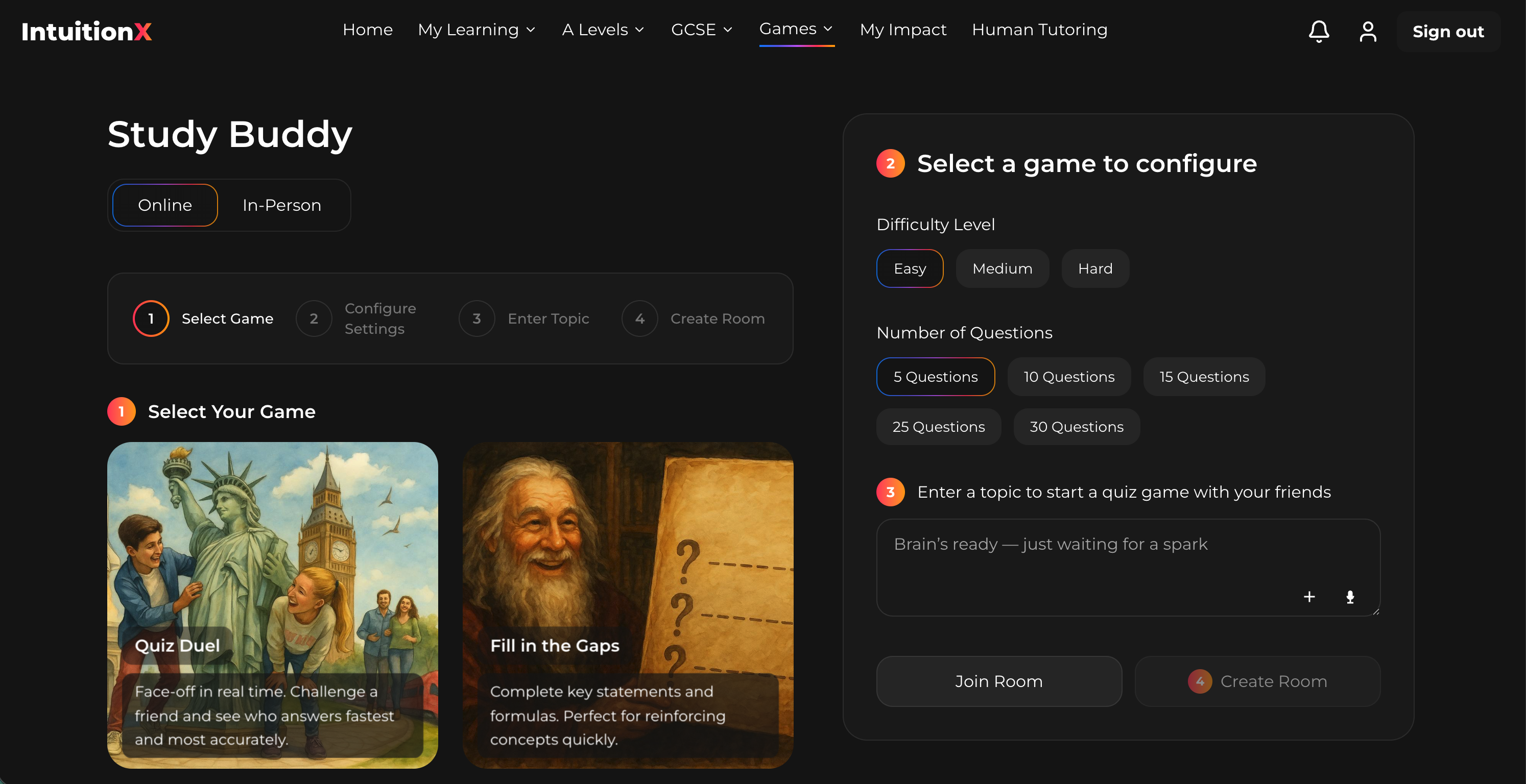
Whether your child is preparing for GCSEs, A Levels, or US college entry, IntuitionX adapts to their level, asks the right questions, and builds real understanding rather than just providing answers. You can explore the platform and start a guided session at IntuitionX AI platform. Backed by Sir Anthony Seldon and committed to funding education for children in crisis through our partnership with the International Rescue Committee, we believe every student deserves access to elite-level learning.
Frequently asked questions
How can I tell if my child needs personalised learning?
If your child struggles with standard classroom instruction, lacks engagement, or shows uneven progress across subjects, personalised learning can address those specific needs rather than relying on a generic approach.
What affordable tools are available for UK and US parents?
UK parents can start with Seneca Learning and flexible online courses; US parents have Khan Academy, OER platforms, and AI tools like TeachSuite and Yourway, many of which offer free trials and low-cost access.
Is personalised learning suitable for all subjects?
It works best in discrete skills like maths but requires careful oversight in context-heavy subjects such as literature and history, where conceptual depth matters enormously.
How can I make sure my child benefits from personalised learning?
Monitor progress regularly, use a blend of technology and teacher or parental guidance, and ensure your child has equitable access to the devices and resources they need.
Does personalised learning help with exam preparation?
Yes. Personalised learning can target specific exam gaps and improve outcomes, particularly for GCSE, A-Level, and US college preparation when combined with flexible GCSE and A-Level pathways and diagnostic tools that track real progress.