

TL;DR:
- Quality free resources like OER Project offer curriculum-aligned lessons for humanities and English literature.
- Building routines, parental involvement, and active engagement enhance effective learning at home.
- Rethinking access to high-quality resources promotes self-directed learning and reduces reliance on expensive tutoring.
Quality education shouldn't come with a price tag that rules most families out. Yet here we are, with wealthy households spending up to $150 an hour on private tutors while many students are left searching for scraps. If you're a parent or student struggling to find reliable, affordable support for English literature or humanities, you're not alone, and you're not stuck. This guide walks you through exactly what you need, where to find the best free and low-cost resources, how to use them well, and how to check that real progress is happening.
Table of Contents
- What you need to access the right education resources
- Step-by-step: Finding and choosing quality resources
- How to use resources effectively: Study and support at home
- Checking progress and getting help if stuck
- Why rethinking tutoring access changes everything
- Next steps: Supercharge your learning journey
- Frequently asked questions
Key Takeaways
| Point | Details |
|---|---|
| Start with trusted sources | Free, high-quality resources like OER Project make effective learning possible for all families. |
| Structure and support matter | Using proven frameworks and regular routines boosts the impact of education resources at home. |
| Track and adapt | Check progress, adjust resources when needed, and don’t hesitate to seek additional assistance. |
| Mindset is essential | An open, resourceful approach empowers both students and parents to overcome educational barriers. |
What you need to access the right education resources
Before you start searching, it helps to know what you're working with. Think of this as your preparation checklist. Getting the basics right means you won't waste time on platforms that don't fit your situation.
Digital foundations first
You need a reliable device and a stable internet connection. That sounds obvious, but it's worth saying clearly because online education access is genuinely uneven, and knowing your setup helps you choose the right type of resource. A tablet or laptop works well for most platforms. A smartphone can work in a pinch, though longer reading tasks are easier on a larger screen.
Platforms worth bookmarking right now
OER Project is one of the strongest free options available. It delivers free, standards-based curriculum for history and humanities, with ready-to-use lessons that genuinely foster critical thinking rather than passive reading. Alongside that, explore your local library's digital catalogue, school-recommended websites, and trusted educational hubs.
Here's a quick comparison of what different resource types offer:
| Resource type | Cost | Best for | Accessibility |
|---|---|---|---|
| OER Project | Free | History, humanities | Browser-based |
| Public library digital | Free | Wide range | App or browser |
| School-recommended sites | Free | Curriculum-aligned | Varies |
| Premium tutoring platforms | £30 to £150/hr | Personalised support | Online |
Mindset and family involvement matter too
Resources only work if you actually use them. That means building a mindset of self-driven curiosity, which is easier said than done when you're already stressed. Keeping parents involved, even just for short check-ins, dramatically improves outcomes. Research consistently shows that family engagement is one of the most powerful factors in academic progress. You can read more about technology trends for students that support this kind of active, involved learning.
Here's a quick checklist to get started:
- A working device and reliable internet
- A free account on OER Project or similar platform
- A quiet, consistent study space at home
- A simple weekly schedule with dedicated study slots
- Family or carer awareness of what's being studied
Pro Tip: Before committing to any platform, spend 15 minutes exploring its free sample content. If it doesn't engage you within the first session, try a different one. Engagement is non-negotiable for real learning.
Good curriculum support examples show that structured, consistent access to quality materials makes a measurable difference, even without a private tutor in the room.
Step-by-step: Finding and choosing quality resources
Knowing where to look is half the battle. The internet is full of content that looks educational but delivers very little. Here's how to cut through the noise.
A step-by-step process for finding what works
- Start with subject-specific searches. For English literature and humanities, search for curriculum-aligned platforms rather than generic study sites.
- Check for curriculum alignment. Does the resource match your exam board or national curriculum? If not, it may not prepare you for assessments.
- Look at who created it. University-backed or government-funded resources tend to be more reliable than anonymous blogs.
- Test before committing. Most quality platforms offer free sample lessons. Use them.
- Ask your school. Teachers often know which free resources align with what's being taught in class.
How to judge quality quickly
Not all free resources are equal. A strong resource will have clear learning objectives, structured progression, and some form of assessment or reflection built in. Weak resources are often just walls of text with no interaction. Humanities success strategies consistently point to active engagement over passive reading as the key differentiator.
Here's a comparison of common resource types for humanities:
| Resource type | Interactivity | Curriculum fit | Reliability |
|---|---|---|---|
| OER Project lessons | High | Strong | Excellent |
| YouTube explainers | Medium | Variable | Mixed |
| Wikipedia | Low | Broad | Moderate |
| School-issued textbooks | Medium | Excellent | Excellent |
| AI tutoring platforms | Very high | Strong | Excellent |
OER Project stands out because it was built specifically for democratising learning in history and humanities. Its lessons are teacher-designed, peer-reviewed, and free. That's a rare combination.
Pro Tip: When you find a platform you like, explore its teacher or parent section too. These often contain guides that help you get far more from the student-facing content.
How to use resources effectively: Study and support at home
Finding the right resource is step one. Using it well is where most students fall short. Here's how to make every study session count.

Build a routine that actually sticks
Consistency beats intensity every time. A 30-minute focused session four days a week will outperform a three-hour weekend cram. Start by mapping out your week and identifying two or three realistic study slots. Protect those slots like appointments.
- Set a clear goal for each session. "Read Chapter 3" is weaker than "Identify three themes in Chapter 3 and write two sentences on each."
- Remove distractions. Phone in another room, notifications off.
- Use active recall. After reading, close the material and write down what you remember.
- Discuss what you've learned. Even a five-minute conversation with a parent or sibling reinforces retention.
- Review at the end of the week. Spend 10 minutes looking back at what you covered.
The MTSS-R framework: a structure worth knowing
The MTSS-R framework guides tiered literacy support through universal screening, evidence-based instruction, and family involvement. It's used in schools across the US and UK to identify and support learners at every level. You don't need to implement the full framework at home, but its core principles are useful.
"The most effective literacy support combines structured instruction, regular check-ins, and meaningful family involvement. These aren't extras. They're the foundation."
For English literature specifically, try these approaches:
- Read aloud together and discuss character motivations
- Encourage creative written responses, not just comprehension questions
- Use active learning strategies like debate or role-play to explore themes
- Celebrate effort and curiosity, not just correct answers
Emotional support matters as much as academic support. Students who feel safe to make mistakes learn faster. Build that environment at home and watch confidence grow alongside ability. Explore personalised learning tips to tailor your approach further.
Checking progress and getting help if stuck
Progress without measurement is just hope. Here's how to stay honest about where things stand and what to do when they stall.
Simple ways to track progress at home
You don't need expensive assessment tools. A simple notebook works. After each week, ask: what did we cover, what was understood well, and what needs revisiting? That three-question review is more powerful than most parents realise.
| Progress check method | Frequency | Time needed | Best for |
|---|---|---|---|
| Weekly written reflection | Weekly | 10 minutes | All subjects |
| Verbal quiz on recent topics | Bi-weekly | 15 minutes | Humanities, literature |
| Practice questions or past papers | Monthly | 30 to 60 minutes | Exam preparation |
| Comparison with curriculum goals | Half-termly | 20 minutes | Curriculum alignment |
Recognising when something isn't working
Common stumbling blocks include:
- Consistent avoidance of a particular subject or topic
- Frustration that doesn't reduce over time
- Scores or written work that plateau despite effort
- Low confidence even after repeated practice
The MTSS literacy framework recommends early identification as the most effective intervention. Don't wait for a crisis. If something feels off after two or three weeks, adjust the approach. Swap the resource, change the study format, or seek additional support. Look at education benchmarks and solutions to understand where your student should be at each stage.
Pro Tip: Keep a simple progress log with dates, topics covered, and a 1 to 5 confidence rating from the student. Patterns become visible quickly, and it gives you something concrete to discuss with a teacher or tutor. AI in education is also making real-time progress tracking more accessible than ever before.
If you need additional support beyond what you can provide at home, organisations listed among education support partners can point you toward structured programmes.
Why rethinking tutoring access changes everything
Here's an uncomfortable truth: traditional one-to-one tutoring, as valuable as it can be, often reinforces the very gap it claims to close. Families who can afford it pull further ahead. Families who can't are left feeling like they're missing something essential. That framing is wrong, and it's worth challenging directly.
Open, high-quality resources don't just save money. They shift the dynamic entirely. When a student learns to seek out knowledge independently, to question sources, to build their own understanding, they develop skills that no hourly tutor session can replicate. That's self-directed learning, and it's genuinely powerful.
Families who adopt a resourceful mindset, using platforms like OER Project alongside structured home routines, often report more sustained progress than those relying solely on paid support. There's a growing ecosystem here. It's not a compromise. It's a smarter approach to closing the education gap for good.
Next steps: Supercharge your learning journey
You've got the map. Now it's time to move. Free and open resources are a brilliant foundation, but sometimes you need something that adapts to you, asks the right questions, and pushes your thinking further.
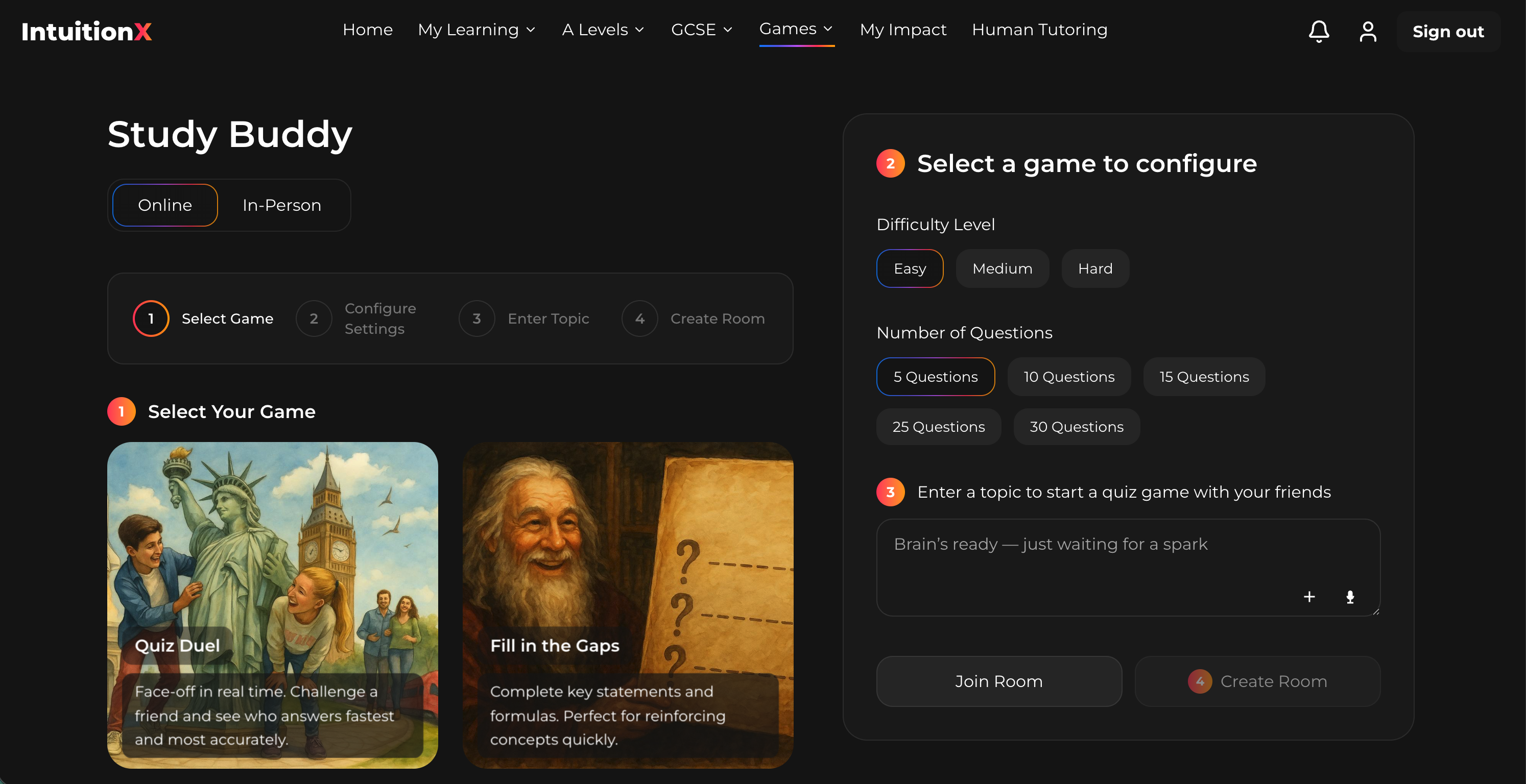
That's exactly what IntuitionX was built for. Our Socratic AI tutor works alongside the resources you've already discovered, adding Oxbridge-level depth and personalised challenge to every session. Whether you're working through English literature themes or exploring humanities concepts, the IntuitionX platform meets you where you are and takes you further. Backed by Sir Anthony Seldon and built on academic excellence, it's the thinking partner your studies deserve. Try it today.
Frequently asked questions
Where can I find reliable, free education resources for humanities and English literature?
OER Project offers high-quality, free curriculum for history and humanities subjects, designed for students and families and ready to use immediately.
How can parents support their child using online resources at home?
Parents can build consistent routines, encourage open discussion about topics, and draw on frameworks like MTSS-R to support literacy and engagement in a structured way.
What do I do if progress stalls or my student gets stuck?
Review your current resources and study habits, adjust the approach based on honest assessment, and use tiered support frameworks like MTSS-R to identify where additional help is needed.
Are free resources as effective as paid tutoring for humanities subjects?
Careful use of high-quality open resources like OER Project can match or exceed outcomes from paid tutoring, particularly when combined with consistent routines and active family involvement.
Recommended
- Elite education access: can online resources close the gap?
- Educational access explained: equity, benchmarks & solutions
- Top ways to democratise learning in high schools for all
- Personalised learning explained: strategies for high school success
- From Diploma to Dream: A Graduate’s Guide to Thriving in 2025 | Honor U