
TL;DR:
- World-class educators possess not only subject expertise but also advanced pedagogical skills that enhance student learning. They actively foster confidence, motivation, and independent thinking, leading to improved academic outcomes and reduced achievement gaps. Systemic support, shared practices, and instructional leadership are essential for sustaining teaching excellence and equitable access.
When you search for a tutor for your child, you probably scan for subject expertise first. An A* in A Level Chemistry, a First from Oxford, a string of impressive results. But the role of world class educators goes far deeper than subject knowledge alone. The teachers and tutors who genuinely transform students are those who understand how to teach, not just what to teach. That distinction changes everything. This guide breaks down what truly makes an educator world class, what the research says about their impact, and how you can use that knowledge to find the right person for your child.
Table of Contents
- What makes an educator world class? exploring general pedagogical knowledge
- The impact of world class educators on student achievement and opportunities
- How world class tutoring transforms student engagement and academic success
- Choosing the right world class educator: what every parent should know
- How world class educators support equity and close achievement gaps
- Reconsidering what makes teaching truly world class
- How IntuitionX supports parents in finding world class educators
- Frequently asked questions
Key Takeaways
| Point | Details |
|---|---|
| GPK defines teaching quality | General pedagogical knowledge allows educators to manage classrooms and adapt instructions, boosting student outcomes. |
| Educators influence opportunity | World-class teachers increase college enrolment and reduce achievement gaps, opening doors for all students. |
| Effective tutoring transforms engagement | Elite tutors who use advanced pedagogy foster curiosity and tailor learning to individual students. |
| Choosing tutors requires care | Parents should verify pedagogical expertise and fit with the student's needs for the best results. |
| Teaching excellence is systemic | Sustainable world-class teaching depends on leadership, collaboration, and coherent school-wide practices. |
What makes an educator world class? exploring general pedagogical knowledge
To understand why world-class educators matter, we first need to explore what sets their teaching expertise apart. Subject knowledge is the price of entry. What separates excellent tutors from exceptional ones is a body of skills known as General Pedagogical Knowledge, or GPK.
GPK covers the craft of teaching itself. It includes:
- Classroom and session management — keeping students focused, reducing wasted time, and building a learning environment that feels safe
- Lesson structuring — sequencing ideas so each concept builds naturally on the last
- Formative assessment — reading student understanding in real time and adjusting accordingly
- Motivational strategies — knowing when to push, when to pause, and when to reframe a concept entirely
This is not abstract theory. Teachers with higher GPK scores correlated positively with PISA 2022 student performance, enabling up to 22% more classroom time for actual teaching and learning. That is a significant difference. In a one-hour tutoring session, that is an extra thirteen minutes of productive learning simply because the educator knows how to structure their time.
Understanding how pedagogy shapes tutoring helps parents see past surface-level qualifications and ask the right questions when selecting support for their child.
Pro Tip: When interviewing a potential tutor, ask them how they assess whether a student has truly understood a concept, not just repeated it back. Their answer will reveal far more about their pedagogical skill than their CV alone.
The impact of world class educators on student achievement and opportunities

Having understood what defines world-class educators, let us examine the tangible effects they have on student success and opportunity. The findings are striking.
The importance of effective teachers extends well beyond exam scores. Consider these outcomes:
- Students with consistently strong teachers demonstrate faster academic progress year on year
- Less advantaged students gain the most from access to high-quality instruction
- The motivational influence of a skilled teacher carries forward into post-secondary choices
- Resilience and independent thinking are actively modelled, not just mentioned
Teacher encouragement increases college enrolment among less-advantaged students by up to 12 percentage points, with the average teacher influencing over 3,000 students in their career. Think about that number. One educator. Over three thousand lives touched.
The role of teachers in student success becomes even clearer when we look at equity. Ensuring equitable access to strong teachers could cut the achievement gap in half, and strategic assignment of the best teachers could close it entirely. That is not a marginal improvement. That is a structural shift in outcomes.
Here is how that plays out in practice, in sequence:
- A student receives a highly skilled tutor matched to their learning style and school context
- Engagement rises because the tutor creates curiosity rather than drilling content
- Confidence builds as the student begins to understand rather than memorise
- Results improve across subjects, not just the one being tutored
- Post-secondary ambitions expand because the student now believes they are capable
"The single most important in-school factor affecting student achievement is the quality of the teacher in front of them." This is not opinion. It is the consistent finding of decades of education research.
Explore how educators and parents can bridge educational gaps at every stage of secondary school, and why education access is a genuine driver of long-term opportunity.
How world class tutoring transforms student engagement and academic success
Let us now explore how world-class tutoring leverages these educational principles to actively engage students and support their success. There is a meaningful difference between a tutor who covers the syllabus and one who makes a student fall in love with learning.
The qualities of world class educators show up most clearly in how they approach a session. Elite tutors:
- Diagnose learning gaps before they attempt to fill them
- Use Socratic questioning to build reasoning skills, not just recall
- Adapt the pace and framing of content based on real-time responses
- Connect abstract concepts to things the student already cares about
- Track progress across sessions and adjust their approach accordingly
World-class educators in elite tutoring co-create materials with subject-matter experts, transforming rote memorisation into discovery and fostering genuine curiosity. The result is a student who does not just know the answer, but understands why it is the answer.
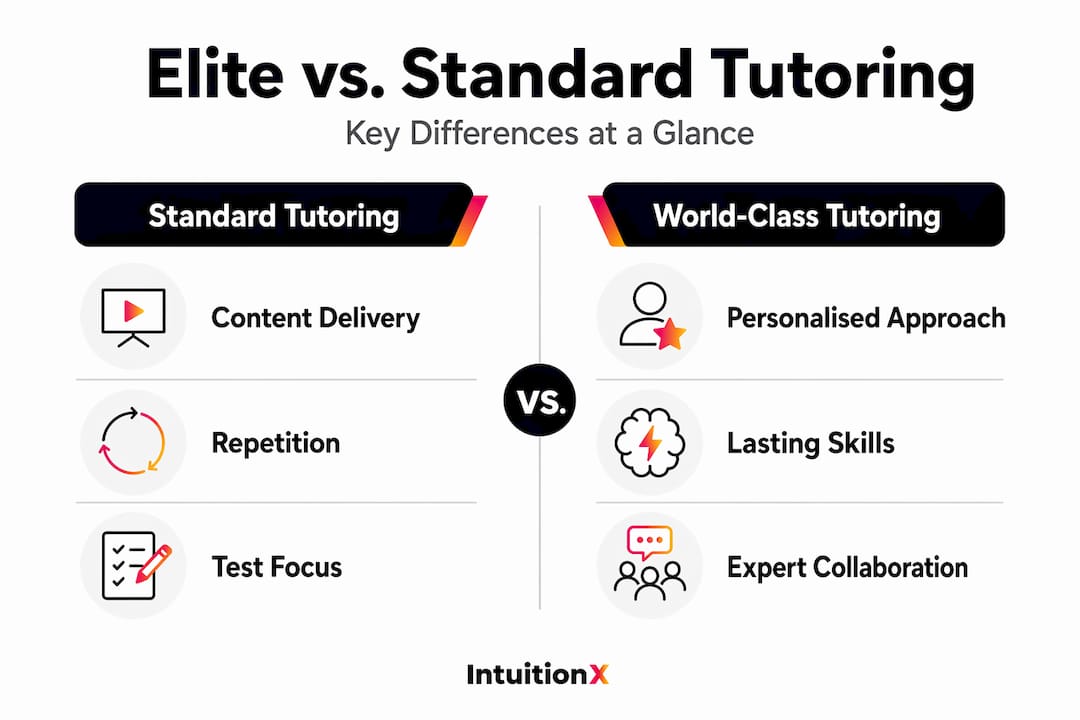
Here is a comparison of how standard and world-class tutoring approaches differ in practice:
| Approach | Standard tutoring | World-class tutoring |
|---|---|---|
| Session focus | Content delivery | Understanding and inquiry |
| Student role | Passive recipient | Active participant |
| Assessment style | End-of-session quiz | Ongoing formative checks |
| Motivation strategy | Praise for correct answers | Curiosity and challenge |
| Adaptation | Rarely adjusted | Continuously refined |
| Long-term outcome | Short-term grade improvement | Confidence and independent thinking |
Pro Tip: Ask any tutor you are considering to describe a moment when they completely changed their teaching approach mid-session. World-class educators do this instinctively. Those who struggle to recall an example may not yet have the adaptive skill your child needs.
Discover more about how tutors boost engagement and what personalised tutoring looks like for secondary students in the UK.
Choosing the right world class educator: what every parent should know
After understanding what makes world-class educators effective, it is crucial to know how to select the right tutor for your child's unique needs. It is easier than you might think to be misled by impressive credentials.
Here is a practical framework for evaluating any tutor or educational programme:
- Verify formal pedagogical training. A degree in a subject is not the same as training in how to teach it. Look for evidence of teacher education, mentoring experience, or formal qualification in pedagogy.
- Ask about professional collaboration. Do they work alongside other educators? Do they update their approach based on new research? Isolated tutors who never develop their practice tend to plateau.
- Check alignment with your child's school. Tutor effectiveness drops by 0.12 SD if the tutor is not well matched to the student's school context, according to OECD findings. A tutor preparing students for AQA assessments using Edexcel methods, for example, adds friction rather than progress.
- Observe how they handle confusion. Watch a trial session. Does the tutor respond to a confused student with a different explanation, or just a louder version of the first one?
- Beware of fast-track certifications. Traditional training programmes consistently outperform fast-track alternatives in developing teaching effectiveness. A short course alone does not produce a world-class educator.
Key qualities of world class educators to watch for:
- They ask more questions than they answer
- They celebrate effort and reasoning, not just correct answers
- They communicate progress clearly to both student and parent
- They adapt materials to the student's interests and school context
- They are genuinely curious themselves
Explore pedagogy for effective tutoring and personalised learning strategies to understand what this looks like in the context of secondary school.
Pro Tip: Request a brief written summary after the first three sessions. How the tutor documents your child's progress reveals how systematically they are thinking about learning, not just covering content.
How world class educators support equity and close achievement gaps
Understanding how world-class educators contribute to student success leads naturally to recognising their role in promoting equity and fairness. Achievement gaps do not appear out of nowhere. They are built, slowly, by uneven access to excellent teaching.
The impact of quality educators on equity is well documented:
| Factor | Schools with strong teacher allocation | Schools without strong teacher allocation |
|---|---|---|
| Achievement gap trajectory | Narrowing over time | Widening or stagnant |
| Student confidence levels | Higher | Lower |
| Post-16 progression rates | Stronger | Weaker |
| Disadvantaged student outcomes | Significantly improved | Persistently below average |
Strategically assigning strong teachers could close achievement gaps entirely, underlining that teaching quality is the single most important in-school factor. And this is not just about assigning talented individuals. Well-prepared teachers with deep content and pedagogical knowledge close gaps through sustained professional development, not isolated brilliance.
What systemic support actually looks like in practice:
- Ongoing CPD (Continuing Professional Development) that keeps educators current and reflective
- Instructional coaching within schools, where experienced teachers model best practice for newer colleagues
- Shared planning time so teachers are not developing lessons in isolation
- Data-informed teaching that helps educators identify struggling students before they disengage entirely
"The best educators do not just help individual students. They shift the culture of learning in the rooms they inhabit."
Find out more about elite education access and the proven role of tutoring in closing the gap for students at every level.
Reconsidering what makes teaching truly world class
Here is something most articles on this topic miss entirely. We tend to celebrate world-class educators as individuals, as those rare, charismatic teachers who somehow inspire everyone they meet. But the most durable teaching excellence is not a solo act.
World-class educators prioritise instructional leadership, systemic coherence, and sustained support rather than relying on charisma alone. That is a fundamentally different picture from the inspirational-teacher narrative we inherit from films and popular culture.
In practical terms, this means the best tutors and teachers are not the ones who perform brilliance in isolation. They are the ones who embed great practices that outlast any single session. They build habits in students. They create conditions where curiosity becomes a default state, not a lucky accident.
For parents, this insight is useful. Do not just look for a tutor your child likes. Look for a tutor whose methods your child internalises. The goal is not dependency on a brilliant guide. The goal is a student who can think, question, and learn independently long after the tutoring sessions end.
Schools and programmes that build genuine instructional leadership, shared knowledge, and sustained professional communities consistently produce better outcomes than those relying on individual superstars. That same principle applies to how tutoring relationships are structured. Understanding how pedagogy shapes effective tutoring helps you look for systemic quality, not just individual charm.
How IntuitionX supports parents in finding world class educators
If this article has given you a clearer picture of what world-class teaching actually looks like, you are now better placed to make a meaningful choice for your child. But knowing what to look for and finding it are two different challenges.
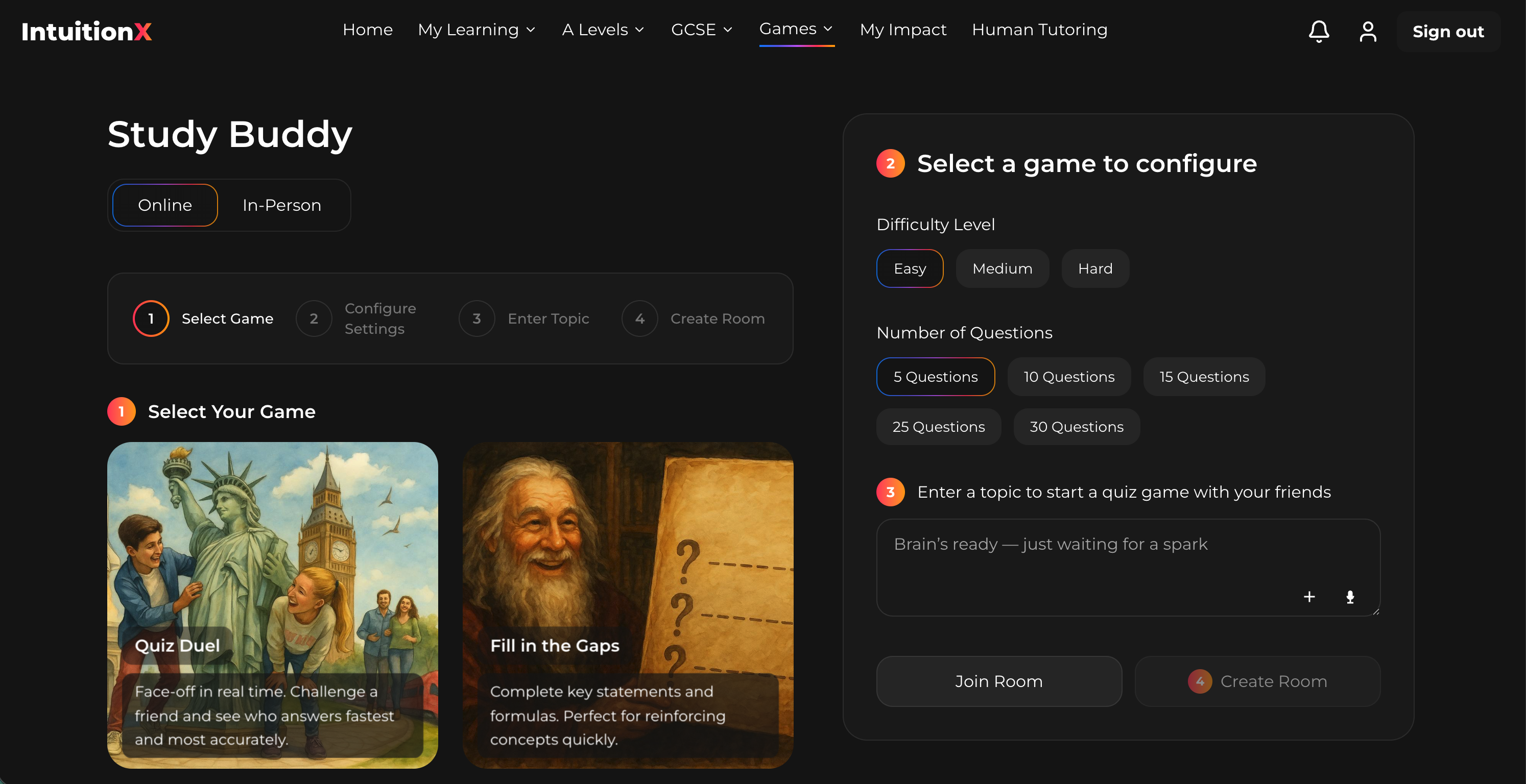
IntuitionX was built to close exactly that gap. Our AI tutor, Omniscience, is not a search engine for content. It is a learning companion built on the pedagogical methods, personality, and memory science of Oxbridge-educated academics who earned A*s at A Level and Firsts from Oxford and Cambridge in their subjects. Sir Anthony Seldon, described by the BBC as one of Britain's leading educationalists, backs our approach, saying: "If you are serious about staying ahead in the age of AI, try IntuitionX today." Start your child's learning journey with IntuitionX and experience the difference that world-class pedagogy actually makes.
Frequently asked questions
What is general pedagogical knowledge (GPK) and why does it matter?
GPK is the specialised teaching expertise that enables educators to manage learning environments and facilitate understanding regardless of the subject. It matters because GPK correlates strongly with improved student performance and enables significantly more productive learning time per session.
How do world class educators impact students beyond academics?
They actively nurture resilience, motivation, and confidence, which improve long-term personal development. Teacher encouragement increases college enrolment among less-advantaged students by up to 12 percentage points, showing influence that extends well beyond grades.
What should parents look for in elite tutors?
Parents should verify formal pedagogical training, check evidence of professional development, and ensure the tutor's approach aligns with their child's school context and learning style. Mismatches in school context measurably reduce tutor effectiveness, so fit matters as much as qualification.
Can access to world class educators reduce achievement gaps?
Yes, and the data is unambiguous. Equitable access to strong teachers could cut achievement gaps in half, and strategically assigning the best teachers where they are most needed could close those gaps entirely.