

TL;DR:
- Elite education methods focus on active engagement, reasoning, and mastery over rote learning.
- Classical trivium stages promote knowledge acquisition, reasoning, and persuasive communication for better results.
- Home application of structured, active, and mastery-based strategies can significantly enhance teenagers' learning outcomes.
Every parent wants the best for their teenager. But "the best" can feel locked behind school fees, postcodes, or connections you simply don't have. The good news? Elite results are far less about where your child studies and far more about how they study. This article unpacks four evidence-based approaches, from classical methods to mastery learning, that are already transforming outcomes for students in the UK and US. Better still, most of them can be adapted for your home, your budget, and your teenager's actual schedule. Let's get into it.
Table of Contents
- What makes an education method truly 'elite'?
- The trivium method: Classical structure and modern impact
- Project-based learning: Driving engagement and real-world skills
- Mastery learning: Progress through deep understanding
- Why affordable, active learning outpaces exclusivity
- Transform your teen's learning with elite-inspired tools
- Frequently asked questions
Key Takeaways
| Point | Details |
|---|---|
| Elite methods can be affordable | Structured strategies like the trivium or mastery learning do not require expensive schools. |
| Focus on active learning | Techniques that encourage expression and reasoning drive better long-term results. |
| Project-based works everywhere | Public schools and families can both boost engagement and skills with themed projects. |
| Watch for selection bias | School brand alone does not explain results; method matters far more than label. |
What makes an education method truly 'elite'?
The word "elite" gets thrown around a lot in education. But what does it actually mean when we strip away the branding, the uniforms, and the eye-watering fees?
Truly elite methods share a set of core features. They are not about passive reception of information. They demand that students actively engage, defend ideas, and demonstrate understanding in real time. Research into elite pedagogical methods consistently shows that the highest-performing approaches emphasise reasoning, expression, and genuine mastery of content rather than rote repetition.
Here is what separates a high-impact method from a mediocre one:
- Active learning: Students do the intellectual heavy lifting, not just the teacher.
- Rigour: Content is challenging and sequenced to build genuine depth.
- Personal expression: Students must articulate and defend their thinking, in writing and verbally.
- Stretch: Learning is pitched just beyond a student's current comfort zone.
- Feedback loops: Regular, specific feedback that drives improvement.
Outcomes from these methods include stronger exam scores, higher academic confidence, and greater access to Russell Group and Ivy League universities. It is worth noting, however, that private school results must be read with some scepticism. Studies show that private schools show approximately +0.18 standard deviation gains in test scores and positive GPA effects, but causality is complicated by selection bias. In other words, results are partly because of who attends, not only how they are taught.
This is actually encouraging news for parents. It means that method matters enormously. You can find online resources and elite access that bring these techniques directly to your teenager, without the fees.
"The best education is not about the building. It is about the quality of the intellectual conversation happening inside it."
Pro Tip: Socratic discussion, where students are questioned rather than told, is one of the most powerful elite methods. You can do this at the dinner table tonight, for free.
The trivium method: Classical structure and modern impact
With the criteria in mind, let us break down a classical method that is delivering extraordinary results in the modern high school context.
The trivium is a three-stage framework rooted in classical education. It has been quietly powering some of the most impressive academic results in the UK. Here is how the three stages work:
- Grammar: This is the foundation stage. Students systematically acquire knowledge through structured input, memorisation, and disciplined study. Think vocabulary, dates, formulas, and the building blocks of a subject.
- Logic: Here, students test the depth of their knowledge. They identify patterns, challenge assumptions, spot fallacies, and begin to reason independently within a subject.
- Rhetoric: The final stage focuses on verbal and written argument. Students must communicate their understanding persuasively, defending positions with evidence and clarity.
This is not theory. The results speak clearly. In 2024, 96% of A-level grades at the New Classical School were B or above, a figure that outpaced Eton. That is a remarkable achievement, and it was built on the trivium framework rather than enormous resources or selective intake.
What makes this exciting for parents is that the trivium is genuinely replicable. The logic stage, for example, maps perfectly onto active learning for A levels, which research shows dramatically improves retention and critical thinking. You do not need a classical school to benefit from this approach.
Pro Tip: Try a Socratic circle at home once a week. Pick a topic from your teen's current studies. Ask them to explain it to you, then gently challenge their reasoning. This mirrors the tutorial-style questioning used at Oxford and Cambridge, and it costs nothing.
Project-based learning: Driving engagement and real-world skills
If classical models focus on structure, project-based learning flips theory into action. And the results from one US public school make a compelling case for why it works.
Franklin High School transformed a low-income, low-performing student population using project-based learning blocks, ultimately winning School of the Year. This was not a selective intake or a wealthy district. It was a school that changed its methods, not its students.
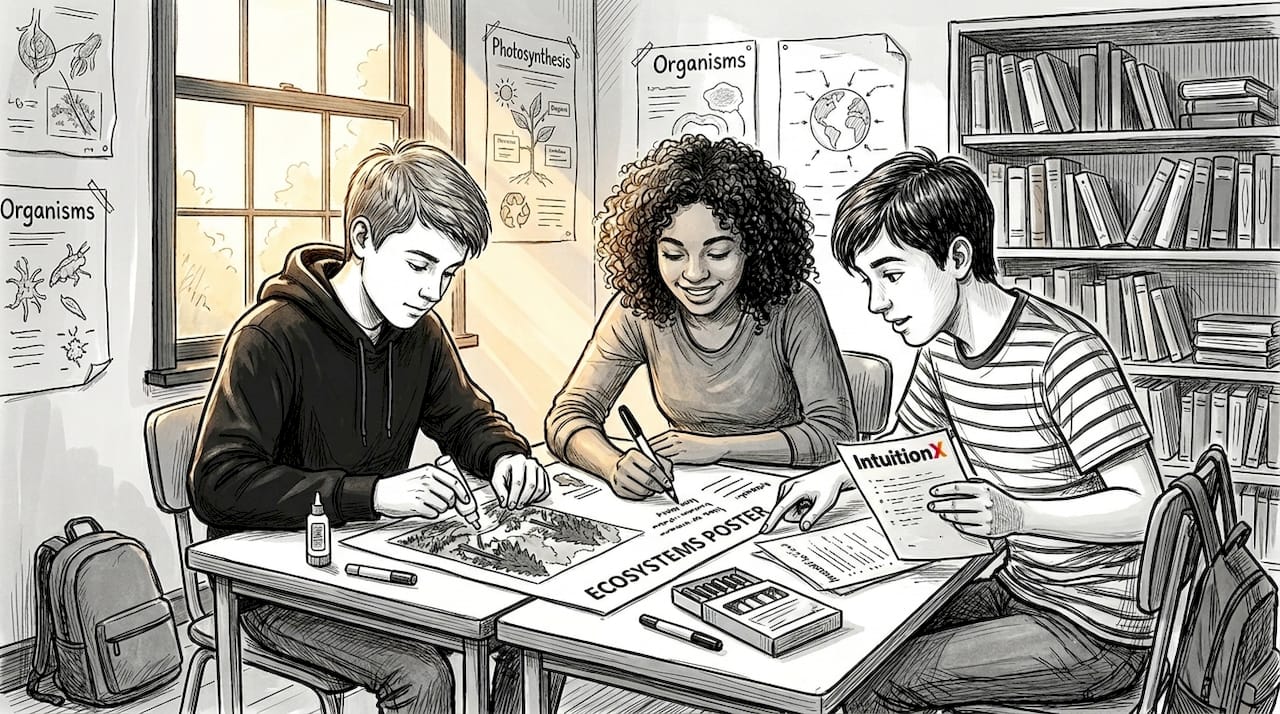
The model at Franklin used 90-minute lecture blocks, two-hour dedicated project times, and real-world themes that connected schoolwork to genuine challenges. The results included higher engagement, stronger critical thinking, and improved resilience among students who had previously been written off.
Here is how you can bring project-based learning principles home:
- Choose a real-world theme: Ask your teen to investigate something that genuinely matters to them, whether that is climate science, local history, or a business idea.
- Set aside dedicated time: Block out regular weekly sessions rather than squeezing projects into spare moments.
- Encourage collaboration: Invite a friend or sibling to join. Group problem-solving mirrors the PBL classroom dynamic.
- Showcase the outcome: Whether it is a presentation, a short essay, or a prototype, giving the project an audience raises the stakes in the best way.
| Approach | Engagement level | Critical thinking | Exam performance |
|---|---|---|---|
| Traditional lecture | Low to moderate | Passive | Variable |
| Project-based learning | High | Active and applied | Improved, especially for at-risk students |
"When students work on problems that feel real, they stop asking 'why do I need to know this?' That question disappears."
Explore active learning strategies to see how these principles translate across subjects. The goal, as with all of these methods, is to democratise learning so that every student has access to the kind of education that actually builds capability.
Mastery learning: Progress through deep understanding
Moving from engagement to depth, mastery learning offers a research-backed way to lock in genuine progress across subjects.
The core principle is simple but powerful. No student moves forward until they have demonstrated 80 to 90 per cent mastery of the current material. This sounds obvious, yet most traditional schooling does the opposite. Students are pushed forward on a fixed calendar, gaps and all.
The Education Endowment Foundation found that mastery learning delivers an average of five months' additional progress for students, with particularly strong effects in maths and science. It is also rated as very low cost, making it one of the most efficient interventions available to families.
Here is the typical mastery cycle:
| Stage | What happens |
|---|---|
| Diagnose | Identify specific gaps through a short test or quiz |
| Support | Targeted practice on weak areas only |
| Retest | Reassess until mastery threshold is reached |
| Advance | Only then does the student move to new content |
Three practical steps for applying mastery learning at home:
- Start with a diagnostic: Use a short quiz or past paper question to find out exactly where your teen is struggling, not just where they feel uncertain.
- Practise in targeted cycles: Focus only on the gap identified. Avoid the temptation to review everything at once.
- Retest before moving on: This is the non-negotiable step. Confirm mastery before introducing new content.
Pairing this approach with personalised learning strategies makes it even more powerful. You can also draw on this affordable education resources guide for free and low-cost tools to support every stage.
Pro Tip: Khan Academy and Anki are free tools that are perfectly suited to mastery cycles. Khan Academy provides targeted practice by topic, while Anki uses spaced repetition to lock in knowledge at exactly the right intervals.
Why affordable, active learning outpaces exclusivity
Here is something the education industry rarely says aloud. Paying more does not reliably buy better learning. It often buys better selection, better facilities, and stronger networks. Those things have real value. But the actual pedagogy, the methods that produce thinkers rather than test-passers, is not proprietary to any school.
What the trivium, project-based learning, and mastery learning share is a commitment to active intellectual effort. Students must reason, argue, apply, and reflect. They are not passengers. That shift in dynamic is what drives real growth, and it is entirely reproducible without a fee-paying postcode.
The evidence from elite pedagogical methods confirms that tutorial-style reasoning and structured expression work not because of location or budget, but because they force genuine cognitive engagement. The uncomfortable truth is that a teenager working through mastery cycles with free tools, or debating ideas at home using Socratic questioning, may be getting a more rigorous education than a peer sitting passively in an expensive classroom.
True advantage comes from structured challenge and empowered self-expression. These are things you can build at home, starting this week. Explore how effective learning strategies are already helping students access that advantage without the price tag.
Transform your teen's learning with elite-inspired tools
The methods in this article are powerful. But putting them into practice consistently, across subjects, week after week, is where most families struggle. That is exactly the gap that IntuitionX was built to close.
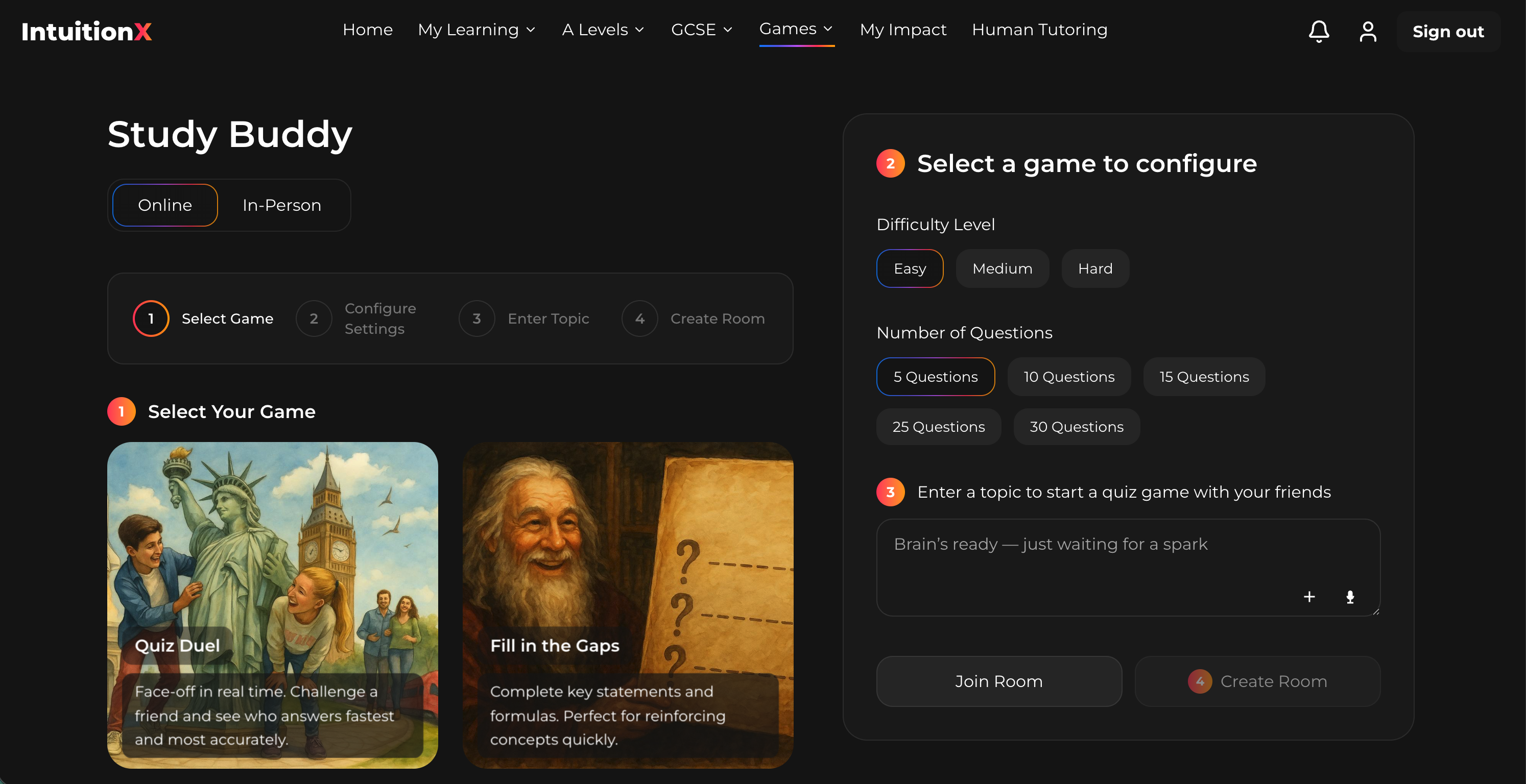
IntuitionX is a 24/7 Socratic AI tutor built on Oxbridge-level intelligence. It adapts active questioning, mastery cycles, and structured challenge to your teen's individual needs, every session. Backed by Sir Anthony Seldon and built on the brains of Oxford and Cambridge graduates, it brings elite pedagogical methods home, affordably and at any hour. Discover how IntuitionX can put these frameworks to work for your teenager today.
Frequently asked questions
Can parents replicate elite education methods at home affordably?
Yes, key methods like the trivium, project-based learning, and mastery learning can be applied at home using free guides and tools. Free tools like Khan Academy and the Socratic approach adapt elite strategies without any cost.
Which elite education method has the most proven impact?
Mastery learning delivers an average of five months' extra progress for students, with particularly strong effects in maths and science, making it one of the most evidence-backed approaches available.
Are elite education results just due to selection effects?
Partly, yes. Selection bias and grading differences account for some of the performance gap in private schools, which means the method matters more than the school type when choosing how to support your teenager.
How can project-based learning be used at home?
Set aside regular weekly project time, choose real-world themes your teen finds meaningful, and encourage collaborative problem-solving to build the kind of engagement that transforms academic performance.