
TL;DR:
- Education access is essential for individual success and societal economic growth.
- Barriers include cost, location, digital divide, and lack of tailored support.
- Parents can leverage technology, community resources, and advocacy to improve their child's learning opportunities.
By 2030, the failure to educate children properly could cost the global economy $6 trillion every year. That is not a typo. Education is not simply a personal advantage for your child; it is a societal necessity that shapes economies, health outcomes, and social wellbeing on a global scale. For parents in the UK and US, understanding why education access matters has never been more urgent. In this guide, we explain what education access really means, who it affects, and what you can practically do to ensure your child is not left behind.
Table of Contents
- The life-changing impact of education access
- What does education access look like today?
- Who is left behind? Gaps and consequences of unequal access
- Making education access real: what parents and communities can do
- Why equity, not just access, is the education conversation parents need
- How IntuitionX helps you close education access gaps
- Frequently asked questions
Key Takeaways
| Point | Details |
|---|---|
| Access changes lives | Improved education access leads to better well-being, economic prospects, and life satisfaction. |
| Barriers persist everywhere | Income, geography, and resources remain major obstacles to quality education, even in developed countries. |
| Equity is crucial | Lasting improvement comes not just from wider access, but from tailored support that meets every child’s needs. |
| Parents can drive change | Advocacy, technology, and community solutions empower parents to unlock better educational outcomes. |
The life-changing impact of education access
The connection between education and life outcomes is not subtle. Children who receive a quality education earn more, live longer, report better mental health, and make stronger contributions to their communities. These are not abstract promises; they are backed by robust data.
Consider this: lacking basic skills could cost the world $10 trillion annually by 2030. That figure exceeds the combined GDPs of France and Japan. When children miss out on meaningful learning, society pays an enormous price. But beyond the numbers, there is a deeply human cost that every parent understands instinctively.
Research confirms that education attainment correlates strongly with personal well-being, with a correlation coefficient of r=0.709. In plain terms, children who achieve more educationally tend to report greater life satisfaction, confidence, and emotional resilience. That is a compelling reason for every parent to care deeply about not just whether their child is in school, but whether they are truly learning.
So what gets in the way? The barriers to genuine education access are more varied than most people realise:
- Cost: Private tutoring in the UK and US can run to £100 or $150 per hour, pricing out millions of families.
- Location: Rural students often lack access to specialist teachers, enrichment programmes, and extracurricular support.
- Tailored support: Students with special educational needs or those who learn differently often find standard classroom approaches miss the mark entirely.
- Digital divide: Unreliable internet or lack of devices shuts students out of online learning opportunities.
- Engagement: 73% of UK students are not actively engaged in learning, and in the US, 80% report feeling bored in class.
"Access to education is not just about having a seat in a classroom. It is about having the support, resources, and opportunities to genuinely thrive."
Pro Tip: If your child seems disengaged or stressed about school, explore proven engagement strategies that can rekindle their curiosity and confidence. Small changes in how learning is approached can make a significant difference, particularly during the high school years when motivation often dips. Personalising the experience using personalised strategies for high school success is one of the most effective moves any parent can make.
What does education access look like today?
Education access is more than a child simply attending school. True access means that a student receives quality teaching, adequate support for their individual needs, and a genuine opportunity to progress regardless of their background or postcode.

Unfortunately, that vision is far from universal, even in wealthy countries like the UK and US. Only 26% of disadvantaged youth complete higher education, compared to 70% of their more advantaged peers, according to OECD data. That gap is not simply about talent; it reflects deep structural inequalities in access to resources, support, and opportunity.
Here is a snapshot comparison of education access factors in the UK and US:
| Factor | UK | US |
|---|---|---|
| Private tutoring cost | Up to £100/hr | Up to $150/hr |
| State school funding gaps | Significant by region | Significant by district |
| Digital access in rural areas | Improving but uneven | Major gaps persist |
| Special needs provision | Variable by local authority | Variable by state |
| Higher education completion (disadvantaged) | Around 26% | Around 26% |
The barriers that prevent meaningful access include:
- Income inequality: Wealthier families invest heavily in private tutoring and enrichment, widening the attainment gap.
- Postcode lottery: In both the UK and US, the quality of your local school can vary enormously depending on where you live.
- Special educational needs: Students who need tailored approaches often find mainstream schooling insufficient.
- Rural isolation: Limited transport and fewer specialist teachers make quality education harder to reach outside urban centres.
Understanding what equity means in education helps parents see beyond basic access. Getting through the school gates is just the first step. Whether your child thrives once inside depends on much more. Parents can play a powerful role in democratising learning in high schools by seeking out tools and support that level the playing field.
Who is left behind? Gaps and consequences of unequal access
Not all children feel the effects of limited education access equally. Certain groups face much steeper barriers, and the consequences follow them for decades.
The groups most consistently left behind include:
- Children from low-income families who cannot afford tutoring, enrichment activities, or reliable internet access.
- Students in rural communities where teacher shortages and fewer specialist courses limit learning options.
- Learners with special educational needs who require bespoke support that underfunded schools struggle to provide.
- Children from minority or migrant backgrounds who may face language barriers or cultural disconnects in standard curricula.
The consequences of falling through these cracks are serious and lasting. Lower attainment at school predicts reduced career choices, lower lifetime earnings, and poorer health outcomes. The well-being gap compounds over time.
At a global level, the picture is even starker. Sub-Saharan Africa loses between 19% and 26% of GDP due to low education access. Nearly 800 million children worldwide have no access to education at all. These numbers matter to UK and US parents too, because the world your child will work and live in is shaped by global learning outcomes.
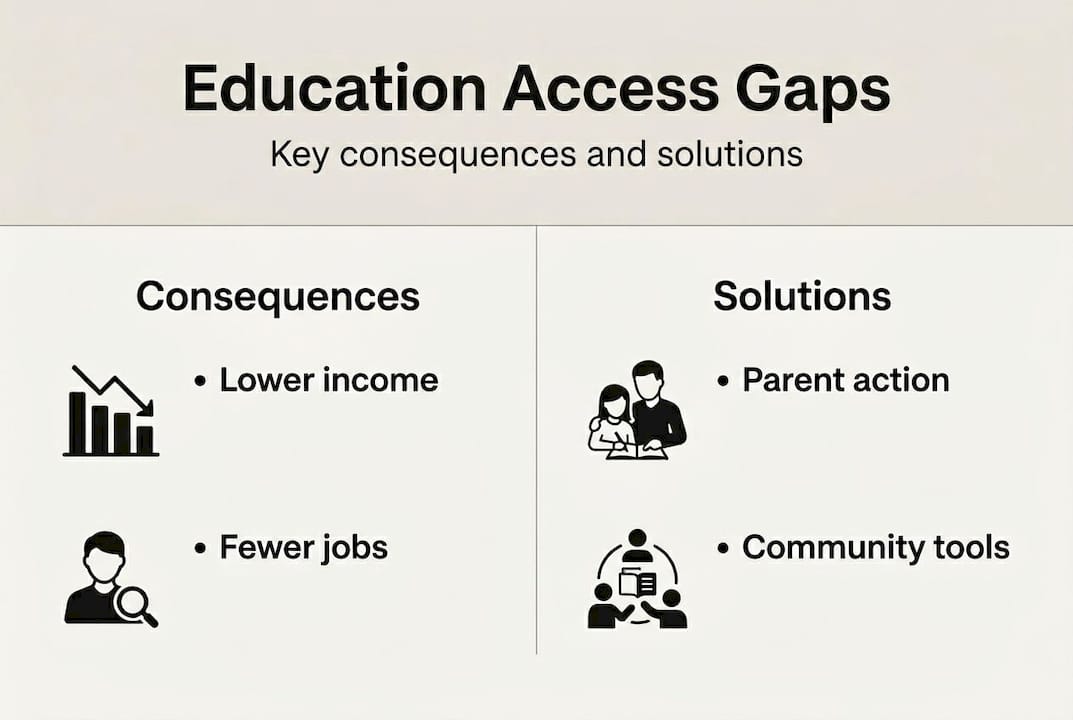
Here is a quick look at how the attainment gap plays out:
| Group | Typical outcome without intervention |
|---|---|
| Low-income students | 44% less likely to enter higher education |
| Rural students | Fewer subject choices, lower attainment |
| Special needs learners | Higher risk of school exclusion |
| Disengaged students | 3x more likely to leave school early |
The good news? Parents have more tools than ever to bridge these gaps. Affordable online resources for closing access gaps now make expert-level support accessible from a family home, without the £100-per-hour price tag. Exploring affordable resources for students is a practical first step any family can take today.
Pro Tip: If your child is disengaged, do not wait for the school to flag it. Ask them what subjects feel confusing or boring, and look for tools that make those topics feel relevant and achievable.
Making education access real: what parents and communities can do
Educational engagement boosts learning outcomes and can meaningfully mitigate access inequities. Parents who take an active role in their child's learning journey create a genuine advantage, regardless of household income.
Here are the most effective steps you can take right now:
Identify your child's specific needs first. Not every student struggles for the same reason. Is it a specific subject? Confidence in asking questions? Lack of stimulating challenge? Once you know the real issue, you can find the right solution.
Leverage technology. The educational technology trends shaping 2026 make it possible for any student to access expert teaching at a fraction of traditional costs. AI tutoring, interactive platforms, and on-demand support have transformed what is possible.
Seek community solutions. Local libraries, community learning centres, and parent networks often have free or low-cost resources. Do not overlook what is available nearby.
Talk openly with your child's school. Many families do not realise the range of support their school can offer. A direct conversation with a form tutor or head of year can unlock targeted help.
Here is a simple action plan for parents:
- Sit down with your child and identify the subjects or skills they find most challenging.
- Research free and affordable digital tools using guides to effective learning strategies.
- Set up a regular learning routine at home, even 20 minutes a day makes a difference.
- Explore AI tools for smarter learning that adapt to your child's pace and style.
- Advocate at school and locally for better access, more resources, and tailored support.
Pro Tip: Consistency beats intensity. Twenty focused minutes of engaged learning each day outperforms two hours of passive study every time. Build the habit first, then build the duration.
Why equity, not just access, is the education conversation parents need
Here is something most articles will not tell you: access alone is not enough. You can open every door for every student and still recreate the same old inequalities on the other side.
True educational transformation requires equity. That means recognising that two students sitting in the same classroom may need entirely different kinds of support to genuinely flourish. A one-size-fits-all approach, whether it is a standard classroom or a generic AI tool that writes essays rather than building understanding, simply recreates the problem in a new format.
Parents are the most powerful advocates for this shift. You are not just lobbying for your child to have a seat at the table. You are lobbying for the table to be designed so that every child at it can actually benefit. Ask your school what personalised support looks like. Demand more than tick-box inclusion. Explore solutions that meet your child where they are, not where the curriculum assumes they should be.
Real progress happens when we move beyond the question of "does every child have access?" and start asking "is every child genuinely supported to succeed?" Understanding equity benchmarks and solutions helps you ask better questions, advocate more effectively, and make smarter choices for your family.
How IntuitionX helps you close education access gaps
If you are serious about giving your child every possible advantage, without paying £100 an hour for a private tutor, IntuitionX was built for exactly this moment.
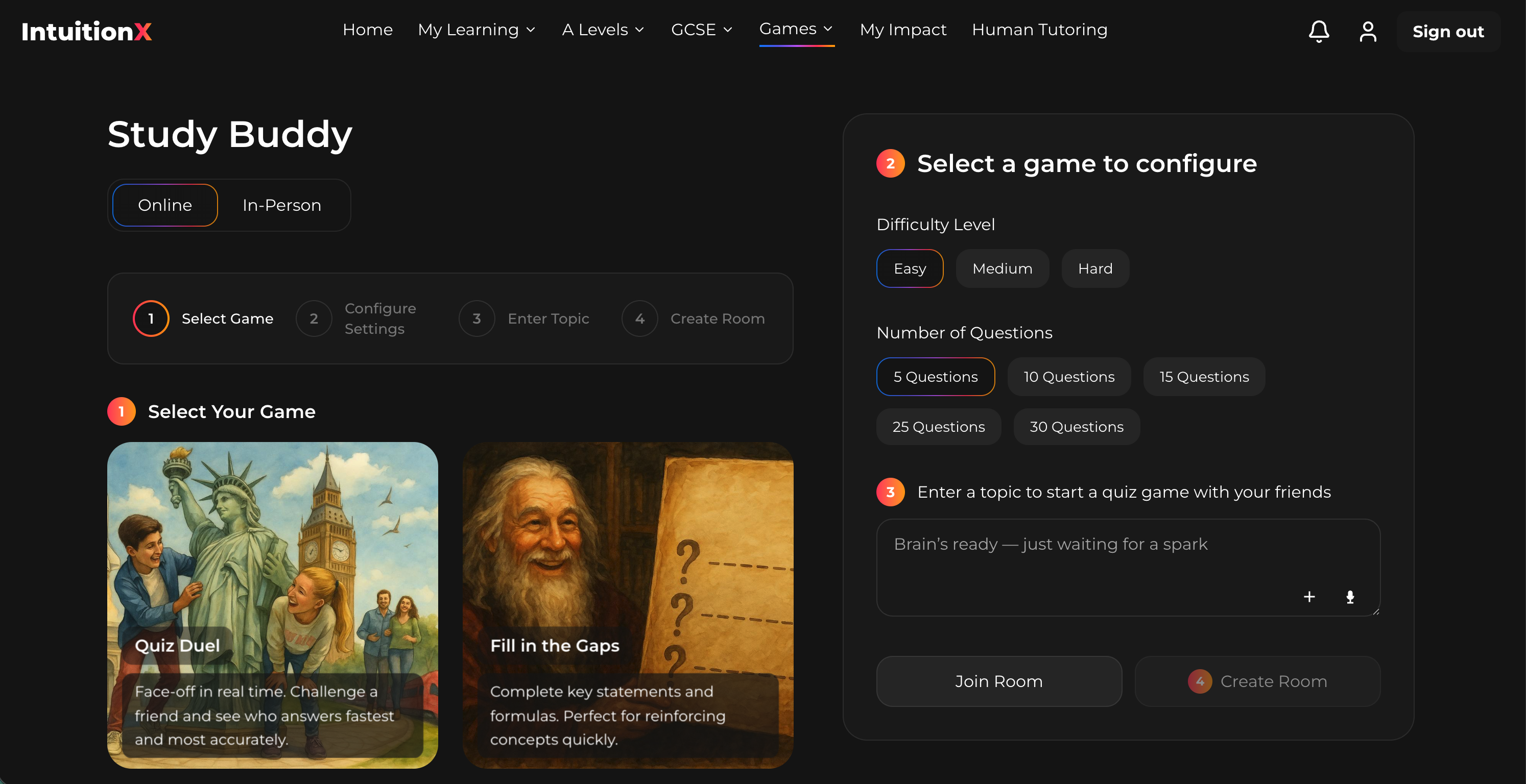
IntuitionX is a 24/7 Socratic AI tutor built on Oxbridge-level academic intelligence, designed to make elite education accessible to every family. Rather than doing the work for your child, our AI asks the right questions to build genuine understanding, confidence, and curiosity. It is backed by Sir Anthony Seldon, one of Britain's leading educationalists, and 10% of every subscription funds educational programmes for children in crisis zones worldwide. Explore the IntuitionX AI tutor today, or start learning with IntuitionX and give your child the support they deserve.
Frequently asked questions
What is education access in simple terms?
Education access means every child has the opportunity, resources, and support to learn and succeed, regardless of their background or family income.
What are the most common barriers to education today?
Major barriers include family income, geography, internet access, special educational needs, and the significant differences between public and private schooling in both the UK and US.
How does better educational access boost well-being?
Better access to quality learning is strongly linked to improved well-being and life satisfaction, with research showing a correlation of r=0.709 between educational attainment and subjective well-being.
What practical steps can parents take to improve their child's access?
Parents can use technology, connect with local support networks, and maintain open dialogue with schools to identify and unlock more personalised learning opportunities for their child.