
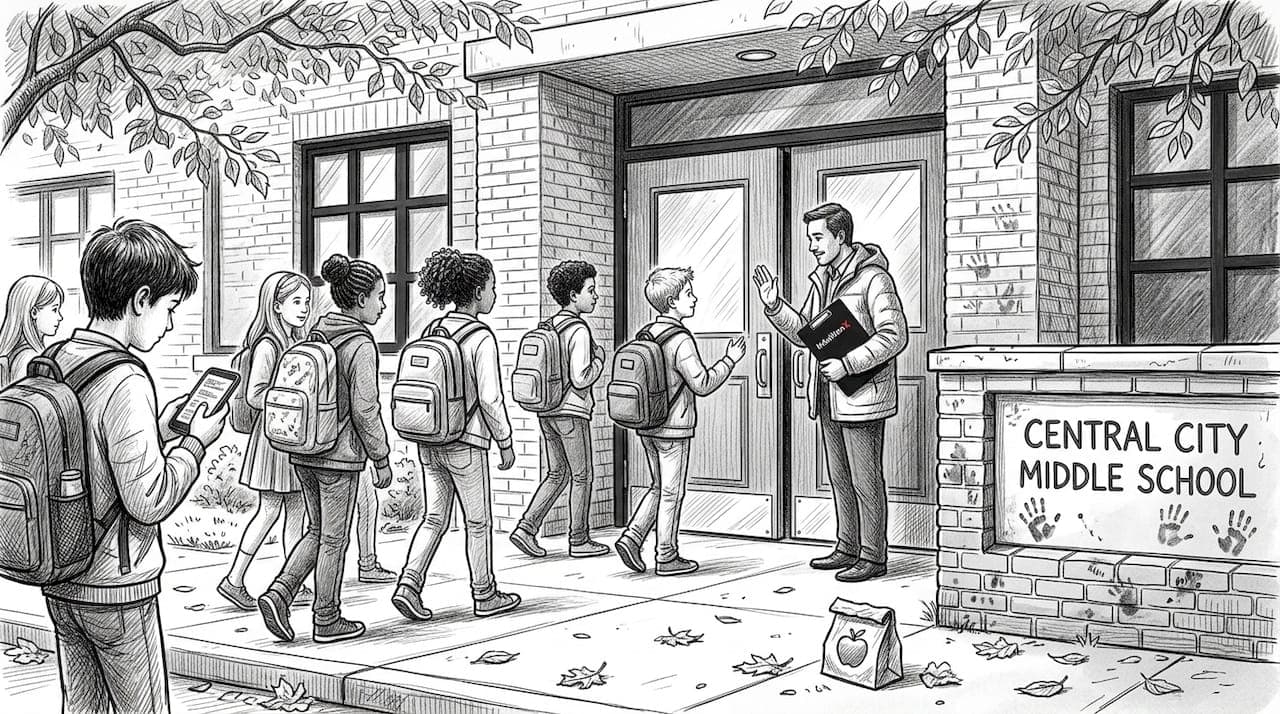
Millions of children sit in classrooms every day without genuinely learning. Enrolment figures look promising on paper, but the 2026 UNESCO GEM Report makes it clear: true educational access requires equity in outcomes, high standards, and personalised support to remove real barriers. It is not simply about getting through the school gate. For parents, educators, and students, understanding what genuine access looks like, how it is measured, and what can be done about it, is one of the most important conversations we can have right now.
Table of Contents
- What does educational access mean?
- Key indicators and benchmarks for educational access
- Mechanics and methodologies: how access works in practice
- Nuances, challenges, and equity gaps in educational access
- Debates: equity versus excellence and pitfalls in educational access
- Practical applications: innovative solutions for improving access
- Discover educational AI solutions for equitable access
- Frequently asked questions
Key Takeaways
| Point | Details |
|---|---|
| Educational access is multifaceted | It includes enrolment, progression, safe environments, and genuine opportunities to learn. |
| Benchmarks reveal persistent gaps | While global progress exists, equity gaps remain especially for disadvantaged groups. |
| Nuanced challenges require targeted solutions | Policy, technology, and inclusive practice are needed to address intersectional barriers. |
| Debate balances equity and excellence | Maintaining high standards while ensuring access is central to sustainable reform. |
| Innovative tools can bridge the divide | AI and adaptive solutions offer promising ways to personalise learning and support equity. |
What does educational access mean?
Let's begin by breaking down exactly what educational access covers, and why it matters far beyond the classroom door.
Most people assume access means a child has a school place. That is a start, but it is nowhere near the full picture. According to the UNESCO IIEP Glossary, educational access includes enrolment at the right age, regular attendance, progression through learning consistent with national standards, a safe environment, and equitable opportunities for every student regardless of background.
Think about what that actually means. A student can attend school every day and still lack access if they are sitting in an overcrowded classroom, falling behind without support, or too anxious to ask a question. In fact, 91% of students in the US report feeling nervous about asking questions in class. That is not access. That is presence without participation.
Here is a quick summary of what genuine access involves:
- Enrolment at the appropriate age, without over-age entry
- Regular, consistent attendance throughout the academic year
- Progression without unnecessary repetition of year groups
- A safe, inclusive learning environment free from discrimination
- Equitable opportunities regardless of gender, income, or location
"True educational access is not a door you open once. It is a pathway you maintain, every single day, for every single learner."
Key indicators and benchmarks for educational access
Having clarified the meaning of educational access, we can now look at how it is measured and what the numbers reveal worldwide.
Measuring access requires concrete data. The SDG 4 indicators include out-of-school rates, completion rates, participation in early childhood education, tertiary gross enrolment ratios, and parity indices that compare access for disadvantaged groups against the majority.
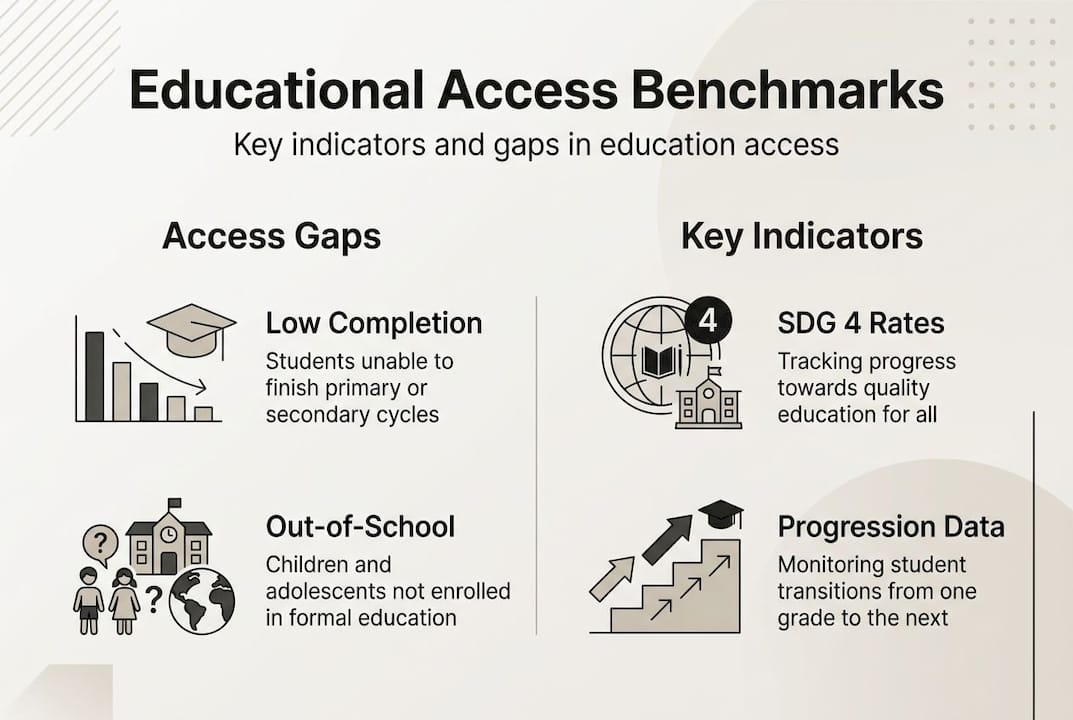
The numbers are sobering. Out-of-school rates reach between 10% and 20% in several regions. Upper secondary completion continues to lag, particularly in lower-income countries. And the socioeconomic gap is stark: only 26% tertiary attainment is recorded for students from low socioeconomic backgrounds, compared to 70% for those whose parents had high socioeconomic status.
| Indicator | Low SES students | High SES students |
|---|---|---|
| Tertiary attainment | 26% | 70% |
| Upper secondary completion | Below average | Above average |
| Out-of-school risk | Higher | Lower |
| Early childhood participation | Lower | Higher |
PISA data shows some equity improvements over time, but progress is inconsistent. Gains in one region are often offset by stagnation elsewhere. For educators and families, these benchmarks are not just statistics. They are signals about where support is most urgently needed.
Key areas to watch include:
- Out-of-school rates by region and income group
- Completion rates at primary, secondary, and tertiary levels
- Parity indices for girls, rural students, and students with disabilities
- Early childhood education participation as a predictor of later success
Mechanics and methodologies: how access works in practice
Once measured, the question becomes: what systems and methods enable genuine educational access?

Access does not happen by accident. The 2026 UNESCO GEM Report identifies several core mechanics: timely enrolment, attendance monitoring, progression without over-ageing or repetition, inclusive education expansion, equity-focused financing policies, and mixed school-work training pathways for older students.
Here is how these mechanics translate into practice:
- Timely enrolment: Children should start school at the correct age. Over-age enrolment often signals prior exclusion and creates compounding disadvantage.
- Progression monitoring: Students should move through year groups without unnecessary repetition. Repeating a year rarely improves outcomes and often increases dropout risk.
- Inclusive methodology: Teaching approaches must accommodate different learning needs. This means differentiated instruction, not a one-size-fits-all model.
- Equity financing: Governments and institutions must direct resources toward the students who need them most, not simply distribute them equally.
- Mixed school-work pathways: For older students, combining vocational training with academic study creates practical routes into employment and further education.
Pro Tip: If you are a parent or educator, ask your school how it monitors progression and what support is in place for students who fall behind. The answer will tell you a great deal about how seriously access is taken. Exploring active learning strategies can also help you identify methods that keep students genuinely engaged rather than simply present.
Nuances, challenges, and equity gaps in educational access
Despite practical methodologies, gaps and complexities persist. Let's examine them in detail.
One of the trickiest issues is how countries define access differently. Some count a child as enrolled after a single day of attendance. Others use broader definitions. This inconsistency can inflate reported rates and mask the real scale of exclusion.
The socioeconomic gap is persistent. Low SES students are significantly less likely to complete secondary or tertiary education, even when they enrol. Tertiary expansion, while positive in headline terms, sometimes leaves disadvantaged students further behind if support structures do not scale alongside enrolment numbers.
Intersectional barriers make this even more complex. Gender, geographic location, disability, and ethnicity all interact to create compounding disadvantages. A rural girl with a disability faces a very different set of obstacles than an urban boy from a middle-income family. Universal Design for Learning and proactive inclusion are essential responses, but the digital divide risks making things worse for disabled and rural learners if technology is not deployed thoughtfully.
| Barrier type | Who is most affected | Common policy response |
|---|---|---|
| Socioeconomic | Low-income families | Targeted funding, free meals |
| Geographic | Rural students | Distance learning, transport |
| Disability | Students with additional needs | UDL, assistive technology |
| Gender | Girls in certain regions | Targeted enrolment drives |
Pro Tip: When reviewing school or national data, always look beyond headline enrolment figures. Ask specifically about completion rates and outcomes for disadvantaged subgroups. That is where the real story lives. Understanding AI for equitable learning can also reveal how technology is being used to address these gaps.
Debates: equity versus excellence and pitfalls in educational access
Such challenges fuel debates on whether to prioritise equity or excellence. Let's look at these arguments.
This is one of the most contested areas in education policy. Some argue that focusing resources on lower-achieving students neglects gifted learners and risks lowering overall standards. Others contend that genuine system reform lifts everyone, and that excellence built on exclusion is not excellence at all.
"Replicating the conditions of affluence for a few does not create equity. It creates a slightly wider version of the same inequality."
The equity versus excellence debate is not new, but it remains unresolved. Key arguments on both sides include:
- Equity-first advocates argue that closing gaps at the bottom raises the overall quality of the system
- Excellence-first advocates worry that lowering expectations to achieve parity undermines rigour
- Critics of both point out that simply replicating affluent schooling models does not address structural inequality
- Empirical evidence from PISA and OECD data shows slight equity improvements but inconsistent results, with NAEP scores declining in some equity-first policy contexts post-2010
The most credible position is that high standards and inclusive practice are not opposites. They are partners. Exploring how AI supports A-level literature is one example of how rigour and accessibility can coexist in practice.
Practical applications: innovative solutions for improving access
Moving from theory to action: here is how real solutions are tackling educational access challenges.
The good news is that practical tools exist. AI personalisation scales access without diluting rigour, enabling individual learning pathways that adapt to each student's pace, strengths, and gaps. This is transformative for students who have historically been left behind by one-size-fits-all teaching.
Here is what effective access-focused solutions look like in practice:
- Adaptive AI tutoring that responds to individual needs in real time, rather than delivering the same content to everyone
- Universal Design for Learning principles embedded into curriculum design, making content accessible from the outset
- Active learning strategies that replace passive listening with genuine intellectual engagement
- Family involvement in monitoring progress and understanding what support is available
- Educator training in inclusive pedagogical methods, so teachers feel equipped rather than overwhelmed
Pro Tip: If you are a student who feels bored or disengaged, that is not a personal failing. It is a signal that the learning environment is not meeting your needs. Seeking out personalised learning with AI can help you find an approach that actually works for how your brain learns best.
For families and educators, the most powerful step is to stop treating access as a binary. A child is not simply in or out of education. They exist on a spectrum of engagement, support, and opportunity. Recognising that is the first step toward genuinely improving it.
Discover educational AI solutions for equitable access
If you have read this far, you already understand that genuine educational access is about far more than a school place. It is about equity, engagement, and the right support at the right time.
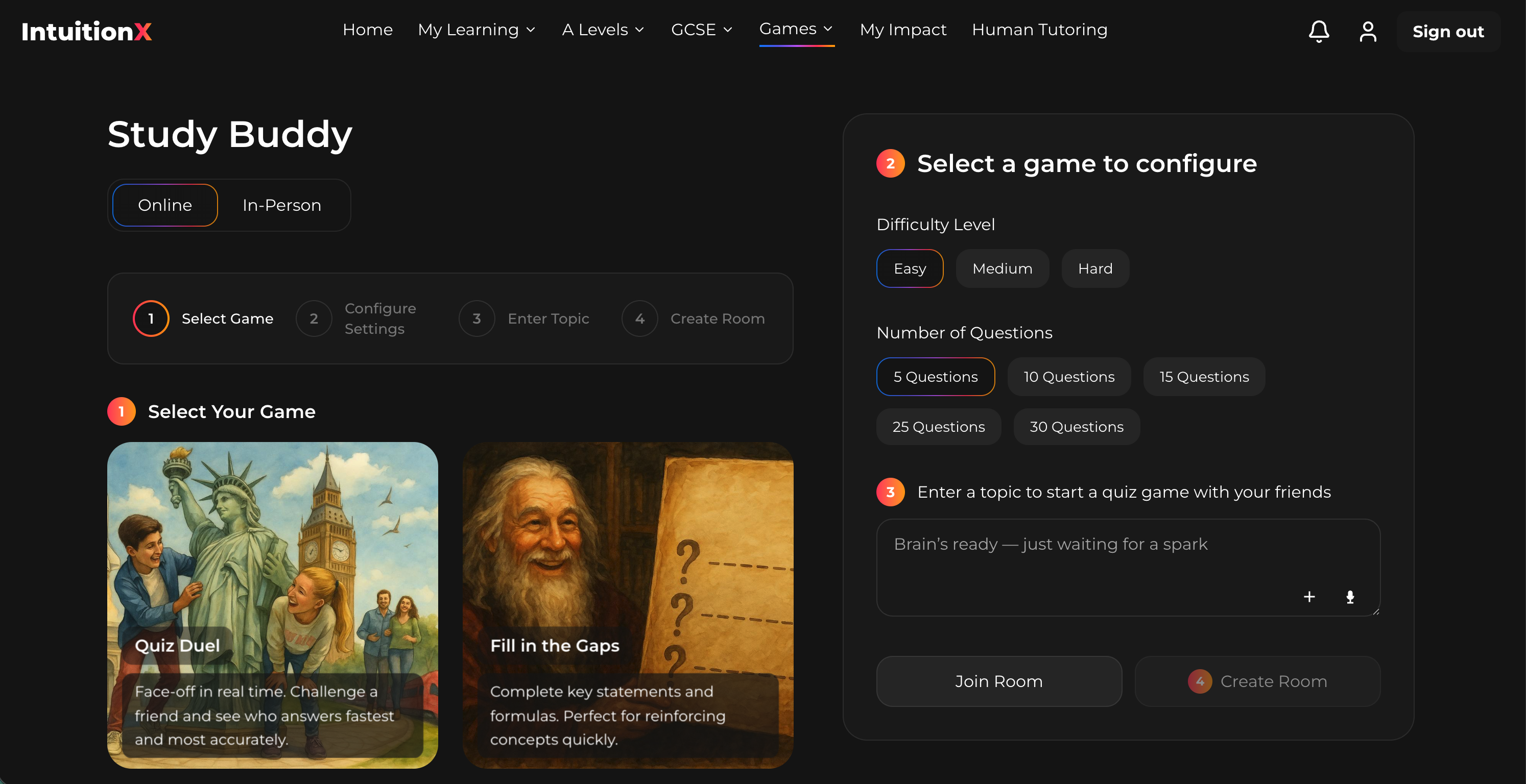
That is exactly what IntuitionX was built to address. Our Socratic AI tutor, Omniscience, draws on the knowledge of Oxford and Cambridge graduates to deliver Oxbridge-level learning to every student, regardless of background or postcode. We do not write essays for students. We ask the questions that make them think. And through our first-of-its-kind agreement with the International Rescue Committee, 10% of our revenue funds educational programmes for children in crisis and conflict countries. Backed by Sir Anthony Seldon, one of Britain's leading educationalists, IntuitionX is where equity and excellence finally meet.
Frequently asked questions
How is educational access measured worldwide?
SDG 4 indicators measure educational access through enrolment rates, completion rates, out-of-school rates, early childhood participation, and parity indices for disadvantaged groups including girls, rural students, and those with disabilities.
What is the biggest barrier to educational access for secondary students?
Socioeconomic status remains the most significant barrier, with only 26% tertiary attainment among students from low-income backgrounds compared to 70% for those from high-income families.
Can technology help improve educational access?
Yes. AI personalises learning at scale, creating individual pathways that close gaps for secondary students without reducing academic rigour or quality.
Why does educational access differ between countries and regions?
Differing definitions, resource allocation, and intersectional barriers mean that reported rates can be inflated, masking the true scale of exclusion for disadvantaged groups across different regions and policy contexts.