

TL;DR:
- Active learning involves student participation, discussion, and application, improving retention and critical thinking.
- Creating an encouraging environment, using digital tools, and gradual implementation enhance active learning at home.
- Reflecting regularly and celebrating progress help measure growth and overcome initial challenges.
Passive learning is quietly failing millions of students. Sitting through tutoring sessions, copying notes, and memorising facts without context leaves most learners bored and disengaged. In fact, 73% of UK students report not being actively engaged in their learning, and in the US, 80% describe feeling bored in class. The good news? Active learning changes all of that. This guide walks you through exactly what active learning is, how to set it up, and how to measure whether it's working, so you and your family can replace frustrating study sessions with genuine understanding.
Table of Contents
- Understanding active learning and its benefits
- Getting started: tools and mindset for encouraging active learning
- Practical steps: implementing active learning at home
- Overcoming challenges and assessing progress
- Our perspective: why empowering learners matters more than ever
- Discover smarter learning tools to boost active engagement
- Frequently asked questions
Key Takeaways
| Point | Details |
|---|---|
| Active learning advantage | Active learning outperforms traditional tutoring by boosting engagement and deeper understanding. |
| Tools for success | The right digital platforms and collaborative mindset set the stage for effective active learning. |
| Step-by-step approach | Implementing small, consistent changes makes active learning practices sustainable at home. |
| Overcoming obstacles | Regular progress checks and adapting strategies address challenges and maximise outcomes. |
Understanding active learning and its benefits
Active learning is exactly what it sounds like. Rather than sitting back and absorbing information passively, students participate, discuss, question, and apply what they are learning. It is the difference between watching someone cook a meal and actually making it yourself.
Traditional tutoring often follows a one-way model. The tutor explains, the student listens. That method has its place, but it rarely builds the kind of critical thinking or genuine curiosity that leads to long-term success. Active learning research consistently shows that when students engage with material actively, they retain more, think more independently, and feel more motivated.
Active learning boosts retention and engagement compared to passive approaches, and the data backs this up comprehensively. The shift is not just about using different activities. It is about changing how students relate to the material they are studying.
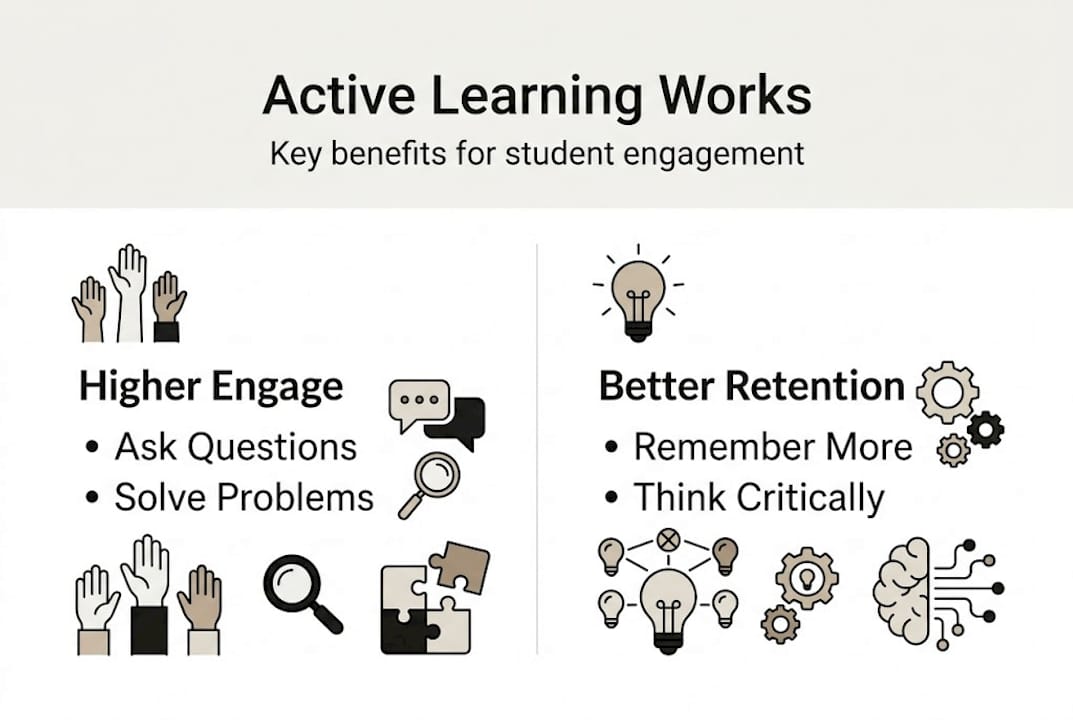
Here is a quick comparison to show why this matters:
| Approach | Engagement level | Retention | Critical thinking |
|---|---|---|---|
| Traditional tutoring | Low to moderate | Short-term | Limited |
| Active learning | High | Long-term | Developed |
| Peer discussion | High | Long-term | Strong |
| Project-based learning | Very high | Long-term | Excellent |
The educational engagement benefits of active learning go beyond exam results. Students who learn actively tend to develop resilience, stronger communication skills, and genuine enthusiasm for their subjects. These are qualities no amount of rote memorisation can build.
Some of the most effective active learning activities include:
- Group discussions where students explain concepts to each other
- Real-life projects that connect learning to the world around them
- Interactive digital tools that respond to each student's pace and choices
- Role-play and simulation that bring abstract ideas to life
- Reflective journalling to consolidate and question what has been learned
The beauty of active learning strategies is that they can be adapted for any age group, any subject, and any home environment. You do not need a classroom full of pupils or expensive equipment. You just need the right mindset and a willingness to experiment.
Getting started: tools and mindset for encouraging active learning
With the benefits of active learning in mind, the first step is to set up the right environment. This means both the physical and the mental space for learning.
The mindset shift is arguably more important than the tools. Students and parents who approach learning with openness, curiosity, and a tolerance for getting things wrong create the conditions where active learning thrives. If every mistake feels like a failure, students will retreat into passive habits to stay safe.
Digital tools can personalise learning and foster genuine engagement, making it easier than ever to introduce variety and interaction into study sessions at home. The key is choosing tools that encourage thinking rather than tools that simply deliver answers.
Here is a comparison of common tools and what they offer:
| Tool type | Best for | Level of interaction | Cost |
|---|---|---|---|
| AI tutoring platforms | Personalised questioning | Very high | Low to free |
| Video platforms | Visual explanation | Low | Free |
| Collaborative apps | Group projects | High | Low |
| Flashcard tools | Memorisation | Moderate | Free |
Exploring technology trends in learning can help you identify which tools are gaining traction and why. Not every tool will suit every learner, and that is perfectly fine.
For parents looking to create a supportive learning environment at home, here are the key steps:
- Set aside a dedicated, distraction-free study space
- Establish a consistent routine with built-in reflection time
- Ask open questions about what your child is learning each day
- Celebrate curiosity and effort, not just correct answers
- Explore best educational AI tools together to find what resonates
- Review what is working weekly and adjust without pressure
Pro Tip: Introduce one new digital tool or activity per week rather than overhauling everything at once. This keeps students curious without causing fatigue, and gives you time to see what genuinely helps.
According to active learning strategies resource, the most successful transitions from passive to active learning happen gradually, with consistent encouragement from parents and educators alike.
Practical steps: implementing active learning at home
Once you have the right tools and mindset, it is time to put active learning into action at home. The great thing is you do not have to reinvent everything at once.
Discussion, hands-on activities, and guided inquiry consistently outperform passive methods when it comes to genuine understanding. Here is a step-by-step guide to getting started:
- Choose one subject to pilot active learning with first
- Replace one passive task (such as re-reading notes) with an active alternative (such as explaining the topic aloud)
- Try role-play or simulation to make abstract concepts feel real and memorable
- Introduce peer teaching, where your child explains a topic to you or a sibling
- Set a weekly project connected to something in the real world
- Reflect together at the end of each week on what felt engaging and what did not
- Gradually increase variety as confidence builds
Peer teaching is particularly powerful. When a student teaches something, they have to understand it well enough to explain it. That process reveals gaps in knowledge and builds genuine confidence at the same time.

Pro Tip: Start with just one new activity per week. Reflect honestly on what works. Small, consistent changes are far more effective than big overhauls that fizzle out quickly.
You can also explore accessible learning methods that are designed to work for students of all backgrounds and abilities. Active learning is not a privilege reserved for elite schools. It belongs in every home.
For a broader view of what is possible, ten active learning strategies offers a practical catalogue of approaches you can start using straight away.
Consistency is more important than quantity when adopting new strategies. One well-executed activity done regularly will outperform ten ideas tried once and abandoned.
Overcoming challenges and assessing progress
With implementation underway, it is natural to encounter some hurdles. Here is how to stay on track and measure results.
Active learning feels unfamiliar at first. Students who are used to being told what to think may struggle when asked to figure things out themselves. That discomfort is actually a sign that learning is happening. But it does need to be managed carefully.
Common pitfalls to watch for include:
- Overwhelm from too much change at once. Introduce new approaches gradually.
- Lack of structure, which can make active sessions feel chaotic. Set clear goals for each session.
- Resistance from students who feel more comfortable with passive methods. Start with activities they enjoy.
- Comparing progress to others rather than to past performance. Focus on individual growth.
- Giving up too early when results are not immediately visible. Real learning takes time to show.
When it comes to measuring progress, reflection is your most valuable tool. Regular feedback and progress checks increase the success of active learning significantly. Ask your child what felt challenging, what felt exciting, and what they would do differently. These conversations reveal far more than a test score.
Students in active learning environments outperform peers by up to 6% in assessed outcomes, and the gap widens over time as active habits compound. That might sound modest, but across an entire school career, it adds up to something genuinely significant.
| Progress sign | Active learning | Passive tutoring |
|---|---|---|
| Asks more questions | Common | Rare |
| Explains concepts in own words | Yes | Rarely |
| Seeks challenges voluntarily | Often | Unlikely |
| Retains knowledge over time | Strong | Weak |
Use active learning success tips to fine-tune your approach as you go. And explore learning strategies for academic success for subject-specific guidance that complements everything covered here.
Celebrate small wins. Seriously. When a student explains something they previously found confusing, that is worth acknowledging. Confidence builds on small victories.
Our perspective: why empowering learners matters more than ever
Conventional wisdom says that more tutoring is the answer. Hire a better tutor. Book more sessions. Spend more money. But we think that gets the whole thing backwards.
The students who thrive long-term are not the ones who had the most hours of instruction. They are the ones who learned how to learn. That is a fundamentally different skill, and it is one that active learning builds directly.
There is something uncomfortable about admitting that traditional tutoring can actually reduce a student's independence if it becomes a crutch. When every challenge is immediately solved by an expert sitting across the table, students never develop the resilience to struggle productively on their own.
We believe every student deserves the chance to become genuinely curious, genuinely capable, and genuinely confident. That is not about access to the most expensive tutor. It is about access to the right kind of engagement. Exploring AI learning companion insights shows how thoughtfully designed tools can replicate the best aspects of elite education without the price tag or the passivity.
Empowered learners do not just perform better in exams. They adapt, they persist, and they grow.
Discover smarter learning tools to boost active engagement
Active learning does not have to be a solo project. The right technology can make the whole process feel more natural, more rewarding, and a lot less stressful.
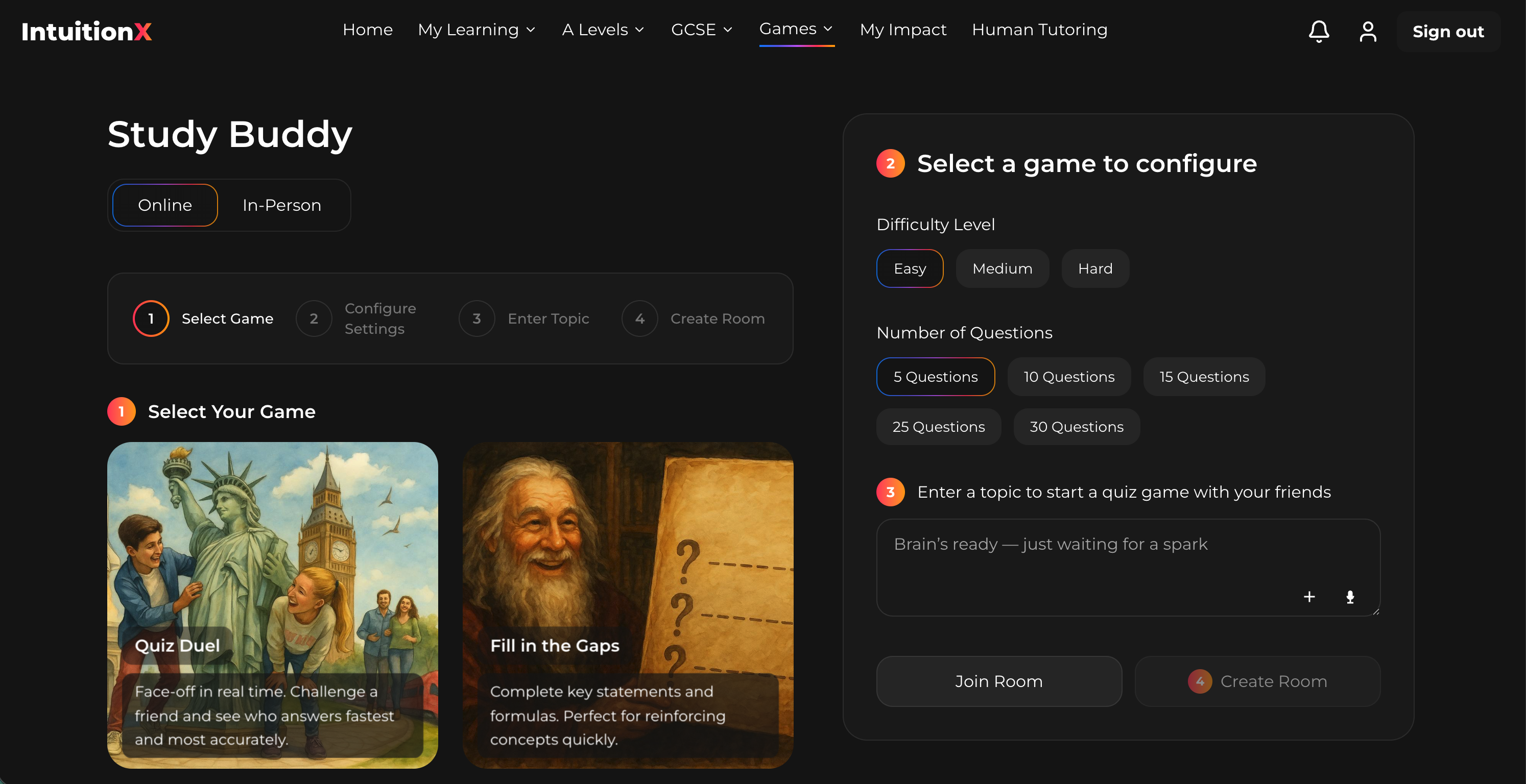
IntuitionX is a 24/7 AI tutor built on Oxbridge-level pedagogy and Socratic questioning. Rather than handing students answers, it asks the questions that lead them to their own understanding. That is active learning at its most effective. Whether you are a parent looking for a smarter alternative to traditional tutoring, or a student who wants to actually understand what you are studying, the IntuitionX platform is designed to meet you exactly where you are and push you forward with confidence.
Frequently asked questions
What are the most effective active learning strategies for students?
Group discussions, hands-on projects, and peer teaching are among the most effective because they require students to apply and explain knowledge, which deepens understanding far beyond passive revision.
How can parents support active learning at home?
Parents can encourage curiosity, set up collaborative activities, and explore digital tools for learning to make study sessions genuinely interactive and enjoyable rather than a chore.
How do you measure progress in active learning?
Track progress through reflection, regular feedback, and observing whether the student is asking more questions and explaining ideas in their own words. Self-assessment habits are particularly effective at revealing genuine growth.
Is active learning suitable for all subjects?
Absolutely. Active learning techniques can be adapted across every subject, from mathematics to history to science. Active learning increases performance consistently across disciplines, making it one of the most versatile approaches available.