

Many A Level students spend hours rereading notes and highlighting textbooks, yet struggle to retain information or apply it confidently in exams. This passive approach leaves you feeling frustrated and underprepared, despite the time invested. Active learning offers a transformative alternative by engaging you directly with material through questioning, summarising, and self-testing. This guide provides a practical, step-by-step framework to help you master active learning techniques that improve retention, deepen understanding, and boost exam performance. You'll discover how to prepare effectively, execute proven strategies, avoid common pitfalls, and measure your progress with confidence.
Table of Contents
- Key Takeaways
- What you need to prepare for active learning at A level
- Step-by-step guide to executing the active learning process
- Common mistakes and how to avoid them during active learning
- Measuring success and expected results from active learning at A levels
- Enhance your active learning with IntuitionX
- FAQ
Key Takeaways
| Point | Details |
|---|---|
| Active learning engagement | Active learning engages you directly with material through questioning, summarising and self testing to boost retention and exam performance. |
| Preparation and tools | Effective preparation involves creating the right study environment, gathering textbooks and notes, and using digital tools to support understanding. |
| Consistent practice improves exam results | Scheduling regular blocks of study with breaks converts intention into consistent practice and boosts exam results. |
| Avoid common pitfalls | Start with previewing material, setting clear goals, and actively questioning to stay focused and identify knowledge gaps. |
What you need to prepare for active learning at A level
Before diving into active learning techniques, you need to establish the right foundation. Mental readiness matters as much as physical preparation. Approach your studies with curiosity rather than obligation, viewing each session as an opportunity to genuinely understand concepts rather than merely memorise facts. This mindset shift transforms how you engage with material.
Your study environment significantly influences effectiveness. Choose a quiet space with minimal distractions where you can focus without interruption. Remove your phone or place it in another room, close unnecessary browser tabs, and inform family members when you need uninterrupted time. Natural lighting and comfortable seating help maintain concentration during longer sessions.
Gather essential materials before starting each study session. You'll need your textbooks, class notes, highlighters, blank paper for summarising, and flashcards for self-testing. Digital tools can enhance engagement when used purposefully. An educational AI companion provides instant clarification on challenging concepts, whilst note-taking apps help organise information efficiently. Effective active learning starts with the right environment and tools, combining physical resources with technology that supports genuine understanding.
Pro Tip: Create a dedicated study kit containing all necessary materials in one portable container. This eliminates time wasted searching for supplies and signals to your brain that it's time to focus.
Scheduling transforms intentions into consistent practice. Block specific times for active learning sessions rather than studying whenever you feel like it. Start with 45-minute blocks followed by 10-minute breaks, adjusting duration based on your concentration capacity. Morning sessions often yield better results when your mind is fresh, though evening study works well for reviewing material covered during the day.
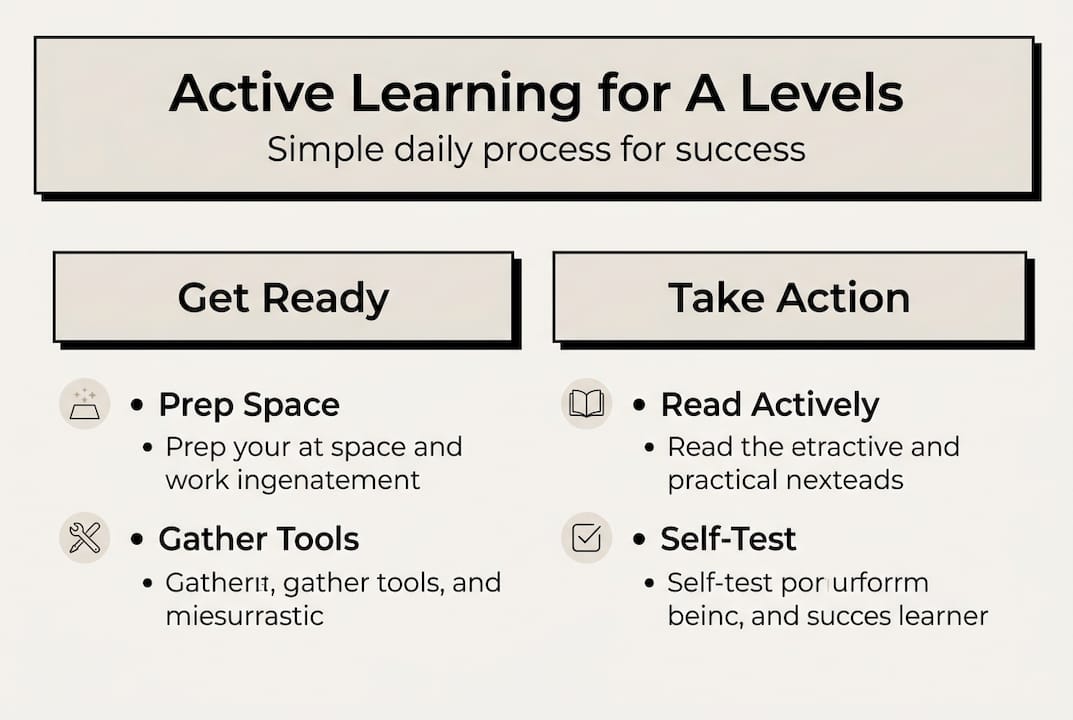
| Preparation element | Purpose | Example |
|---|---|---|
| Mental readiness | Cultivates curiosity and engagement | Approach chemistry as puzzle-solving rather than memorisation |
| Physical space | Minimises distractions | Designated desk with good lighting, no phone |
| Materials | Enables active techniques | Textbooks, blank paper, flashcards, highlighters |
| Technology | Provides instant support | AI tutors, note apps, quiz platforms |
| Schedule | Ensures consistency | Daily 45-minute blocks at same time |
Step-by-step guide to executing the active learning process
Active learning begins before you even open your textbook. Preview the material by scanning headings, diagrams, and summary boxes to create a mental framework. Set specific learning goals for each session, such as understanding photosynthesis mechanisms or mastering quadratic equations. This focus prevents aimless reading and gives your study session clear direction.
Engage with content by constantly questioning what you're reading. Ask yourself why concepts work the way they do, how different ideas connect, and where you might apply this knowledge. Annotate margins with your own thoughts, questions, and connections to previous learning. Active involvement with content improves retention over passive reading, transforming you from a spectator into a participant in your own education.
Pro Tip: Use the Feynman Technique by explaining concepts aloud as if teaching a younger student. This reveals gaps in your understanding immediately.
- Preview and set goals: Scan the chapter structure and define what you aim to understand by session end.
- Question actively: Challenge each concept by asking why, how, and what if questions as you read.
- Annotate purposefully: Write margin notes connecting ideas, flagging confusion, and summarising key points.
- Summarise independently: Close your book and write a paragraph explaining the concept in your own words.
- Self-test rigorously: Create flashcards or practice questions, then test yourself without looking at answers.
- Reflect on errors: When you get something wrong, investigate why and clarify the misunderstanding immediately.
Summarising information in your own words forces deeper processing than simply rereading. After studying a section, close your materials and write a brief summary from memory. This retrieval practice strengthens neural pathways and reveals what you genuinely understand versus what you've merely recognised. Compare your summary with the original text to identify gaps, then study those specific areas again.
Frequent self-testing represents the cornerstone of active learning. Create flashcards for key terms, concepts, and processes, then quiz yourself regularly. Use practice questions from past papers or textbooks, attempting them under exam conditions before checking answers. An AI tutor for active learning can generate personalised questions targeting your weak areas, providing immediate feedback that accelerates improvement.
"The act of retrieving information from memory strengthens that memory and makes future recall easier. Testing yourself is not just assessment; it's one of the most powerful learning strategies available."
Reflection transforms mistakes into learning opportunities. When you answer incorrectly or struggle with a concept, resist the urge to quickly check the answer and move on. Instead, analyse why you made that error. Did you misunderstand the question, forget a key formula, or confuse similar concepts? Addressing the root cause prevents repeating the same mistakes and builds genuine mastery.

Common mistakes and how to avoid them during active learning
The most frequent mistake students make is reverting to passive rereading when material feels challenging. You might convince yourself that reading your notes one more time will help, but recognition differs fundamentally from recall. Students often revert to passive study, reducing the benefits of active learning, particularly when feeling stressed about upcoming exams. Combat this by scheduling specific times for active techniques like self-testing and summarising, treating them as non-negotiable appointments.
Time management failures undermine even the best intentions. Studying for six hours straight without breaks leads to diminishing returns and eventual burnout. Your brain needs rest to consolidate information effectively. Use the Pomodoro Technique or similar methods to structure study sessions with regular breaks. During breaks, move away from your desk, stretch, or take a brief walk rather than scrolling social media, which fragments attention further.
- Multitasking destroys focus: Close all unrelated tabs and apps. Your brain cannot effectively encode information whilst switching between tasks.
- Delaying clarification compounds confusion: When you don't understand something, seek help immediately rather than hoping it will make sense later.
- Inconsistent review schedules cause forgetting: Space your review sessions over days and weeks rather than cramming everything the night before.
- Perfectionism prevents progress: Start with imperfect summaries or flashcards rather than waiting until you feel ready to create perfect materials.
Distraction represents perhaps the greatest threat to active learning. Social media notifications, messaging apps, and background noise fragment your attention, preventing the deep focus necessary for genuine understanding. Studies show it takes an average of 23 minutes to fully regain concentration after an interruption. Create a distraction-free zone by using website blockers, turning off notifications, and communicating your study schedule to others.
Many students hesitate to seek help when concepts remain unclear, viewing it as admission of failure. This mindset wastes valuable time struggling alone with material that could be clarified quickly. Use office hours, study groups, or avoid study mistakes with AI support that provides instant explanations without judgement. Asking questions demonstrates engagement and commitment to understanding rather than weakness.
Inconsistent review schedules allow forgetting to erase your hard work. The forgetting curve shows that without review, you lose approximately 50% of new information within days. Combat this by scheduling regular review sessions using spaced repetition. Review material after one day, then three days, then one week, then two weeks. This pattern strengthens long-term retention far more effectively than massed practice.
Measuring success and expected results from active learning at A levels
Tracking progress provides motivation and reveals which strategies work best for you. Mock exams offer the most realistic assessment of your preparation. Take full past papers under timed conditions, marking them honestly against mark schemes. Compare your performance across multiple attempts to identify improvement trends and persistent weak areas requiring additional focus.
Regular self-testing through flashcards and practice questions generates quantifiable data about your mastery. Track your accuracy rate over time, aiming for consistent improvement rather than perfection. Notice which topics you answer confidently versus those requiring multiple attempts. This information guides where to allocate study time most effectively.
Self-assessment and reflection improve long-term retention and exam outcomes, transforming studying from a passive activity into a strategic process. After each study session, spend five minutes reflecting on what you learned, what remains unclear, and which techniques proved most effective. This metacognitive awareness helps you adapt your approach continuously.
| Assessment method | Frequency | What it measures |
|---|---|---|
| Mock exams | Monthly | Overall exam readiness and time management |
| Topic quizzes | Weekly | Mastery of specific concepts and recall ability |
| Flashcard accuracy | Daily | Retention of key terms and definitions |
| Self-explanations | After each session | Depth of understanding and ability to teach concepts |
| Error analysis | Ongoing | Common mistake patterns and knowledge gaps |
Comparing active versus passive learning outcomes reveals dramatic differences. Students using active techniques typically demonstrate 20-30% better retention in follow-up tests compared to those who simply reread material. You'll notice increased confidence when approaching exam questions, recognising that you've already tested yourself on similar problems multiple times. This familiarity reduces anxiety and improves performance under pressure.
Reflection and adaptation separate good students from exceptional ones. Regularly assess which active learning techniques yield the best results for you personally. Some students thrive with flashcards whilst others prefer mind mapping or teaching concepts aloud. Experiment with different approaches, measuring learning progress objectively rather than relying on how hard you feel you're working. Effort matters, but effectiveness matters more.
Increased confidence serves as a qualitative indicator of progress. When you can explain concepts clearly without consulting notes, answer practice questions accurately on first attempts, and connect ideas across different topics spontaneously, you're demonstrating genuine mastery. This confidence translates directly into exam performance, allowing you to tackle unfamiliar question formats by applying fundamental understanding rather than relying on memorised answers.
Enhance your active learning with IntuitionX
Active learning becomes even more powerful when supported by intelligent technology designed specifically for deep understanding. IntuitionX functions as your personal Oxbridge-pedigree tutor, available 24/7 to guide you through challenging concepts using Socratic questioning that mirrors how elite tutors teach. Rather than simply providing answers, it asks probing questions that help you discover solutions independently, building genuine comprehension.
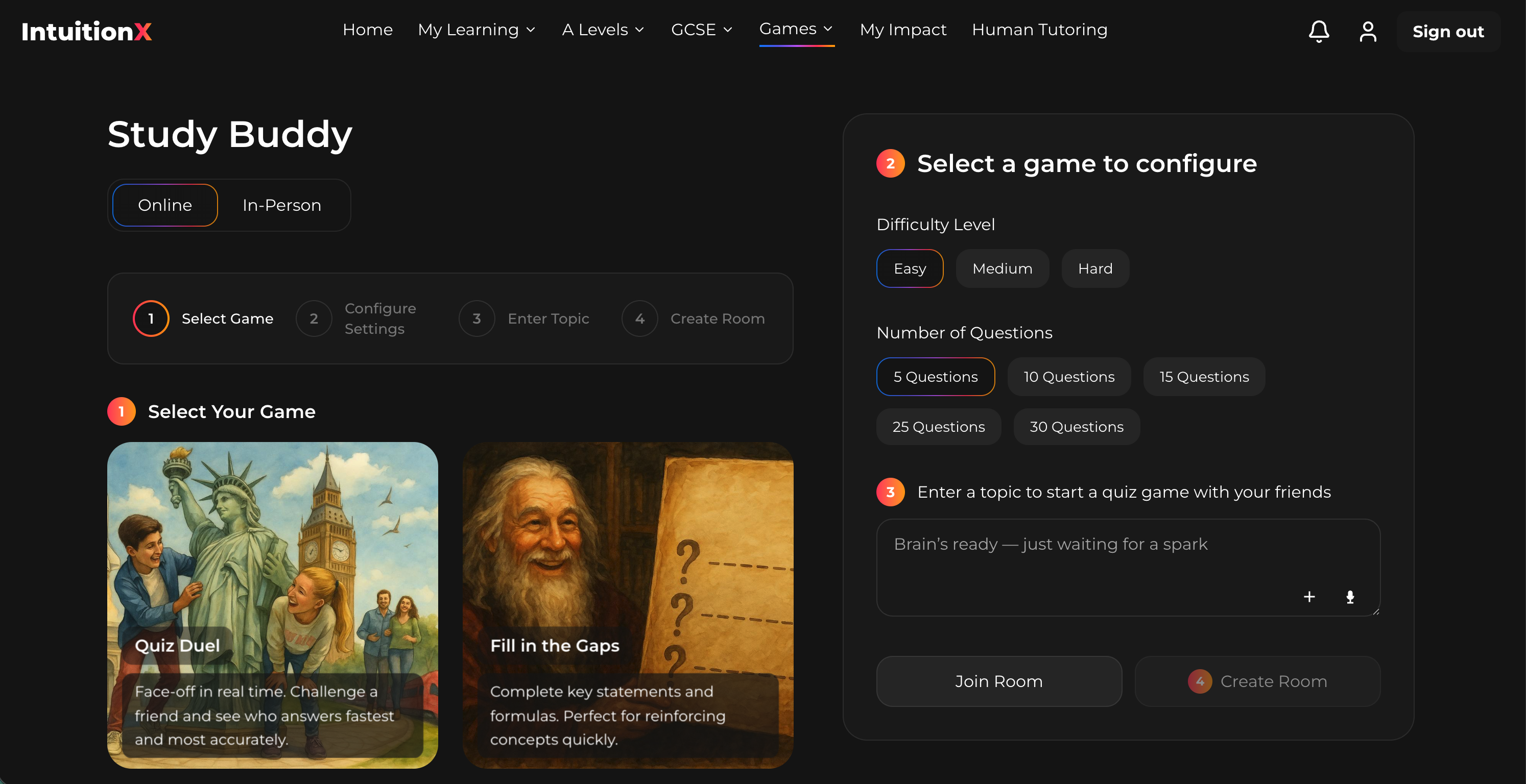
The platform adapts to your individual learning style and pace, identifying knowledge gaps and providing targeted practice in those specific areas. When you struggle with a chemistry mechanism or calculus problem, an educational AI companion walks you through the reasoning step by step, ensuring you understand the why behind each concept. This personalised support transforms active learning from a solitary challenge into a collaborative process.
For A Level students seeking the advantages of private tutoring without the £150 per hour cost, IntuitionX democratises access to elite educational methods. Built on pedagogy from academics who earned A*s at A Level and Firsts from Oxford and Cambridge, it brings world-class teaching to everyone. Explore how an AI tutor for A Level students can accelerate your progress and help you achieve the results you're capable of reaching.
FAQ
What is the active learning process for A levels?
Active learning involves engaging directly with study materials through questioning, summarising, and self-testing to improve understanding and retention. It represents a fundamental shift from passive reading to active participation, where you constantly challenge yourself to explain concepts, make connections, and apply knowledge. This approach transforms you from a consumer of information into an active constructor of understanding, leading to deeper learning and better exam performance.
How can I create an effective active learning environment at home?
Designate a quiet, organised space free from distractions where you study consistently at the same times each day. Remove phones and close unnecessary digital tabs to maintain focus. Establish clear study routines with specific start and end times, using digital tools wisely to enhance engagement rather than fragment attention. Inform family members of your schedule to minimise interruptions during focused study blocks.
What are common challenges when practising active learning, and how do I overcome them?
Challenges include procrastination, distractions, and the tendency to revert to passive rereading when material feels difficult. Overcome these by implementing structured time blocks with regular breaks, using website blockers to eliminate digital distractions, and scheduling specific times for active techniques like self-testing. Break large tasks into smaller, manageable chunks and seek clarification immediately when concepts remain unclear rather than hoping they'll make sense later.
How long does it take to see results from active learning?
Most students notice improved retention and confidence within two to three weeks of consistent active learning practice. Initial sessions may feel challenging as you adjust to new techniques, but the cognitive benefits accumulate rapidly. Mock exam scores typically show measurable improvement after four to six weeks of regular active study, with the most dramatic gains appearing in topics you previously found difficult.
Can active learning work for all A Level subjects?
Active learning techniques adapt effectively across all subjects, though specific methods vary by discipline. Sciences benefit from explaining mechanisms and solving practice problems, whilst humanities subjects respond well to summarising arguments and creating concept maps connecting themes. Mathematics requires extensive problem-solving practice, whilst languages improve through active recall of vocabulary and grammar structures. The core principle remains constant: engage actively rather than passively consuming information.