

TL;DR:
- Success in A Level English literature depends on critical analysis and clear argumentation, not memorization.
- Using active learning, tailored resources, and AI tools enhances understanding and exam performance.
- Developing curiosity, engaging with feedback, and practicing argument depth are key to achieving top grades.
A Level English literature is one of the most rewarding subjects you can study. It is also one of the most misunderstood. Many students spend hours re-reading novels and copying out quotes, only to feel just as lost when they sit down to write an essay. The difference between scraping a C and earning an A* often comes down to how you study, not how long. This guide gives you a structured, evidence-backed approach to learning English literature effectively, covering everything from understanding what examiners want to the tools and techniques that genuinely move your grades forward.
Table of Contents
- Understand what success in A Level English literature looks like
- Gather your tools: essential resources for effective study
- Master your study approach: proven techniques that work
- Common hurdles and how to overcome them
- Our perspective: what students rarely hear about learning at A Level
- Next steps: personalise your A Level English literature journey
- Frequently asked questions
Key Takeaways
| Point | Details |
|---|---|
| Success means skill | Top grades come from mastering analysis, not just memorisation. |
| Use the right tools | Combining textbooks, AI apps, and revision resources boosts retention and performance. |
| Active learning works | Explaining, practising, and engaging with material leads to deeper understanding. |
| Overcome common stumbling blocks | Address procrastination, anxiety, and gaps with mindful, tech-assisted strategies. |
Understand what success in A Level English literature looks like
Before you can study effectively, you need to know what you are actually being assessed on. A Level English literature assesses critical analysis, clear argumentation, and close reading skills. That means examiners are not rewarding the student who has memorised the most quotes. They are rewarding the student who can think on the page.
Most exam boards assess you across a combination of:
- Closed-book essays on set texts, where you must recall and apply evidence
- Comparative essays that ask you to link two or more texts thematically
- Unseen text analysis, where you respond to an extract you have never seen before
- Coursework components that reward sustained, independent argument
Each of these tasks demands a different skill. Unseen analysis, for example, rewards close reading and confidence with language. Comparative essays reward breadth of understanding and the ability to construct a coherent argument across texts. Knowing which skill each task tests helps you practise with purpose.
So what does a top-mark answer actually look like? It opens with a clear, arguable thesis. It uses evidence precisely, not just to show the examiner you know the text, but to support a specific point. It considers alternative interpretations. And it engages with context without letting context swallow the literary analysis.
The most common student pitfall? Rote memorisation. Students spend weeks learning quotes by heart but never practise building an argument. When the exam question arrives, they know what the text says but not how to respond to the question in front of them. Practising with real questions from the start is the fix.
For deeper insight into humanities learning strategies, it helps to understand that English literature rewards a mindset of genuine curiosity, not just hard work.
Pro Tip: Download your exam board's mark scheme and read the descriptors for each grade band. Then annotate a past essay of your own against those descriptors. You will immediately see where you are losing marks and what to prioritise.
Gather your tools: essential resources for effective study
With the criteria for success clear, it is time to gather the right resources and tools. Not all revision materials are created equal, and the wrong ones can actually slow you down.
Here is a quick-reference table of resource types and what each one is best used for:
| Resource type | Best used for |
|---|---|
| Set texts with annotations | Close reading and quote recall |
| Exam board anthology | Unseen and poetry practice |
| Critical guides (e.g. York Notes) | Context and critical perspectives |
| Past paper banks | Essay practice and timing |
| Flashcard apps (e.g. Anki) | Key quotes and terminology |
| AI revision platforms | Personalised feedback and Socratic questioning |
| Mind maps | Thematic connections across texts |
AI tools enhance revision with personalised feedback and practice, which is something a static textbook simply cannot do. When you practise an essay and get instant, specific feedback on your argument structure, you improve far faster than if you simply re-read your notes.
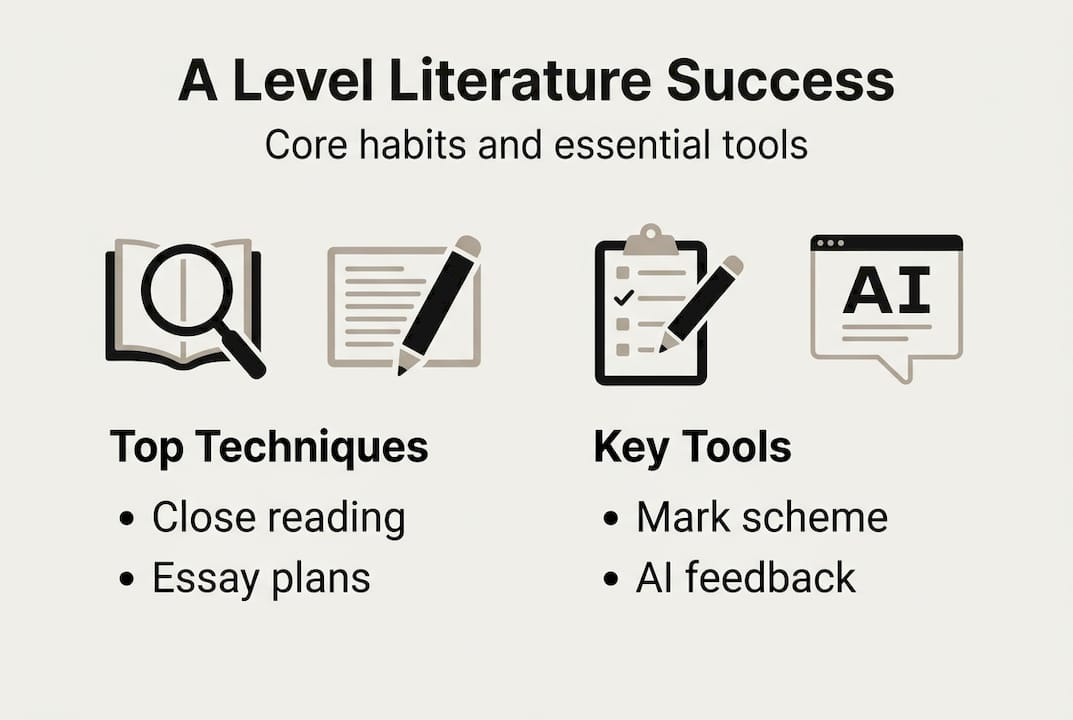
The key is to personalise your study toolbox. If you are a visual learner, mind maps and colour-coded annotations will help you retain thematic connections. If you learn best by explaining ideas aloud, try recording yourself discussing a theme or character and playing it back.
Your essential study toolkit should include:
- Annotated copies of all set texts
- A dedicated revision notebook for essay plans and argument structures
- A bank of past exam questions, organised by text and theme
- At least one top educational AI tool for interactive practice
- Access to affordable revision resources that do not require a large budget
Pro Tip: Many exam boards publish free exemplar answers and examiner reports on their websites. These are gold. Reading an examiner's commentary on a real student response teaches you more about what markers want than almost any revision guide.
Master your study approach: proven techniques that work
Now, with your resources ready, let's get hands-on with strategies that actually move the needle. Having the right materials means nothing if your study method is passive. Reading and re-reading is not revision. It is just reading.
Active learning improves memory retention and exam performance. Here is a step-by-step approach tailored specifically to English literature:
- Read actively. Annotate your texts as you read. Note language choices, structural decisions, and moments where the writer seems to be doing something deliberate. Ask yourself: why this word? Why here?
- Summarise in your own words. After each chapter or poem, write a three-sentence summary without looking at the text. This forces genuine comprehension.
- Build argument banks. For each text, create a list of arguable thesis statements on different themes. Practise opening paragraphs for each one.
- Use spaced repetition. Review quotes and key ideas at increasing intervals, not just the night before an exam. Apps like Anki make this straightforward.
- Teach it back. Explain a theme or character to a friend, a family member, or even yourself out loud. If you cannot explain it clearly, you do not understand it well enough yet.
- Practise under timed conditions. Write full essays in exam time. Then compare your response to the mark scheme. Identify one thing to improve each time.
"The students who make the biggest leaps are not the ones who study the most hours. They are the ones who practise the right things, get feedback, and adjust." This is the core of the active learning process that consistently produces strong results.
For AI for literature study, the best platforms do not write essays for you. They ask you questions, challenge your interpretations, and help you build the critical thinking skills that examiners reward.
Pro Tip: Mix traditional and tech tools. Write your essay plan by hand to slow your thinking down, then use an AI platform to stress-test your argument before you write the full response.
Common hurdles and how to overcome them
Even with the best-laid plans, challenges arise. Here is how to spot them and respond effectively.

Using technology can address learning gaps and support varied revision styles, particularly when students are dealing with information overload or inconsistent motivation.
Here is a comparison of traditional versus AI-enhanced approaches to the most common learning barriers:
| Challenge | Traditional approach | AI-enhanced approach |
|---|---|---|
| Lack of essay feedback | Wait for teacher to mark work | Instant, specific feedback on argument and structure |
| Knowledge gaps | Re-read textbook chapters | Targeted questions that identify and fill the gap |
| Procrastination | Rely on willpower alone | Short, gamified revision sessions with clear goals |
| Exam anxiety | Practise past papers alone | Simulated exam conditions with guided debrief |
| Inconsistent revision | Paper timetable | Adaptive scheduling based on your progress |
Beyond technology, mindset and routine matter enormously. Here are some practical habits that support consistent progress:
- Set a specific study goal for each session, not just a time block. "I will write two essay openings on power in Macbeth" beats "I will study for an hour."
- Track your progress weekly. Note which question types feel stronger and which need more attention.
- Take breaks deliberately. The Pomodoro technique (25 minutes on, 5 minutes off) is well-supported by research on focus and retention.
- Seek feedback early and often. Do not wait until a mock exam to find out where your gaps are.
For support with AI revision for English literature and strategies to tackle common learning obstacles, the right tools make a real difference to how quickly you improve.
Our perspective: what students rarely hear about learning at A Level
Here is something most study guides will not tell you: obsessing over grades can actually get in the way of earning them.
When students focus entirely on "what do I need to say to get an A," they stop thinking like readers and start thinking like machines. Examiners notice. The answers that earn top marks are the ones that feel genuinely engaged with the text, where the student has a real point of view and defends it with precision.
The hidden value in A Level English literature lies in discussion, error analysis, and intellectual risk-taking. Read a critical essay you disagree with and argue back. Write an interpretation you are not sure about and see if you can defend it. These habits build the kind of critical confidence that no amount of memorisation can replicate.
We have seen students transform their results not by working harder, but by becoming more curious. They started asking better questions. They embraced feedback instead of fearing it. And they used technology as a thinking partner, not a shortcut. For real success stories from students who made this shift, the pattern is consistent: mindset first, technique second, grades third.
Resilience matters more than perfectionism. A messy essay you wrote and reflected on is worth ten perfect ones you copied from a revision guide.
Next steps: personalise your A Level English literature journey
Ready to put these strategies to work? You do not have to figure it all out alone.
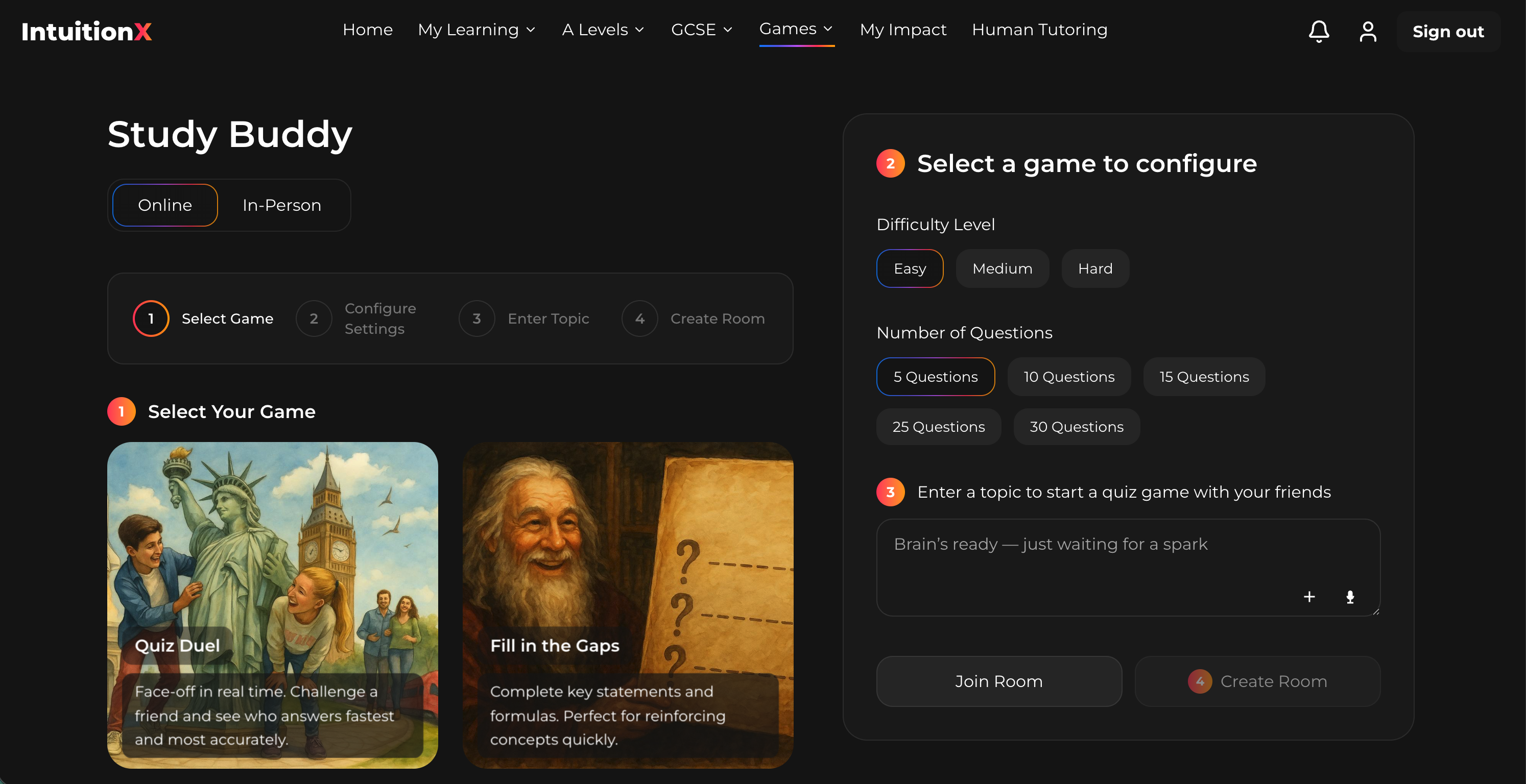
IntuitionX is a 24/7 Socratic AI tutor built on Oxbridge-level expertise, designed to help you think more deeply, not just revise more frantically. Unlike generic AI that writes essays for you, IntuitionX asks the questions that sharpen your critical thinking and build genuine exam confidence. Whether you need help structuring an argument, exploring a theme, or stress-testing an interpretation, the IntuitionX app is your always-available thinking partner. Start your personalised revision journey today and experience what it feels like to study like the top 1%.
Frequently asked questions
What are the most effective study techniques for A Level English literature?
Active learning, regular practice with past papers, and discussing interpretations with peers are proven to boost performance. Building argument banks and writing under timed conditions are particularly effective for essay-based exams.
How can AI tools help me revise for A Level English literature?
AI tools enhance revision by offering tailored quizzes, instant feedback, and essay practice that adapts to your specific gaps. The best platforms challenge your thinking rather than doing the thinking for you.
What resources are essential beyond textbooks?
Set texts, exam board materials, online annotation guides, and revision apps are all key resources. Educational AI tools that structure and personalise your revision are increasingly valuable alongside traditional materials.
How do I avoid common mistakes in A Level literature revision?
Avoid rote memorisation and focus instead on understanding themes, practising essay structure, and working through real exam questions. Critical thinking leads to better grades than memorisation every time.