

TL;DR:
- Most student disengagement stems from a lack of consistent, evidence-based routines that foster active participation. Implementing structured workflows involving retrieval, dialogic teaching, feedback, and home-school communication significantly improves motivation and learning outcomes. Embedding these strategies into daily routines with digital support maximizes their effectiveness and sustainability over time.
Picture this: a classroom of Year 10 students, half of them staring out the window, one scrolling under the desk, and a few simply waiting for the bell. Sound familiar? Disengagement among secondary school students is not a fringe problem. In the UK, 73% of students are not actively engaged in learning, and in the US, 80% report feeling bored in class. The good news? Engagement can be deliberately built. This guide walks you through a structured, evidence-backed workflow that turns passive classrooms into active learning environments, whether you are a teacher planning lessons or a parent supporting a teenager at home.
Table of Contents
- What you need before starting: prerequisites and principles
- Step-by-step learner engagement workflow for secondary students
- Gamification, retrieval practice, and feedback: key methods in action
- Troubleshooting and common mistakes in engagement workflows
- Our perspective: the missing workflow element no one talks about
- Take the next step: digital tools for putting engagement strategies into practice
- Frequently asked questions
Key Takeaways
| Point | Details |
|---|---|
| Routines drive engagement | Consistent workflows with structured talk, retrieval, and feedback outperform one-off tactics. |
| Evidence-led strategies | Classroom talk, metacognition, formative feedback, and home routines are all research-backed. |
| Balance methods for impact | Gamification, retrieval, and feedback each have strengths but require thoughtful implementation. |
| Troubleshooting matters | Address common pitfalls like excessive competition or missing feedback to sustain engagement. |
| Home–school connection | Effective engagement relies on both classroom routines and consistent support from home. |
What you need before starting: prerequisites and principles
Before you redesign a single lesson or homework routine, it helps to understand what actually drives engagement. Scattered techniques rarely stick. What works is a coherent approach built on a few well-tested foundations.
Core engagement drivers
Research consistently points to four key levers that educators and parents can use:
- Dialogic teaching (structured classroom talk): Dialogic teaching intentionally shapes student engagement through structured discussion, metacognition, and feedback systems. When students argue ideas aloud, they think harder.
- Metacognition and self-regulation: Teaching students to plan, monitor, and evaluate their own learning is one of the highest-impact strategies available. It builds independence, not just performance.
- Actionable feedback: Feedback that tells a student what to do next is far more powerful than a grade or a vague "well done."
- Teacher socio-emotional competence: Teacher emotional competence is strongly associated with higher student engagement. How a teacher feels in the room matters as much as what they teach.
For parents, the research is equally clear. Family engagement strategies are most effective when they focus on building consistent routines and clear academic expectations at home, rather than simply attending school events. Regular conversations about learning, structured homework time, and shared goal-setting all make a measurable difference.
Your preparation checklist
Before launching a new engagement workflow, gather your tools:
- A set of open-ended question templates for classroom or dinner-table discussion
- A mini-quiz tool (digital or paper-based)
- A simple feedback template students can complete in two minutes
- A shared weekly plan visible to both students and parents
- A reflection journal or exit-ticket system for end-of-lesson check-ins
Pro Tip: Engagement is most powerful when it is embedded in daily routine. Choose two or three strategies from this guide and practise them consistently for four weeks before adding anything new.
Comparing engagement approaches
| Approach | Best used by | Effort level | Evidence strength |
|---|---|---|---|
| Dialogic teaching | Teachers | Medium | High |
| Retrieval practice | Teachers and parents | Low | Very high |
| Metacognitive reflection | Both | Low to medium | High |
| Parent academic routines | Parents | Low | High |
| Gamification | Teachers | Medium to high | Moderate |
Understanding why student engagement matters for long-term academic outcomes is the first step. The second is knowing which tool fits which context, which is exactly what the workflow below will show you.
Step-by-step learner engagement workflow for secondary students
With the foundations in place, here is the core workflow. Think of it as a repeating cycle rather than a one-off intervention. It works best when teachers and parents use it in parallel, each playing their role.
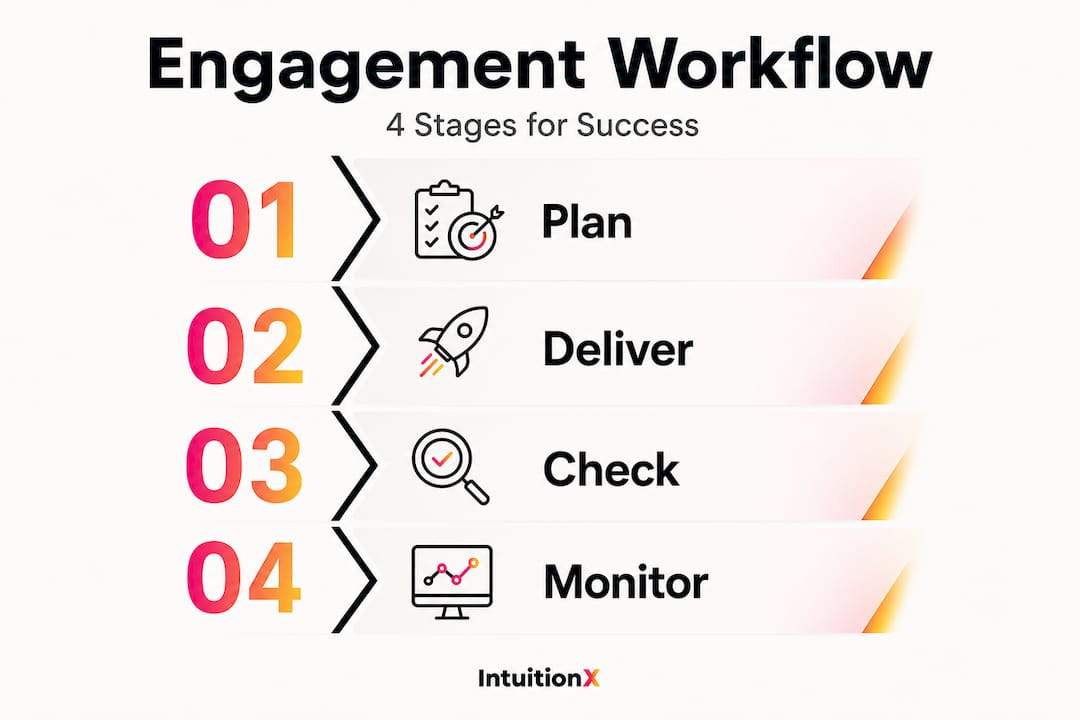
The four-stage workflow
-
Plan: set up conditions for engagement. Identify the lesson's key concepts and design at least one open question that invites genuine discussion. Prepare a retrieval task (a brain dump, a quick quiz, or a short recall exercise) for the start of the session. Share the learning goal with students before you begin.
-
Deliver: activate and sustain attention. Open with your retrieval task. Retrieval practice strategies like quick recall exercises and mini-quizzes are highly effective for engagement and long-term memory, particularly when used at the start and again at intervals during a lesson. Then move into dialogic teaching, using structured questions to invite responses from the whole group, not just the confident few.
-
Check: assess understanding in real time. Use exit tickets, mini-whiteboards, or a two-minute written reflection to gauge how well students understood the material. This is not summative assessment. It is a quick temperature check that informs your next step.
-
Monitor: reflect and self-regulate. Ask students to rate their own confidence with the material. Encourage them to identify one thing they understood and one thing they want to revisit. At home, parents can mirror this by asking "What was the hardest part of today's learning?" rather than "How was school?"
This explicit workflow loop of planning, delivering, checking, and monitoring is the engine behind lasting engagement and self-regulation. It turns a lesson from a one-way broadcast into a genuine learning conversation.
Pro Tip: Use active learning strategies to energise the "deliver" stage. Pair-shares, think-alouds, and mini-debates take five minutes but dramatically lift participation.
Workflow at a glance
| Stage | What to do | Evidence strength | Time needed |
|---|---|---|---|
| Plan | Set retrieval task and open question | High | 10 mins prep |
| Deliver | Retrieval quiz, then dialogic teaching | Very high | 10 to 15 mins |
| Check | Exit ticket or confidence rating | High | 5 mins |
| Monitor | Student reflection and home routine | High | 5 to 10 mins |
Consistent repetition is what separates this from a one-off activity. Run this cycle three to four times per week, and you will begin to see students transform engagement results within a fortnight.
Gamification, retrieval practice, and feedback: key methods in action
Now that the overall workflow is mapped out, let us look more closely at three methods that sit inside it. Each has strong evidence behind it, but each also has pitfalls worth knowing.
Gamification
Gamification means applying game-like elements, points, badges, leaderboards, or timed challenges, to academic tasks. Used well, it can ignite motivation for students who typically disengage. Gamification in secondary maths shows a small to moderate positive effect on motivation and engagement, provided excessive competition is avoided.
What works:
- Cooperative team challenges rather than individual competition
- Points for effort and improvement, not just correct answers
- Short, frequent game-based tasks rather than long sessions
What to avoid:
- Leaderboards that consistently highlight the same struggling students
- Rewards that overshadow the actual learning goal
- Using gamification as a novelty rather than a structured tool
Think of gamification as seasoning, not the main course. A timed quiz on key vocabulary can feel exciting without becoming a pressure cooker. Explore strategies for academic success for subject-specific examples that blend gamification with deeper learning.
Retrieval practice
This is possibly the most powerful tool in the workflow. Asking students to recall information from memory, rather than re-reading notes, strengthens memory formation significantly. However, there is an important condition.
"The advantages of retrieval practice over other study methods can diminish significantly without feedback after retrieval tasks. Feedback is the essential ingredient that makes the practice stick."
In practical terms, this means every retrieval quiz should be followed by a brief review. Students need to know what they got right, what they missed, and why. Without that loop, the exercise loses much of its benefit.
Retrieval practice ideas by subject:
- Science: Brain dump all the steps of a process from memory, then check against notes
- History: Write five facts about a period without opening the textbook
- Maths: Solve three problems from last week's topic before starting today's lesson
- English: Summarise a text's argument in three sentences, then compare with a partner
Understanding what active engagement in learning actually looks like in practice helps you design retrieval tasks that feel relevant rather than rote.
Feedback
Feedback is the connector between effort and improvement. Yet it is often the weakest link in classroom engagement. Vague feedback ("good effort," "needs improvement") gives students nowhere to go. Actionable feedback tells them precisely what the next step is.

The EEF feedback toolkit highlights formative assessment and making feedback actionable as core components of effective engagement practice. In simple terms, feedback should answer three questions: Where am I now? Where do I need to be? What should I do next?
A two-minute feedback protocol works well at the end of a lesson: students write one strength, one target, and one specific action. Teachers read these before the next session and open with a response to the most common theme.
Troubleshooting and common mistakes in engagement workflows
Even the best-designed workflows hit obstacles. Here are the most common mistakes and how to fix them.
Top mistakes to watch for
-
Over-competitive gamification. When points and leaderboards dominate, some students mentally opt out. Research on gamification has noted negative effects when competition becomes the primary motivator. Switch to team-based formats if you notice disengagement creeping in.
-
Retrieval without feedback. Running a quiz and moving on is a missed opportunity. Always close the loop by reviewing answers together, even briefly.
-
Inconsistent routines. A retrieval task used once or twice a term will not build the neural pathways that make it effective. Consistency across weeks is what creates the habit.
-
One-off activities. Bringing in a guest speaker or running a special lesson can spark interest, but without follow-up it rarely sustains engagement. Effective workflows need follow-up and monitoring to shift from isolated tactics to sustained change.
-
Ignoring the home side. Engagement does not end at the school gate. If parents are not part of the loop, the workflow loses half its power.
How to troubleshoot and re-engage
- Review your last two weeks. Are you running all four workflow stages consistently? Identify which stage is being skipped.
- Talk to students. Ask them directly: "What part of our lessons feels most useful? What feels pointless?" Their answers are invaluable.
- Adjust one element at a time. Do not overhaul everything at once. If retrieval tasks feel flat, try adding peer feedback before tweaking anything else.
- Loop in parents. Share a brief summary of what engagement strategies you are using so families can echo them at home.
- Use check-ins to support self-regulation. A brief end-of-week reflection, even just two questions, keeps students aware of their own progress.
Pro Tip: Create a simple engagement checklist for each week. Tick off each workflow stage as you complete it. Over time, this becomes a reliable audit tool. For parents, explore how to encourage active learning at home with practical, low-effort strategies.
Our perspective: the missing workflow element no one talks about
Here is something most engagement guides skip entirely. The workflow breaks down not inside the classroom, but in the handoff between school and home.
Teachers design beautifully structured lessons. Parents want to help but do not know what happened in period three. Students arrive home and the thread is lost. By the next morning, the retrieval task feels like ancient history.
The fix is not complicated. It is a consistent, brief line of communication between teacher and parent, focused specifically on engagement rather than grades. Not a parents' evening once a term. A short weekly update: "This week we are practising retrieval in science. Try asking your child to recall three facts without looking at their notes."
That kind of micro-communication transforms the workflow from a classroom tool into a whole-environment strategy. Parents do not need to become teachers. They need just enough context to ask the right questions at the dinner table.
We have seen time and again that personalised learning strategies work far better when they bridge the home and school environment. The student who reflects on their learning at 5pm is more likely to consolidate it by 9am the next day.
Shared goal-setting is another underused tool. Sit down with a student at the start of each week, set one academic goal together, and revisit it on Friday. This takes ten minutes. It builds agency, accountability, and trust. And it is free.
The uncomfortable truth is that most engagement workflows are designed entirely for the classroom. That is why they plateau. When parents and teachers operate from the same playbook, even a simple one, the results compound.
Take the next step: digital tools for putting engagement strategies into practice
You now have the framework. The next challenge is keeping it consistent week after week, especially when time is short and marking piles up.
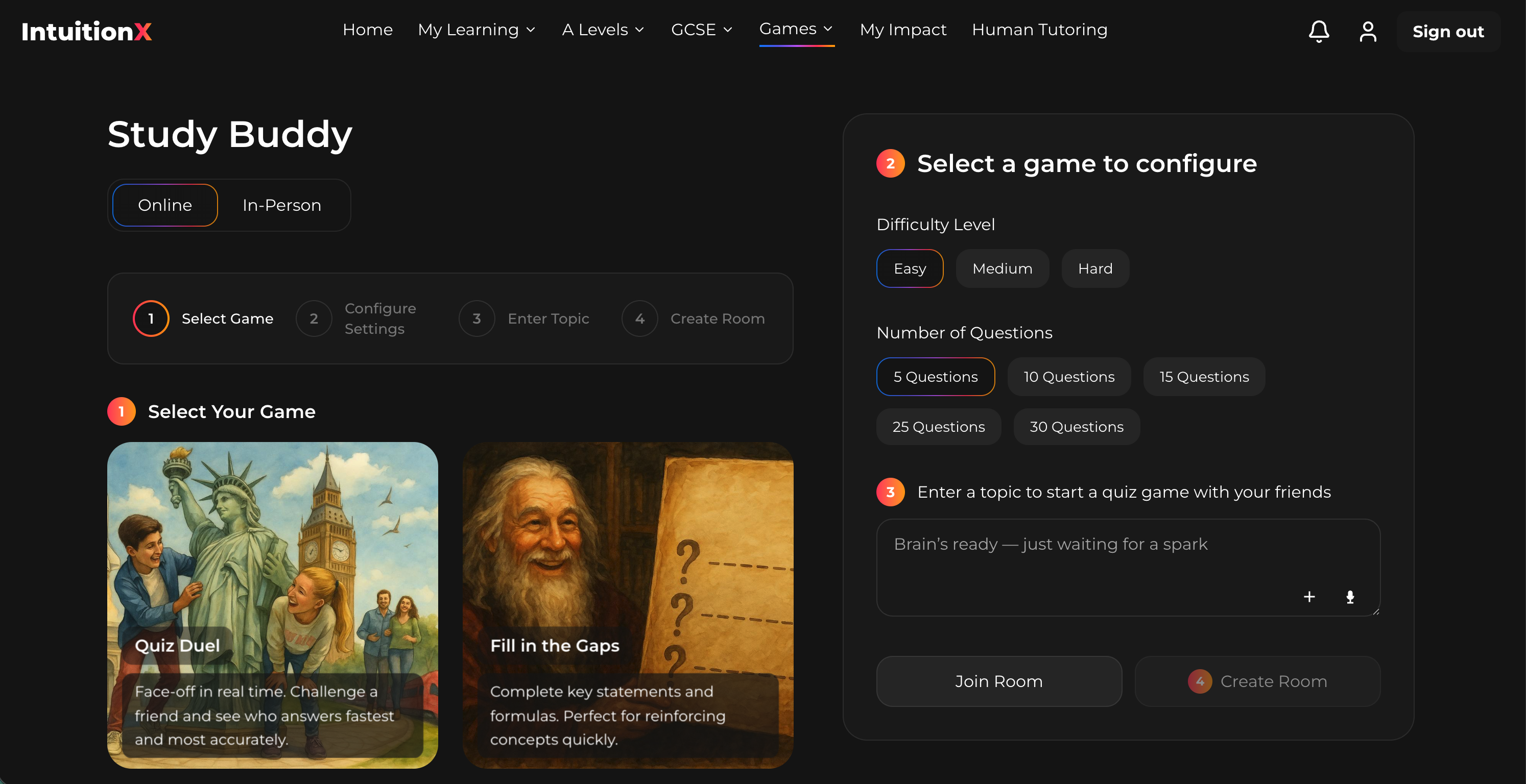
Digital platforms can structure your engagement workflow, track progress, and close the feedback loop between school and home. IntuitionX is built precisely for this. Powered by Oxbridge-pedigree academic intelligence and designed around Socratic questioning and memory science, it gives students a 24/7 thinking partner that reinforces retrieval practice, prompts reflection, and keeps the feedback loop alive between sessions. For teachers and parents who want to move from scattered tactics to a coherent, evidence-backed strategy, IntuitionX brings the workflow to life in every conversation.
Frequently asked questions
What is the most effective first step for improving learner engagement?
Start with building daily retrieval routines that include short recall tasks and clear structured discussion. Consistency matters more than complexity.
Can gamification work for every subject and learner?
It can boost motivation across many subjects, but excess competition harms engagement for some learners. Collaborative formats and effort-based rewards make it more inclusive and effective.
How can parents support engagement outside school?
Maintaining consistent academic routines and clear expectations at home is typically more impactful than attending school events. Regular conversations about learning matter more than formal involvement.
Why is feedback so important in engagement workflows?
Feedback makes practice actionable by telling students exactly what to improve. Without it, even well-designed retrieval tasks lose most of their effectiveness.