

TL;DR:
- Elite tutoring offers bespoke mentorship that transforms how students think and perform academically.
- It emphasizes personalized, immersive learning, cultural capital, and mental resilience, beyond simple grade improvement.
An elite tutor is defined as a specialist educator who provides bespoke, high-impact academic mentoring that extends far beyond subject instruction to shape a student's intellectual identity, exam strategy, and cultural confidence. Unlike a standard private tutor, an elite tutor operates as a thinking partner, adapting every lesson to the student's cognitive state, learning style, and long-term goals. The term "elite tutor" is informal; the recognised industry term is specialist private tutor or academic mentor, though "elite" has become the shorthand for the highest tier of one-to-one instruction. In 2026, with wealthy families spending up to $150 an hour on private tutors, understanding what separates this tier from the rest has never mattered more.
What is an elite tutor and how are they defined?
An elite tutor is not simply a high-scoring graduate who explains concepts clearly. The definition of elite tutor centres on three pillars: exceptional pedagogical skill, personalised intellectual mentorship, and the ability to transmit cultural as well as academic capital. These tutors do not just fill gaps in knowledge. They reshape how a student thinks.

The most advanced model of elite tutoring is known as shadow schooling, where a tutor works 6–8 hours daily alongside a student, assisting with late-night physics problems and breakfast-time essay drafts alike. This immersive model treats learning as a continuous process rather than a scheduled event. It is the educational equivalent of having a personal coach present at every training session, not just on match day.
Elite tutoring also incorporates what researchers call incremental pedagogy, which exploits students' natural cognitive peaks through short, high-intensity bursts rather than rigid timetables. This flexible timing improves absorption and retention of complex material. The result is a student who learns faster and retains more, without the fatigue that comes from long, uniform lessons.
The role of tutors in 2026 has shifted decisively toward this model, with elite tutoring services increasingly expected to deliver cognitive optimisation alongside subject mastery.
What qualities and skills define an elite tutor?
Academic prestige alone does not guarantee elite tutoring quality. A First from Oxford means very little if the tutor cannot explain a concept three different ways until one lands. The qualities that genuinely separate elite tutors from average ones are rooted in communication, adaptability, and the ability to build real rapport.
Here are the core qualities to look for:
- Communication clarity. Elite tutors avoid jargon and check comprehension regularly. They adapt their explanatory models when a student is not following, rather than repeating the same approach louder.
- Patience and emotional intelligence. They create safe learning environments where mistakes are treated as data, not failures. This is what allows students to take intellectual risks.
- Adaptability. Every student has a different cognitive profile. Elite tutors shift their instructional style mid-session if needed, not mid-term.
- Mentor-like rapport. The best tutors combine knowledge with empathy and honesty, building the trust that makes a student willing to say "I don't understand."
- Independence building. A truly elite tutor works to make themselves unnecessary. They teach students how to think, not what to think.
- Enthusiasm for the subject. Passion is contagious. A tutor who genuinely loves their subject transmits that energy, and it changes how a student relates to the material.
Pro Tip: When assessing a potential tutor, ask them to explain a concept you already understand well. Watch how they adapt when you push back or ask follow-up questions. That adaptability tells you more than any CV.
The insight that academic prestige alone does not guarantee effective teaching is one of the most important things parents can internalise before spending significant money on tuition. A tutor with a strong track record of student progress and genuine communication skill will outperform a prestigious graduate who cannot connect with a teenager every single time.
How does elite tutoring benefit students beyond academic improvement?
Elite tutoring benefits students in ways that a school classroom simply cannot replicate. The advantages extend well beyond grade improvement into cultural confidence, mental resilience, and exam strategy.
-
Cultural capital transmission. Elite tutors teach the subtle codes of mannerisms, social references, and intellectual discourse that act as gatekeepers to elite institutions. A student who knows how to conduct themselves in an Oxbridge interview, or how to reference the right cultural touchstones in a personal statement, has a measurable advantage.
-
Exam technique mastery. Elite tutors teach students how to unpack exam questions, identify traps, and use mark schemes strategically. This is a skill set that is rarely taught in classrooms but is worth significant marks in practice.
-
High-level intellectual discourse. Elite tutors integrate real-world concepts and high-level ideas into lessons, providing the kind of intellectual engagement that most classrooms cannot offer. A student studying economics might discuss their family's business decisions as a live case study.
-
Mental wellbeing and resilience. The one-to-one format means a tutor can spot when a student is overwhelmed and adjust accordingly. This personalised attention reduces anxiety and builds the confidence to tackle difficult material.
"Tutors serve as intellectual mentors, guiding students not just through content but through how to think about content." — LSE Inequalities Blog
The benefits of elite tutoring are cumulative. A student who gains confidence in year one of working with an elite tutor typically becomes a more independent learner by year two. That compounding effect is what makes the investment so significant for families who can access it.
Traditional tutoring vs elite tutoring: what is the difference?
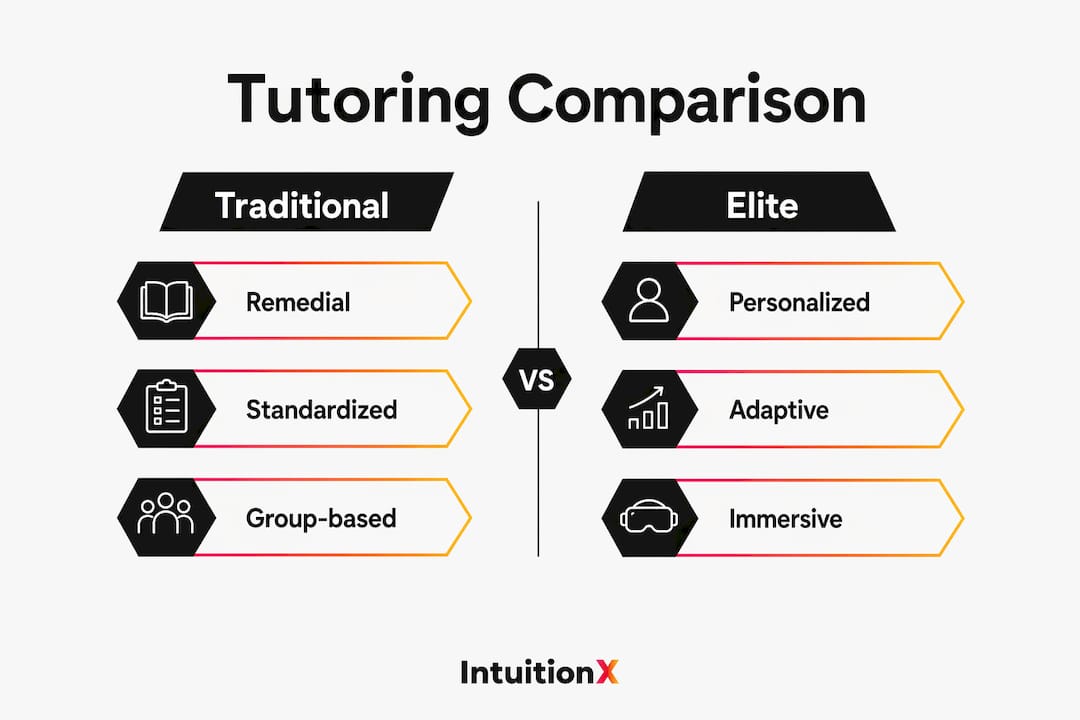
The gap between traditional and elite tutoring is wider than most parents realise. Traditional tutoring is primarily remedial. It fills gaps. Elite tutoring is transformational. It builds entirely new capabilities.
| Feature | Traditional tutoring | Elite tutoring |
|---|---|---|
| Primary purpose | Remedial support and gap-filling | Intellectual mentorship and performance optimisation |
| Availability | Scheduled weekly sessions | 24/7 immersive or on-demand access |
| Curriculum approach | Follows school syllabus | Personalised and extended beyond the syllabus |
| Soft skills focus | Minimal | Cultural codes, exam strategy, confidence building |
| Pedagogy | Fixed lesson plans | Incremental pedagogy aligned to cognitive peaks |
| Student independence | Variable | Explicitly developed as a core outcome |
| Cost range | £20–£50 per hour | £80–£150+ per hour |
The shadow schooling model represents the furthest end of the elite spectrum. In this model, the tutor is present across the student's entire day, from morning essay work to evening problem sets. This eliminates the friction of switching between school mode and tutor mode, allowing learning to flow continuously.
Traditional tutoring also tends to serve a broader student base with less personalisation. Elite tutoring, by contrast, is built around one student's specific profile, goals, and gaps. The advanced pedagogical methods used in elite settings are designed to match how that individual student's brain actually works.
Pro Tip: If a tutor offers the same lesson plan to every student, that is a strong signal you are looking at traditional tutoring, not elite tutoring. Ask directly: "How do you adapt your approach for different learners?"
How to find and evaluate elite tutors: practical steps
Finding a genuinely elite tutor requires more than a Google search. The market is full of tutors who claim elite status without the credentials or track record to back it up. Here is how to evaluate them properly.
- Verify credentials rigorously. Look for tutors with teaching qualifications, subject-specific degrees from reputable universities, and verifiable student outcomes. In Singapore, for example, a major elite tutoring agency has matched over 10,000 students since 2011, advising families to check for MOE or NIE teaching backgrounds before engagement. Apply the same rigour wherever you are.
- Request a trial session. A trial session reveals more than any profile. Watch how the tutor responds when the student struggles. Do they adapt? Do they encourage? Do they make the student feel capable?
- Assess communication style. The tutor should be able to explain their pedagogical approach clearly. If they cannot articulate how they teach, they probably have not thought about it deeply enough.
- Check for red flags. Be cautious of tutors who lead with their own academic achievements rather than their students' outcomes. Prestige without rapport produces expensive frustration, not results.
- Use specialist agencies. Agencies that specialise in elite tutoring matches vet tutors for both credentials and teaching ability. This saves time and reduces the risk of a poor fit.
- Ask for references. A tutor with genuine results will have parents and students willing to speak on their behalf. If references are unavailable, treat that as a warning sign.
The guide to elite tutor credentials from Intuitionx offers a detailed framework for assessing tutors in competitive academic environments, and is worth reading before you begin your search.
Key takeaways
Elite tutoring is defined by personalised intellectual mentorship, adaptive pedagogy, and cultural capital transmission, not academic credentials alone.
| Point | Details |
|---|---|
| Definition of elite tutor | An elite tutor provides bespoke mentorship covering academics, exam strategy, and cultural confidence. |
| Qualities that matter most | Communication, adaptability, and rapport outweigh academic prestige in determining tutor effectiveness. |
| Benefits beyond grades | Elite tutoring builds cultural capital, exam technique, and mental resilience alongside subject knowledge. |
| Traditional vs elite tutoring | Elite tutoring is immersive and personalised; traditional tutoring is remedial and scheduled. |
| How to find the right tutor | Verify credentials, request a trial session, and use specialist agencies to reduce the risk of a poor match. |
Why elite tutoring deserves more honest scrutiny
I have spent years watching families pour significant money into tutoring arrangements that looked elite on paper and delivered very little in practice. The credential inflation in this market is real. A tutor with an Oxford degree and a polished website is not automatically worth £120 an hour.
What I have found actually works is simpler than most agencies want you to believe. The tutors who produce transformational results are the ones who genuinely enjoy teaching, not just knowing. They are curious about how their student thinks. They adjust constantly. They celebrate the moment a student stops needing them for a particular concept.
The ethical dimension here is also worth naming directly. Tutoring in Britain is twice as common among private-school pupils compared to state schools. That gap compounds over time, and it is one of the reasons I think the most important development in education right now is making elite-quality tutoring accessible to students who cannot afford £150 an hour. The pedagogical methods that make elite tutoring work are not magic. They are replicable. The question is whether we build systems that share them widely or keep them locked behind a price barrier.
If you are a parent evaluating tutors, focus on outcomes over credentials. If you are a student, find someone who makes you feel capable, not just informed. That distinction matters more than any qualification on a CV.
— Angus
How Intuitionx brings elite tutoring to every student
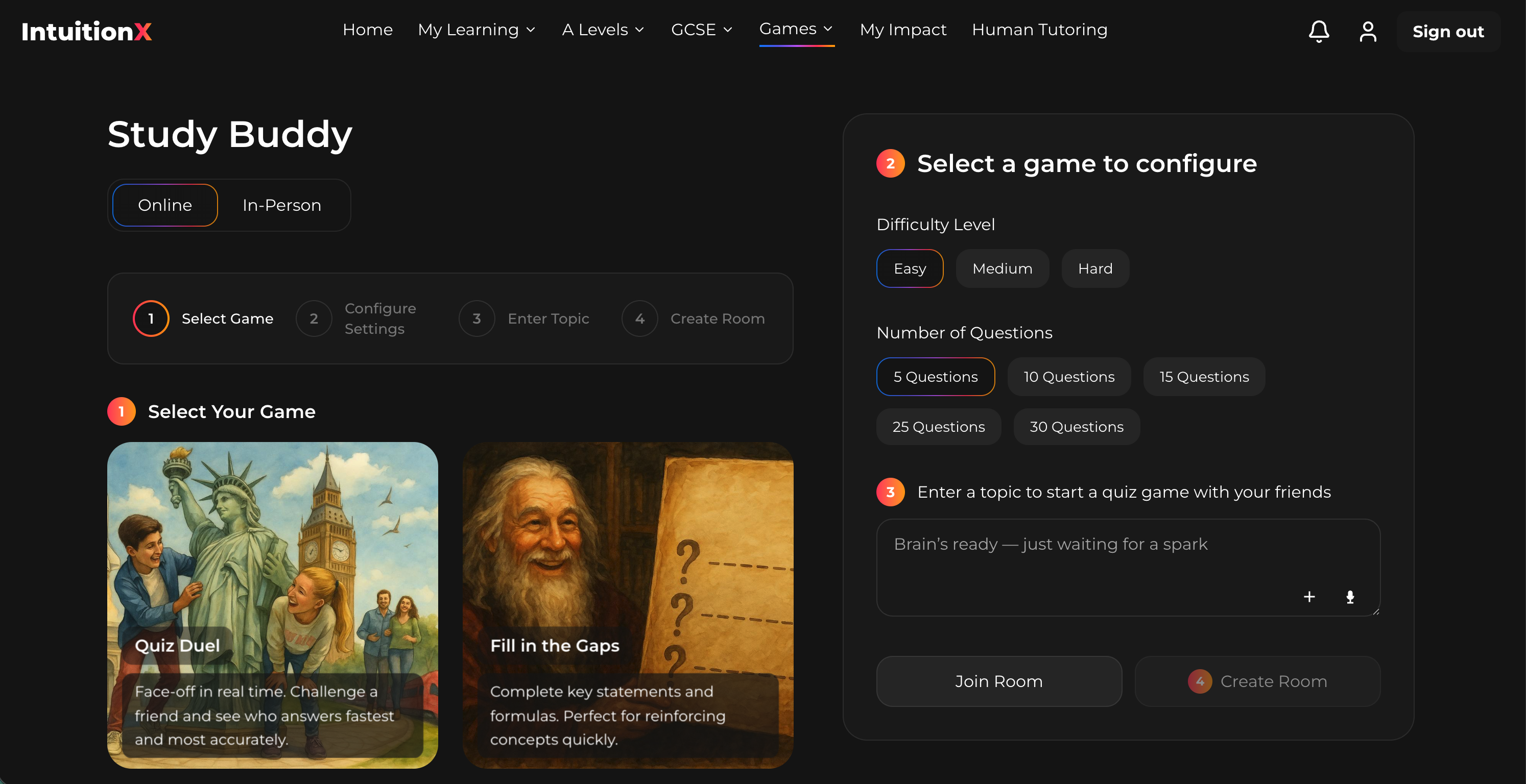
Intuitionx is built on a simple belief: every student deserves access to the kind of learning that wealthy families pay £150 an hour for. The Intuitionx AI tutor, Omniscience, is trained on the knowledge and pedagogical methods of Oxford and Cambridge graduates, delivering Socratic, personalised learning 24/7. It does not write essays for you. It asks the questions that make you think harder, just like the best human tutors do.
Sir Anthony Seldon, described by the BBC as "one of Britain's leading educationalists," has backed Intuitionx directly, stating: "If you are serious about staying ahead in the age of AI, try IntuitionX today." Intuitionx has also committed 10% of revenue to the International Rescue Committee's educational programmes, because elite education should not be a privilege.
Start learning with Intuitionx today and experience what genuinely personalised, Oxbridge-quality tutoring feels like.
FAQ
What is the difference between an elite tutor and a private tutor?
A private tutor typically provides scheduled, subject-specific support. An elite tutor offers immersive, personalised mentorship covering exam strategy, cultural confidence, and intellectual development alongside academic content.
What qualifications should an elite tutor have?
Elite tutor qualifications include a strong subject-specific degree, verified teaching experience, and a track record of measurable student outcomes. Communication skill and adaptability matter more than the prestige of the tutor's own institution.
How much does elite tutoring cost in the UK?
Elite tutoring in the UK typically costs between £80 and £150 per hour, with residential or shadow schooling models costing significantly more. Families are advised to assess value by student outcomes, not hourly rate alone.
Is elite tutoring only for high-achieving students?
Elite tutoring benefits students at all levels. The personalised, adaptive approach is particularly effective for students who are bored by standard classroom pacing or who need targeted support to reach their potential.
How do I know if a tutor is genuinely elite?
Ask for verifiable student outcomes, request a trial session, and assess how the tutor adapts when a student struggles. Tutors who lead with their own credentials rather than their students' progress are rarely worth the premium.