
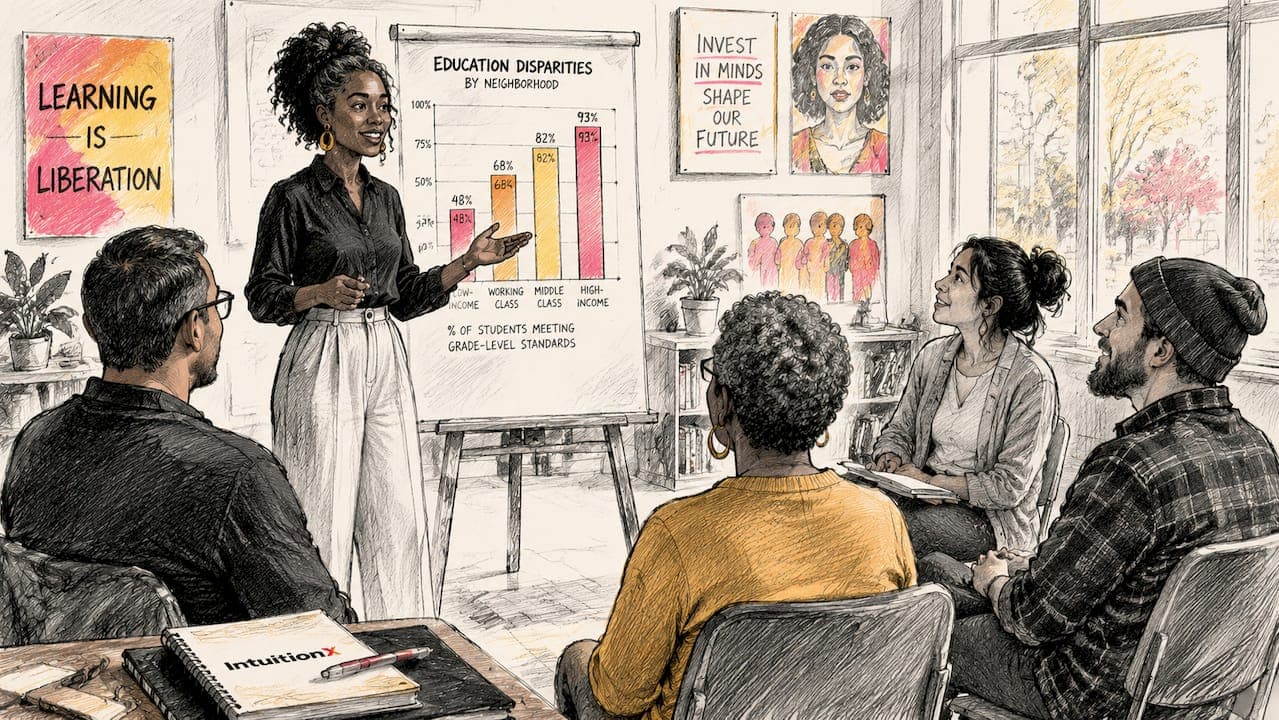
TL;DR:
- Education gaps are structural disparities in academic progress caused by socioeconomic inequality and uneven resource distribution. These gaps widen over time, especially during school years, leading to significant long-term social and economic consequences. Addressing them requires targeted early intervention, equitable teacher distribution, and technology that promotes critical thinking instead of passive learning.
Education gaps are defined as measurable disparities in academic progress and learning opportunities between groups of students, driven primarily by socioeconomic status, uneven resource distribution, and structural inequality. These disparities are not random. The per-child spending gap between the wealthiest and poorest regions of the world sits at approximately 40-to-1. That figure alone tells you everything about why education gaps explained through the lens of individual effort misses the point entirely. Research from the Mitchell Institute, the OECD, and DeepMind all confirm the same truth: the system shapes the outcome far more than the student does.
What are education gaps and why do they exist?
Education gaps, also referred to as educational disparities or achievement gaps, describe the consistent differences in learning outcomes between students from different socioeconomic, racial, geographic, or demographic backgrounds. They are not gaps in ability. They are gaps in access, support, and opportunity.
The causes are structural. Uneven resource distribution and a lack of adequate support widen these gaps as students move through school. A child born into poverty does not start school on equal footing with a child from a wealthy household. The difference in books, tutoring, nutrition, and parental time compounds before they ever sit in a classroom together.
Understanding education disparities also means recognising the role of geography. Rural schools frequently offer fewer advanced courses. Schools in low-income urban areas employ fewer fully certified teachers. These are not isolated failures. They are predictable outcomes of how education systems are funded and organised.
Why do education gaps widen as students get older?
This is where the data becomes genuinely alarming. Research from the Mitchell Institute shows that Year 3 students with highly educated parents are already 2 years and 3 months ahead of their least-advantaged peers. By Year 9, that gap grows to over 4 years. The gap does not stay the same. It accelerates.
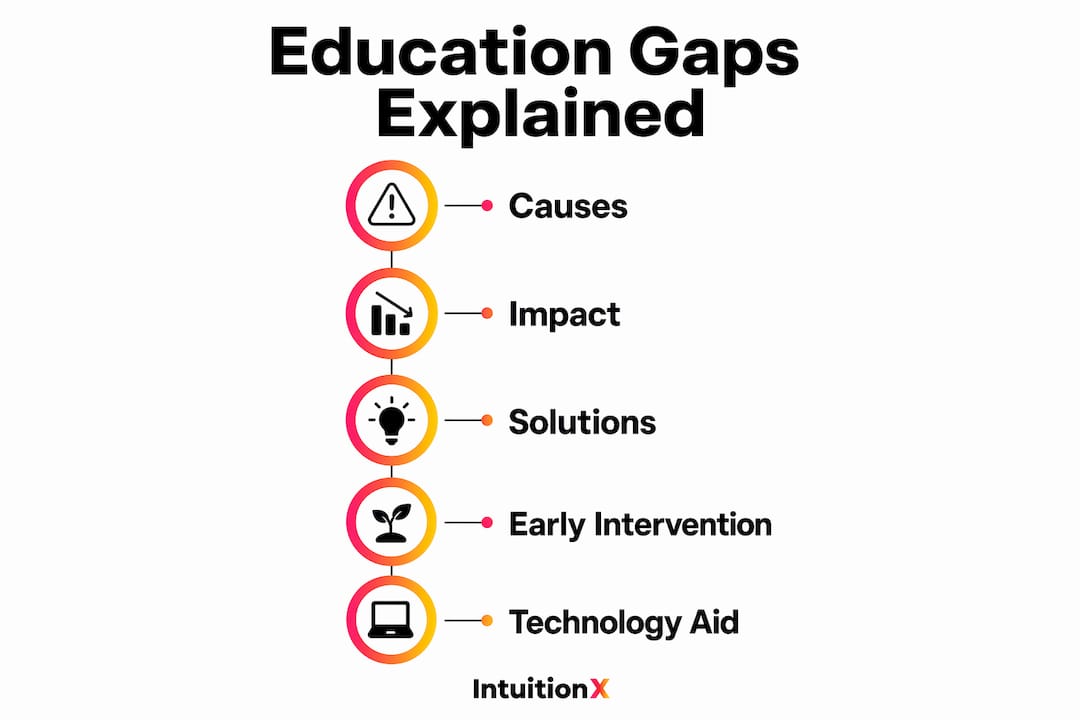
Educators call this the "Matthew Effect," a term borrowed from the biblical principle that those who have more tend to gain more. In education, students who start with stronger vocabulary, reading fluency, and numeracy skills absorb new knowledge faster. Students who start behind spend cognitive energy catching up rather than building forward.
Several factors drive this widening:
- Unqualified teachers in under-resourced schools. Schools serving low-income students employ fewer fully certified teachers and offer fewer advanced courses, limiting the ceiling of what students can achieve.
- Lack of personalised support. Large class sizes and stretched staff mean struggling students rarely receive the targeted attention they need.
- Cumulative disadvantage. Each year a student falls behind, the deficit compounds. Missing foundational maths concepts in Year 4 makes Year 7 algebra significantly harder.
- Inadequate mental health and pastoral support. The student-to-counsellor ratio in poorer areas frequently reaches 408:1, far above the recommended 250:1. Students who are anxious, hungry, or unsupported at home cannot learn effectively.
Pro Tip: If you are a parent concerned about your child falling behind, ask their school directly about the student-to-staff support ratio. That number tells you more about a school's capacity to help struggling learners than any league table position.
How do education gaps affect long-term outcomes?
The impact of education inequality extends well beyond exam results. Students who fall behind early are statistically less likely to complete secondary school, access higher education, or enter skilled employment. The OECD is explicit on this point: lack of fairness in education leads to increased dropout rates, grade repetition, and long-term social and economic costs. Equity is not just a moral argument. It is an economic one.
The effects show up across a lifetime:
| Outcome Area | Impact of Education Gap |
|---|---|
| Academic attainment | Lower test scores and reduced graduation rates |
| Higher education access | Reduced university enrolment among disadvantaged groups |
| Employment and income | Persistent wage gaps and higher rates of unemployment |
| Health outcomes | Lower health literacy and reduced access to healthcare |
| Social mobility | Reduced likelihood of moving beyond parents' socioeconomic status |
"Equity in education is not just about fairness. It is about the efficiency and quality of the entire system." — OECD Education GPS
The mental health dimension is frequently underestimated. Students in under-resourced schools face higher rates of anxiety and disengagement. In the United States, 91% of students report feeling nervous about asking questions in class. That statistic reflects a systemic failure to create psychologically safe learning environments, and it disproportionately affects students already at a disadvantage.
What are the different types of education gaps?
Not all education gaps are the same. Understanding the distinctions helps parents and educators target the right interventions. The three most commonly referenced types are the achievement gap, the opportunity gap, and the learning gap.
| Gap Type | Definition | Primary Driver | Example |
|---|---|---|---|
| Achievement Gap | Difference in test scores and grades between student groups | Socioeconomic status, race, disability | White students outperforming Black students on standardised tests |
| Opportunity Gap | Unequal access to quality teaching, resources, and enrichment | Funding inequality, geography | Rural students lacking access to Advanced Placement courses |
| Learning Gap | Difference between expected and actual learning progress for an individual | Inadequate instruction, missed schooling | A Year 7 student reading at a Year 4 level |
The opportunity gap is arguably the most foundational. Without equal access to qualified teachers and advanced courses, achievement gaps are almost inevitable. You cannot close the achievement gap without first addressing the opportunity gap that produces it.
Gender and disability also shape these disparities in ways that are often overlooked. Boys and girls can experience the same school very differently. Students with learning differences such as dyslexia or ADHD face additional barriers that compound existing socioeconomic disadvantages. Addressing educational gaps properly means accounting for all of these overlapping factors, not just income alone.
What strategies actually work for reducing education gaps?
Solutions for education gaps exist, and the evidence base is growing. The most effective approaches share a common thread: they are targeted, sustained, and address the root causes rather than the symptoms.
-
Start early. High-quality early childhood programmes improve cognitive, social, and emotional skills that shape lifelong learning. Children who access quality early education arrive at primary school better prepared to absorb formal instruction.
-
Invest in teacher quality and distribution. Equitable distribution of experienced, fully qualified teachers is one of the most direct levers available to policymakers. Schools serving disadvantaged communities need the best teachers, not the least experienced ones.
-
Use technology that teaches rather than tells. DeepMind's research in Sierra Leone found that AI-guided learning tools produced 1.8 to 2.5 years of learning progress by keeping students in the "struggle zone" through Socratic questioning rather than simply providing answers. That is a profound distinction. Technology that does the work for students widens gaps. Technology that guides thinking narrows them.
-
Prioritise offline-first digital tools in low-resource settings. Offline-first digital education tools are critical in areas with limited connectivity. Deploying technology that requires reliable internet in rural or conflict-affected regions simply replaces one barrier with another.
-
Integrate continuous formative assessment. Real-time identification of gaps through AI-supported formative assessment allows teachers to intervene before small deficits become entrenched. Waiting for end-of-year results is too late for students who are already falling behind.
Pro Tip: If you are an educator looking for active learning strategies that work for disengaged students, explore high school engagement approaches that are grounded in cognitive science rather than passive instruction.
Key takeaways
Education gaps are structural in origin, cumulative in effect, and addressable through targeted early intervention, equitable teacher distribution, and technology that promotes genuine thinking rather than passive consumption.
| Point | Details |
|---|---|
| Gaps are structural, not personal | Uneven funding and resource distribution drive disparities more than individual ability or effort. |
| Gaps widen through school years | A 2-year gap at Year 3 can exceed 4 years by Year 9 without targeted intervention. |
| Three distinct gap types exist | Achievement, opportunity, and learning gaps each require different responses and policy tools. |
| Early intervention is most effective | High-quality early childhood education builds the cognitive foundations that prevent later deficits. |
| Technology must teach, not replace thinking | AI tools that use Socratic questioning produce measurably better learning outcomes than those that provide direct answers. |
Why we cannot keep treating this as someone else's problem
I have spent years reading research on education inequality, and the finding that consistently stops me is this: the gap between advantaged and disadvantaged students does not hold steady. It grows. Every year a child spends in a system that cannot adequately support them, the deficit deepens. By the time we notice, it is often Year 9 or beyond, and the window for easy remediation has closed.
What frustrates me most is how often the conversation defaults to blaming schools or teachers. The Mitchell Institute's research is unambiguous: structural inequalities, not individual school failure, drive these outcomes. Teachers in under-resourced schools are frequently working harder than their counterparts in wealthy institutions. They simply have less to work with.
Parents and educators who want to make a difference need to understand the causes and solutions at a systemic level. Advocating for better counsellor ratios, equitable funding formulas, and access to quality early education is not abstract politics. It is the most direct thing a community can do for its children.
I am genuinely encouraged by what AI-guided learning is demonstrating in places like Sierra Leone. But I am also cautious. Technology deployed without equity of access simply creates a new version of the old divide. The question is never just "does this tool work?" It is "who gets to use it?"
— Angus
How Intuitionx is helping to close the gap
If you are a student, parent, or educator who has read this far, you already understand that education gaps are not inevitable. They are the product of systems that can be changed, and tools that can be improved.

Intuitionx is built on exactly that belief. Its AI tutor, Omniscience, uses Socratic questioning to keep learners in the productive struggle zone, the same approach DeepMind's research identified as most effective for genuine learning progress. Intuitionx draws on the knowledge of Oxford and Cambridge graduates across every subject, making elite-level academic support available to every student, not just those whose families can afford £150-an-hour private tutors. Through a first-of-its-kind agreement with the International Rescue Committee, 10% of Intuitionx revenue funds educational programmes for children in crisis and conflict regions. Start learning with Intuitionx and experience what genuinely personalised education feels like.
FAQ
What is the definition of an education gap?
An education gap is a measurable disparity in academic progress, attainment, or access to learning opportunities between different groups of students. These gaps are primarily driven by socioeconomic status, uneven resource distribution, and structural inequalities within education systems.
Why do education gaps widen as children get older?
Education gaps widen because early disadvantages compound over time. Research from the Mitchell Institute shows a gap of over 2 years at Year 3 grows to more than 4 years by Year 9, as students without adequate support fall progressively further behind their advantaged peers.
What is the difference between an achievement gap and an opportunity gap?
An achievement gap measures differences in test scores and grades between student groups. An opportunity gap refers to unequal access to quality teaching, resources, and enrichment, and is the structural cause that produces achievement gaps in the first place.
Can technology help reduce education gaps?
Yes, but only when designed correctly. DeepMind's research in Sierra Leone found that AI-guided learning tools using Socratic questioning produced 1.8 to 2.5 years of learning progress. Technology that provides direct answers rather than guiding thinking does not produce the same results.
What can parents do to help address education gaps?
Parents can advocate for equitable school funding, ask about student-to-counsellor ratios at their child's school, and seek out personalised learning tools that promote active thinking. Understanding educational equity frameworks is a strong starting point for informed advocacy.