

TL;DR:
- Global education faces systemic failures in access, equity, and quality, with 273 million children currently out of school. Policy coherence, cross-sector investment, and context-specific reforms are essential to overcome these challenges and ensure inclusive, equitable education worldwide. Uncritical digitalisation risks deepening inequalities unless accompanied by proper infrastructure, governance, and stakeholder engagement.
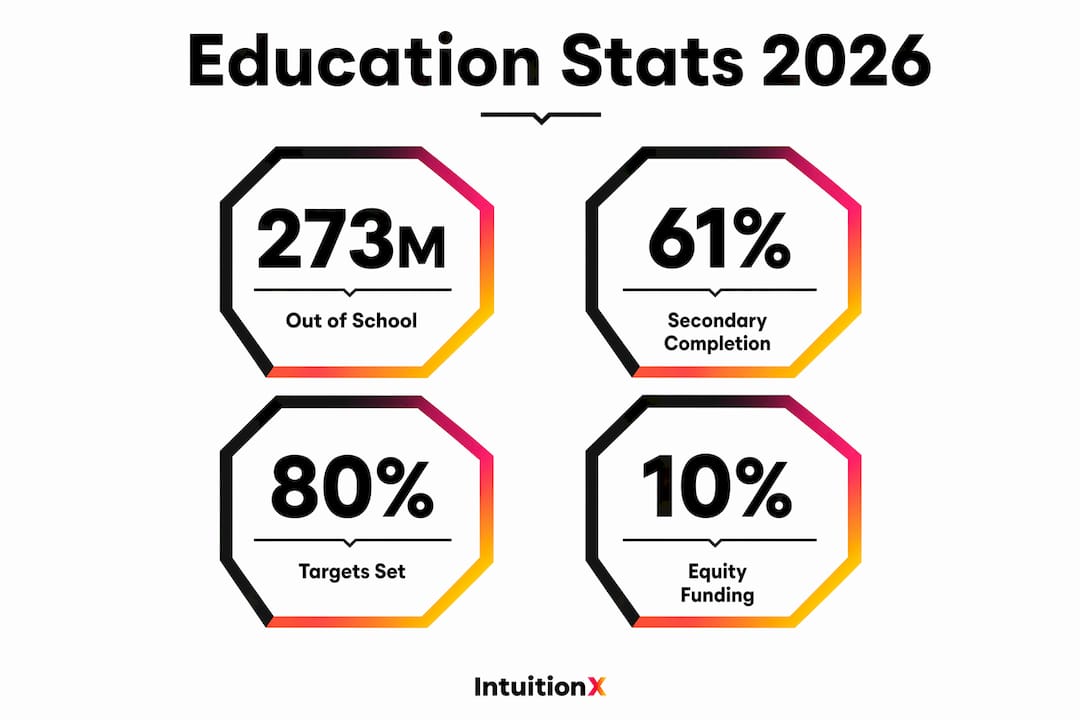
Global education challenges are defined by three interlocking failures: access, equity, and quality. According to the 2026 UNESCO Global Education Monitoring Report, 273 million children and youth are currently out of school worldwide, representing 1 in 6 school-age children. That figure has risen for the seventh consecutive year. For educators, policymakers, and advocates, this is not background noise. It is the defining crisis of our time. The United Nations Sustainable Development Goal 4 (SDG 4) commits every nation to inclusive, equitable, quality education by 2030. Yet the gap between commitment and reality grows wider with each passing year.
What are the primary global education challenges blocking access?
The out-of-school population has increased 3% since 2015, reversing decades of hard-won progress. Two forces drive this reversal above all others: population growth in sub-Saharan Africa and the Middle East, and protracted conflict displacing millions of children from any form of schooling. These are not abstract trends. In countries like South Sudan, Chad, and Afghanistan, entire generations are growing up without a classroom.

Poverty compounds the problem at every stage. Families in low-income settings weigh the direct costs of schooling against the income a working child can bring home. Even where school fees are abolished, ancillary costs including transport, uniforms, and meals push attendance out of reach. Access to education problems of this kind are structural, not individual failures.
The evidence on policy levers is encouraging, though. Key barriers and their documented solutions include:
- Compulsory schooling laws combined with child labour protections add over a year of schooling in 14 African countries when implemented together. Neither law works well in isolation.
- School meal programmes operate in 84% of countries but face chronic funding instability. Where they are funded reliably, school meals add up to half a year of learning for every $100 spent in low and middle-income countries.
- Girls' education gender gaps in many regions, including Nepal, have largely closed through sustained gender equality reforms. Progress is possible when political will is maintained over years, not electoral cycles.
Pro Tip: When analysing access barriers in a specific country context, separate demand-side constraints (poverty, child labour, cultural norms) from supply-side gaps (teacher shortages, infrastructure). Policies that address only one side consistently underperform.
Completion rates tell a similarly uneven story. Secondary school completion stands at 61% globally for upper secondary, with primary at 88% and lower secondary at 78%. The drop-off between primary and upper secondary is where the most children are lost, and it is where targeted policy intervention delivers the greatest return.
How does inequity shape education systems and their funding?
Education equity issues go far beyond who enrols in school. They describe who receives a quality education once inside the system, and whether public resources are distributed in proportion to need. The honest answer, globally, is that they are not.
Less than 10% of countries implement strong equity-focused policies that redistribute resources effectively toward disadvantaged learners. This means that in the vast majority of national systems, children from wealthier families receive better-resourced schooling simply by virtue of where they live. In the United States, a PBS NewsHour investigation into Massachusetts schools illustrates how funding tied to local housing patterns entrenches geographic segregation, concentrating students of colour in under-resourced districts. This is not a developing-world problem. It is a worldwide education trend.
The mechanisms that are supposed to correct these disparities often fall short:
- Conditional cash transfers reduce dropout rates among low-income families but rarely address the quality gap between schools in wealthy and poor areas.
- Per-pupil funding formulas that do not weight for disadvantage actively perpetuate inequality by giving equal resources to unequal starting points.
- Subsidies for private schooling can divert public funds away from the state schools that serve the most vulnerable learners.
| Funding mechanism | Potential benefit | Key limitation |
|---|---|---|
| Conditional cash transfers | Reduces dropout among low-income families | Does not address school quality gaps |
| Weighted per-pupil funding | Directs more resources to disadvantaged schools | Rarely implemented with sufficient weighting |
| School meal subsidies | Improves attendance and learning outcomes | Funding instability risks programme collapse |
| Private school vouchers | Expands choice for some families | Can undermine public school resourcing |
Pro Tip: When reviewing a national education budget, look specifically at whether the funding formula includes a deprivation weighting. A flat per-pupil rate is not a neutral policy. It is a choice to preserve existing inequalities.
Equity-oriented financing is rare globally, and its absence has measurable consequences. Children with disabilities, those in rural areas, and those from ethnic minorities consistently receive less support than their peers. Strong national commitments to equity and inclusion laws have increased in recent years, but they remain significantly under-implemented at the school and district level.
What are the real risks of digitalisation in education?
Digitalisation in education is the dominant policy trend of this decade. Governments and international donors have invested heavily in EdTech, tablets, and connectivity programmes, particularly following the COVID-19 pandemic. The promise is real. The risks are underappreciated.
The 2026 GEM Report and recent analysis published in Frontiers in Education identify four governance failures that arise when digital adoption moves faster than institutional capacity:
- Digital literacy gaps: Teachers and students in low-resource settings often lack the foundational skills to use technology effectively. Devices sit unused or are used for passive consumption rather than active learning.
- Data privacy violations: Rapid EdTech adoption during the COVID-19 pandemic caused widespread student and family data mining by commercial platforms. Many governments had no regulatory framework in place to prevent it.
- Commercialisation of learning: Privatisation and commercial involvement in education risks subordinating learning outcomes to profit motives, particularly when EdTech contracts are awarded without transparency.
- Infrastructure inequality: Digital tools widen the gap between connected and unconnected schools. A tablet programme that reaches urban schools first deepens rural disadvantage rather than reducing it.
"Digitalisation without addressing literacy, privacy, and infrastructure risks commercialising learning and deepening inequalities." — Frontiers in Education, 2025
The concept researchers call the "digital illusion" captures this well. Technology is treated as a solution to foundational problems like absent teachers, overcrowded classrooms, and low literacy, when in reality it amplifies existing conditions rather than replacing them. A well-resourced school with trained teachers benefits from EdTech. An under-resourced school without either does not.
Pro Tip: Before recommending or adopting any EdTech platform, ask three questions: Who owns the student data? What happens to it after the contract ends? And does the platform require infrastructure that disadvantaged schools do not have?
Responsible digitalisation requires genuine stakeholder engagement, including teachers, parents, and students, not just procurement decisions made at ministry level. The educational technology trends that deliver lasting results are those built around pedagogy first and technology second.
Which policy approaches actually work at scale?
Improving education systems at scale requires coherent policy packages, not isolated interventions. The 2026 GEM Report is explicit on this point: successful education reform requires contextualised national coherence between policies rather than the adoption of individual best practices lifted from other contexts.
What does that look like in practice? The most effective national efforts share several characteristics:
- They combine demand-side incentives (cash transfers, free meals, reduced fees) with supply-side investments (trained teachers, safe buildings, learning materials).
- They treat education as part of a broader social protection system, not a standalone sector.
- They include cross-sectoral investments that address the conditions of learning, not just the inputs. Electrification in Cambodia, for example, is linked to nearly one extra year of schooling per child. Power enables evening study, safer schools, and digital access.
- They maintain long-term political commitment across government cycles, which is where most reform efforts fail.
80% of countries now have national education targets for 2030, which is genuinely encouraging. Progress, however, is uneven. Countries that set targets aligned to their actual starting conditions and resource base consistently outperform those that adopt global benchmarks without adaptation. Context is not an excuse for low ambition. It is the foundation of realistic planning.
Coherent, inclusive policy packages that combine financing, social protection, and cross-sector investment are the most reliable path to sustained improvement. There is no shortcut, and there is no single intervention that substitutes for systemic commitment.
Key takeaways
Global education challenges are systemic, not incidental, and they require sustained, coherent policy action across access, equity, and quality dimensions to reverse the current trend of rising out-of-school numbers.
| Point | Details |
|---|---|
| Scale of the crisis | 273 million children are out of school globally, rising for the seventh consecutive year. |
| Equity financing is rare | Fewer than 10% of countries implement effective redistributive education funding. |
| Policy packages outperform single fixes | Combining compulsory schooling laws, child labour protections, and social transfers delivers measurable gains. |
| Digitalisation carries real risks | Uncritical EdTech adoption can deepen inequalities and expose students to data exploitation. |
| Cross-sector investment matters | Electrification, nutrition, and social protection amplify the impact of education spending. |
Why context is everything in education reform
I have spent considerable time reviewing the evidence on what actually moves the needle in education systems, and the single most consistent finding is this: there is no universal solution. Every time a policy that worked brilliantly in one country is transplanted wholesale into another, the results disappoint. Not because the idea was wrong, but because the conditions were different.
What strikes me most about the 2026 GEM Report is its honesty about this. It does not offer a ranked list of best practices. It argues, quite forcefully, that national coherence matters more than any individual intervention. A country that builds a coherent system where financing, teacher training, social protection, and community engagement all point in the same direction will outperform a country that adopts ten internationally acclaimed programmes that pull in different directions.
The digitalisation question is where I feel most strongly. There is enormous pressure on education ministries to adopt technology quickly, partly because donors fund it and partly because it looks like progress. But technology deployed without infrastructure, without trained teachers, and without data governance is not a solution. It is a risk. The COVID-19 period showed us exactly what happens when EdTech scales faster than regulation. Student data was harvested. Learning gaps widened. The children who were already behind fell further behind.
What gives me genuine optimism is the evidence on cross-sectoral investment. Electrification adding a year of schooling in Cambodia is not a quirky footnote. It is a reminder that children cannot learn in the dark, that hunger undermines concentration, and that education outcomes are shaped by everything outside the classroom as much as what happens inside it. Policymakers who understand this build better systems.
— Angus
How IntuitionX is tackling the education divide

The global learning barriers described in this article are exactly the problems Intuitionx was built to address. Wealthy families spend up to $150 an hour on private tutors, while millions of students worldwide have no meaningful support at all. Intuitionx provides 24/7 Socratic AI tutoring built on Oxbridge-level pedagogy, making elite-quality learning accessible to everyone regardless of postcode or income. Backed by Sir Anthony Seldon, described by the BBC as "one of Britain's leading educationalists," and through a first-of-its-kind agreement with the International Rescue Committee, Intuitionx commits 10% of revenue to educational programmes for children in crisis and conflict countries. Start learning with Intuitionx and experience the difference that genuine pedagogical intelligence makes.
FAQ
How many children are currently out of school worldwide?
273 million children and youth are out of school globally as of 2026, representing 1 in 6 school-age children. This figure has risen for the seventh consecutive year, reversing progress made before 2015.
What is the biggest barrier to education access in low-income countries?
Poverty is the primary barrier, operating through both direct costs (fees, uniforms, materials) and opportunity costs (lost income from children who work). Policy packages combining compulsory schooling laws with child labour protections and social transfers consistently outperform single-measure approaches.
Why does education equity remain so difficult to achieve?
Fewer than 10% of countries implement strong redistributive financing policies, meaning public education resources rarely flow in proportion to need. Geographic segregation, disability, gender, and ethnicity all compound the gap between who receives quality schooling and who does not.
What are the risks of using technology to solve education challenges?
Digitalisation without adequate infrastructure, teacher training, and data governance deepens existing inequalities rather than reducing them. During the COVID-19 pandemic, rapid EdTech adoption led to widespread student data mining by commercial platforms, highlighting the need for regulatory frameworks before deployment.
What does SDG 4 require of national governments?
SDG 4 commits all United Nations member states to inclusive, equitable, quality education and lifelong learning opportunities for all by 2030. Currently, 80% of countries have set national education targets aligned to this goal, though progress towards them remains uneven.