

TL;DR:
- Effective at-home humanities learning requires flexible, chunk-based scheduling that prioritizes exploration, reflection, and consistent record-keeping. Building a broad resource base, organizing physical and digital spaces, and using loop scheduling facilitate engagement without rigidity, promoting sustained progress and curiosity. Regular feedback, portfolio collection, and review help maintain structure while supporting individualized growth and motivation.
Getting the workflow for at-home learning right is one of the most underestimated challenges parents and educators face. Humanities subjects make it even harder. History, literature, and the arts resist the neat tick-box structure that works for maths. They need time, conversation, and room to think. Without a deliberate approach, days drift, subjects get skipped, and both you and your child end up frustrated. This guide gives you a concrete, flexible system that brings structure without rigidity, and turns at-home learning from a daily guessing game into something genuinely satisfying.
Table of Contents
- Key takeaways
- Setting up your at-home learning workflow
- Building a flexible daily and weekly schedule
- Keeping students engaged and giving effective feedback
- Managing records, portfolios, and evaluations
- My honest take on humanities workflows at home
- How Intuitionx supports your learning workflow
- FAQ
Key takeaways
| Point | Details |
|---|---|
| Use time chunks, not clock times | Organise your day into flexible blocks to reduce pressure and accommodate real life. |
| Start portfolio records early | Collect learning logs and work samples throughout the year to avoid last-minute stress. |
| Loop scheduling suits humanities | Rotate enrichment subjects so missed days never create a backlog or feelings of failure. |
| Feedback must be timely | Prompt, formative feedback keeps learners motivated and prevents confusion from building. |
| Build in buffer time | Scheduled breathing space between blocks absorbs interruptions and keeps the day flowing. |
Setting up your at-home learning workflow
Before you write a single schedule, you need the right foundations in place. Rushing to plan sessions without the correct tools and environment is one of the most common mistakes families make in the first few weeks.
For humanities specifically, your resource base needs to be broader than a single textbook. Think about what subjects you are covering and gather materials across formats: physical books, audio recordings, documentary links, and primary source collections. The variety matters because humanities learning thrives on exposure to multiple perspectives.
Here is a practical summary of what to have ready before you begin:
| Resource type | Examples | Purpose |
|---|---|---|
| Core texts | Literature anthologies, history narratives, art history books | Anchor content for unit studies |
| Digital tools | Shared calendar app, note-taking platform, portfolio folder | Organisation and record-keeping |
| Reference materials | Atlas, dictionary, timeline posters | Quick reference during sessions |
| Enrichment resources | Podcasts, documentaries, museum virtual tours | Deepen engagement and curiosity |
| Assessment tools | Rubric templates, reflection journals, checklist forms | Track progress and guide feedback |
Once resources are in order, think about your physical space. A dedicated learning area does not need to be a separate room. A consistent spot at the kitchen table, with materials within reach, signals to your child that it is time to focus. Consistency of place is a surprisingly powerful cue for concentration.
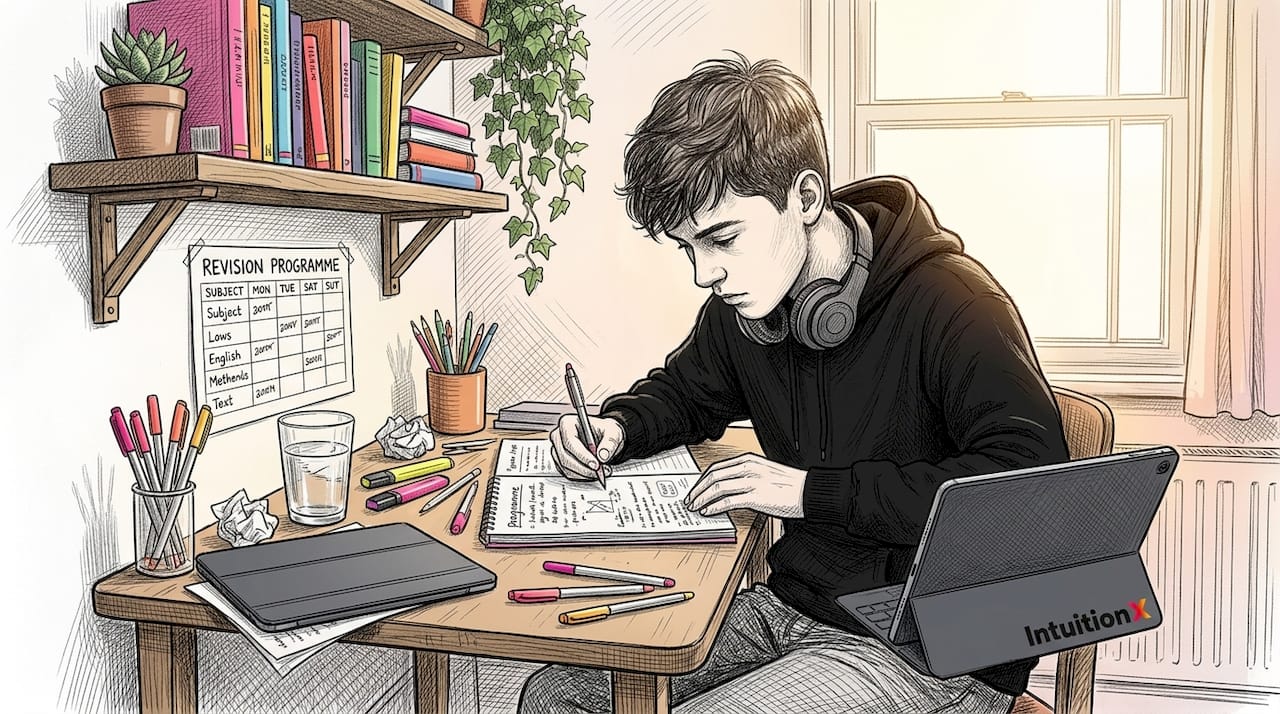
Pro Tip: Set up a simple digital folder system from day one. Label folders by subject and week, and drop in photos of work, typed notes, or saved documents as you go. This takes two minutes per session and saves hours when evaluation time arrives.
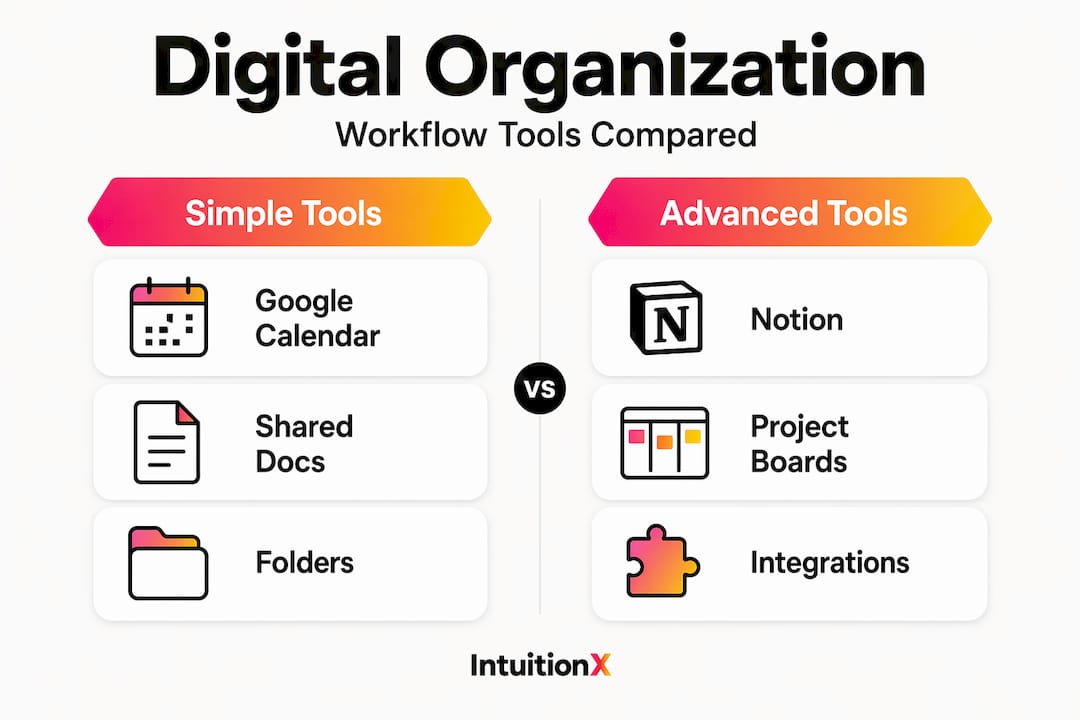
For digital organisation, tools like shared Google Calendars, Notion, or even a simple shared document work well. The goal is one place your child and you can both see. Confusion about where to find things kills momentum faster than almost anything else.
A solid personalised learning approach for humanities also means choosing resources that match your child's learning style early, rather than defaulting to whatever curriculum is most popular.
Building a flexible daily and weekly schedule
Structure is not the enemy of creativity. It is the container that makes creativity possible. The key insight for any effective home learning schedule is to organise by time chunks rather than clock times.
Chunk-based scheduling uses broad periods such as morning, mid-morning, lunch, afternoon, and evening rather than rigid slots like "10:17 am: begin history." This approach absorbs real life without the whole day collapsing when something runs over.
Here is a step-by-step process for building your schedule:
-
Map your chunks. Identify four to five natural periods in your day. Most families work well with a morning block, a focused work block, a break, an afternoon block, and optional evening enrichment.
-
Anchor with morning time. Start the learning day with 10 to 20 minutes of read-aloud or shared poetry. This ritual signals the shift from home mode to learning mode without demanding immediate concentration. It is especially effective for humanities because it builds vocabulary and cultural knowledge almost effortlessly.
-
Assign core subjects to your peak focus window. For most children, this is mid-morning. Prioritise whatever requires most mental effort here: close reading of a historical text, essay drafting, or structured literary analysis.
-
Use loop scheduling for enrichment subjects. Rather than assigning art history to Tuesday and geography to Thursday, create a rotating list. Loop scheduling means that if you miss a subject one day, you simply pick it up next time. No guilt, no fallen-behind feeling, no rewriting the whole week.
-
Schedule buffer time between blocks. This is not wasted time. Buffer time between sessions absorbs transitions, toilet breaks, snack preparation, and the moments when a good discussion runs longer than expected. Without it, one overrun creates a cascade.
-
End with reflection. A two-minute verbal or written reflection at the end of each session cements learning and gives you useful information about what to revisit.
-
Review the schedule weekly, not daily. A weekly check-in lets you see patterns, adjust for the following week, and celebrate what went well. Daily tweaking creates anxiety and instability.
Scheduling that fits family rhythms rather than fighting them is the difference between a plan that lasts a fortnight and one that carries you through the year. If your child is sharpest after lunch, move core work there. If your household is lively in the morning, use that energy for discussions rather than silent reading.
Pro Tip: Treat your first term as a prototype, not a finished product. Review what is and is not working after four weeks and adjust without guilt. Curriculum and workflow benefit from periodic review to fit the individual child's emerging needs.
For teenagers especially, a practical guide to learning workflows can help parents set expectations that grow with the student's increasing independence.
Keeping students engaged and giving effective feedback
A schedule tells you when to learn. Engagement strategies tell you how to make that learning stick. These are two different problems, and most home learning plans solve only the first one.
Start by being clear about learning objectives. Before each session, share a one-sentence goal with your child. Not "we are doing history today" but "today we are working out why the First World War started when it did." That specificity gives the learner something to grab onto. It also makes it much easier to give useful feedback afterwards.
Remote and at-home educators can draw on several proven techniques to maintain engagement:
- Plan weekly overviews. A brief Monday conversation about what the week will cover gives children a sense of shape and autonomy. They feel less like learning is being done to them.
- Use digital tools consistently. Feedback must be timely to influence the next steps in learning. Delays cause disengagement and confusion. Whether you use voice notes, a shared document, or a simple notebook, use the same channel every time. Switching tools confuses learners and fragments the record.
- Create connection routines. Remote learning benefits enormously from planned human interaction beyond content delivery. A five-minute check-in at the start of a session, asking how the child is feeling about the work, costs nothing and pays back in trust and openness.
- Offer formative feedback, not just summative marks. Rather than grading a piece of writing as a finished product, comment on it mid-process. Ask questions that push the child to think further rather than telling them what is wrong.
Pro Tip: Adopt a consistent feedback format your child can predict. For example, always start with what worked, then pose one question, then suggest one specific change. Predictable feedback feels safer and is more likely to be acted upon.
Learner engagement strategies that are built into the weekly workflow, rather than added as afterthoughts, produce measurably better outcomes over a full academic year.
Managing records, portfolios, and evaluations
Nobody enjoys discovering at the end of the year that they cannot remember what their child covered in October. Portfolio management is not bureaucracy. It is proof of progress, and it protects both you and your child.
The single most useful habit you can build is starting your portfolio system early. Collecting evidence throughout the year, rather than scrambling to compile it before an evaluation, transforms the process from stressful to straightforward.
What should you collect? A well-rounded portfolio for a humanities learner typically includes:
- Learning logs. Brief weekly notes on what was covered, what interested your child, and any notable discussions. These take five minutes to write and are invaluable during evaluation.
- Work samples. Essays, maps, timelines, book summaries, and art projects. You do not need everything. Aim for two to three samples per subject per term that show progress over time.
- Book lists. A running log of titles read, including read-alouds. This documents literary breadth and reading development simultaneously.
- Reflection notes. Short written or dictated responses from the child about what they found interesting or difficult. These demonstrate metacognition, which evaluators and future educators value highly.
When it comes to evaluation requirements, these vary significantly depending on where you are. Research your local authority's expectations early and design your record-keeping around those requirements from the outset.
The table below compares two approaches to portfolio management:
| Approach | Ad hoc collection | Systematic weekly collection |
|---|---|---|
| Effort at year end | High, often stressful | Minimal, mostly organising |
| Quality of evidence | Patchy, uneven | Consistent, shows clear progress |
| Child's involvement | Usually excluded | Can participate in choosing samples |
| Evaluation readiness | Reactive | Prepared well in advance |
| Reflection opportunities | Rare | Built into the weekly rhythm |
Incorporating reflection into your workflow also improves your methods over time. Set aside fifteen minutes every month to look back at what is working, what your child is gravitating towards, and whether the balance of subjects feels right. Humanities learning in thematic units provides a natural structure for this kind of review because each unit has a clear beginning and end.
My honest take on humanities workflows at home
I have worked with enough families to say this with some confidence: the parents who struggle most are usually the ones trying to replicate school at home. The ones who thrive are the ones who give themselves permission to do something different.
In my experience, flexibility is not a compromise on rigour. It is what makes rigour sustainable. A child who spends forty minutes genuinely absorbed in a historical novel has done more meaningful humanities work than one who trudges through a textbook exercise they have mentally checked out of.
What I have learned about humanities specifically is that the subject rewards curiosity in a way that maths rarely does. A question like "why did people believe that?" or "what would you have done?" opens up history, literature, and ethics simultaneously. The best at-home humanities sessions I have seen often look more like conversations than lessons.
The thing families tend to underestimate is the value of free exploration time. Scheduled space for a child to read whatever interests them, follow a curiosity, or revisit something from a previous unit is not downtime. It is where consolidation happens. Buffer time and free exploration are not optional extras in an effective home study plan. They are the parts that make everything else work.
My one warning: do not let the pursuit of the perfect schedule prevent you from starting. An imperfect routine that begins this Monday will outperform the ideal system you are still designing in three weeks' time.
— Angus
How Intuitionx supports your learning workflow
If you are building a workflow for at-home learning and want genuine academic rigour behind it, Intuitionx was designed for exactly this. It is a 24/7 Socratic AI tutor built on Oxbridge-level academic expertise, giving your child the kind of questioning, thinking-partner support that private tutors charge up to £150 an hour to provide.
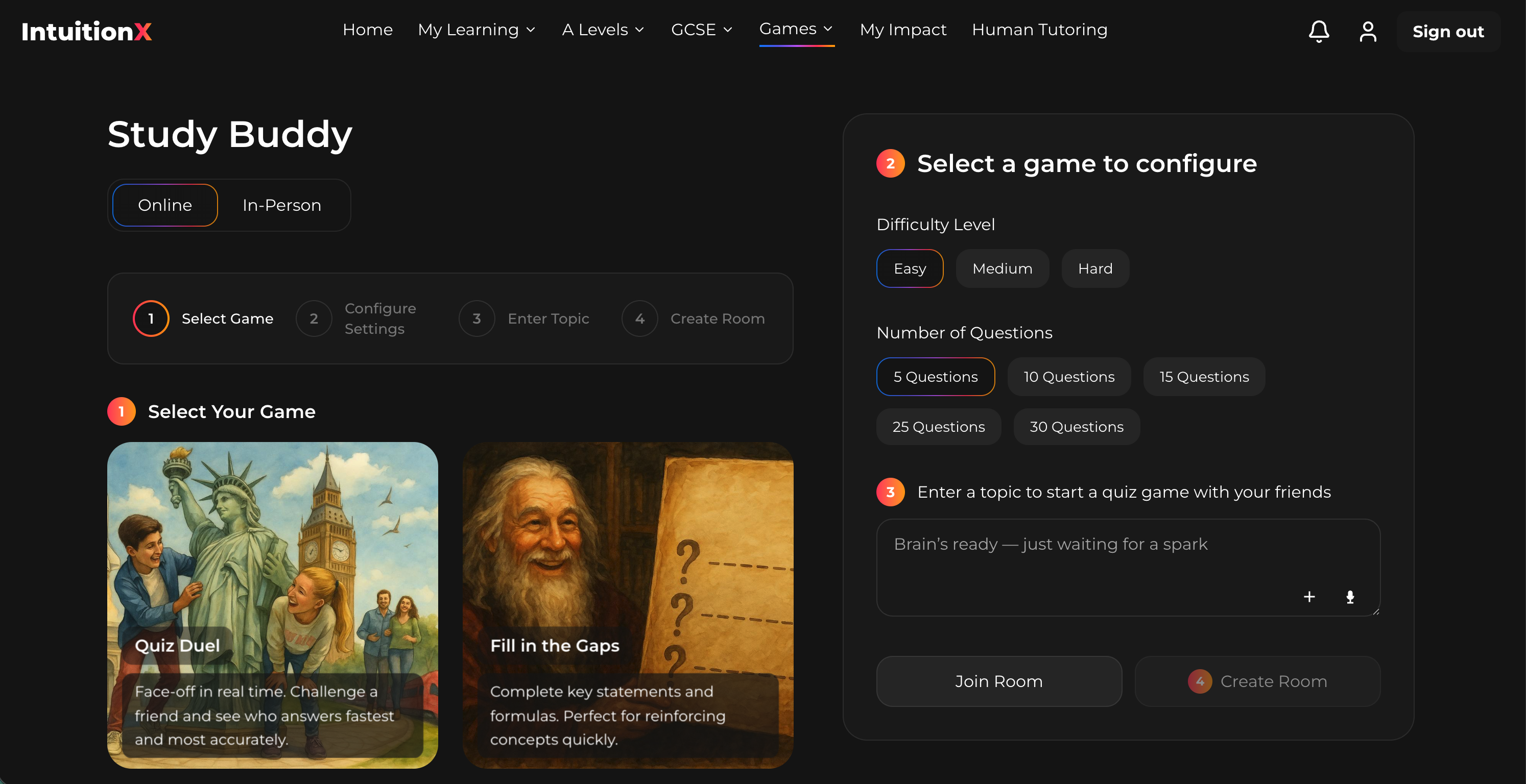
For humanities learners specifically, Intuitionx does not write essays for students. It asks the questions that make them think harder, just as the best Oxford and Cambridge tutors do. Whether you need support with engagement, feedback, or simply making sure your child is genuinely learning rather than passively consuming content, the IntuitionX home learning platform gives you the tools to make it happen. Explore what it can do for your family today.
FAQ
What is the best workflow for at-home learning in humanities?
The most effective workflow combines chunk-based scheduling, loop rotation of enrichment subjects, and regular portfolio collection. Anchoring each day with a short read-aloud and building in buffer time between sessions creates structure without rigidity.
How do I create a home learning schedule that actually works?
Organise your day into broad time chunks rather than rigid clock times, and design around family rhythms rather than school timetable conventions. Review and adjust the schedule every four weeks rather than trying to perfect it before you start.
How should I give feedback during at-home learning?
Feedback should be timely and formative, delivered using the same consistent channel every time. A simple structure of one strength, one question, and one suggestion gives learners something clear to act on.
What should a homeschool portfolio include for humanities?
A strong portfolio contains learning logs, two to three work samples per subject per term, a running book list, and brief reflection notes from the child. Starting this system early in the year removes deadline pressure entirely.
What is loop scheduling and how does it help?
Loop scheduling rotates enrichment subjects through a list rather than assigning them to fixed days. If a session is missed, you simply pick up where you left off, which removes the guilt and backlog that fixed scheduling creates.