

TL;DR:
- Self-directed study is a learner-led process that involves diagnosing gaps, setting goals, finding resources, applying strategies, and evaluating progress. It fosters intellectual independence, deeper retention, and signals initiative to employers and universities. Incorporating active reflection and feedback loops enhances mastery and ensures sustainable learning.
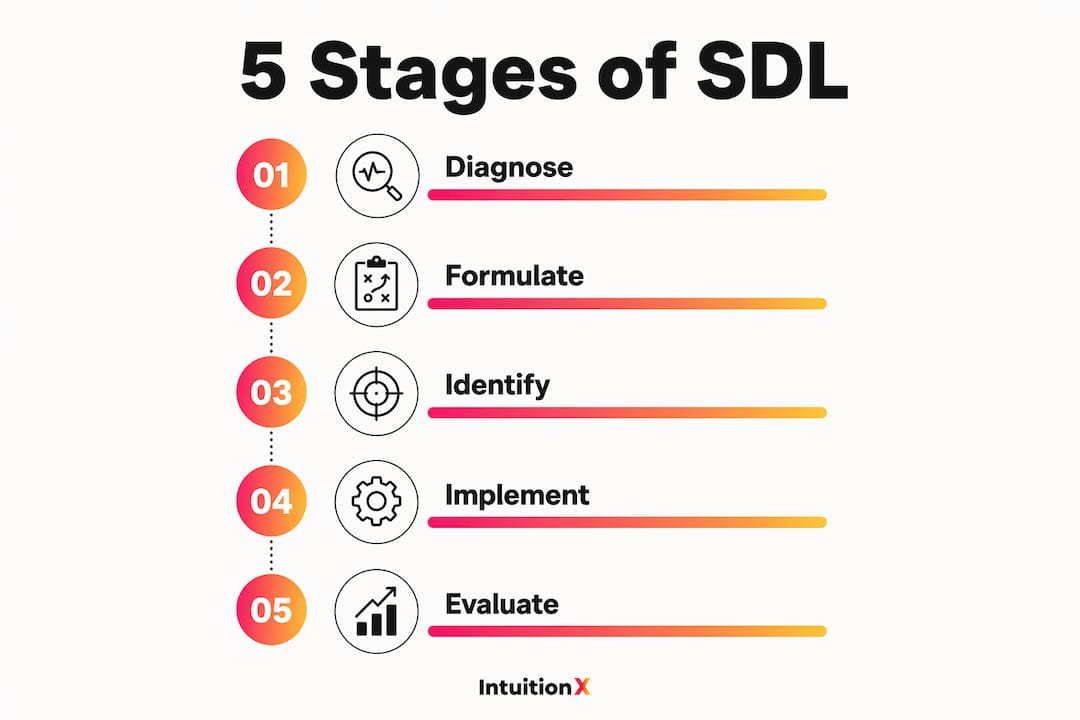
Self-directed study is defined as a learner-led process in which you take full control of what, how, and when you learn. Formally known as self-directed learning (SDL), it follows a structured 5-stage cycle: diagnose your gaps, set goals, find resources, apply strategies, and evaluate your progress. Malcolm Knowles, the adult education theorist who codified SDL, argued that this process builds something more valuable than any single subject: the ability to keep learning throughout your life. Research confirms it. SDL is now recognised as a critical meta-skill for adapting to careers and knowledge demands that formal curricula simply cannot keep pace with. Whether you are preparing for A Levels, university, or a career pivot, self-directed study is the skill that makes every other skill stick.
What is self-directed study and how does it actually work?

Self-directed study is not the same as doing homework alone or cramming the night before an exam. It is active, engaged learning driven by curiosity, questioning, and a genuine desire to understand. That distinction matters enormously. Passive reading or watching lecture recordings without reflection produces weak retention. SDL demands that you interrogate what you are learning and take deliberate steps to close the gaps you find.
The framework most educators use comes from Malcolm Knowles, whose five-stage model gives SDL its structure. Each stage builds on the last, and skipping any one of them weakens the whole process. Think of it as a cycle you return to repeatedly, not a checklist you complete once.
What are the essential stages and strategies in self-directed study?
The five stages of SDL give you a repeatable system for learning anything well.
-
Diagnose your learning needs. Identify exactly what you do not yet know. Use past papers, practice questions, or a simple mind map to surface your genuine gaps. Learners who actively diagnose knowledge gaps retain information significantly longer than those who skip this step.
-
Formulate specific goals. Vague intentions produce vague results. Write goals that are time-bound and measurable. "Understand photosynthesis by friday" is weaker than "Explain the light-dependent reactions from memory by friday afternoon."
-
Identify your resources. Books, academic journals, YouTube explainers, and AI tutors all count. The key is choosing sources that match the depth your goal requires. A GCSE topic needs a different resource than a university dissertation chapter.
-
Implement your strategies. Match your strategy to your objective: use spaced repetition for memorisation, project-based learning for applied skills, and peer discussion for conceptual understanding. Passive reading is rarely sufficient on its own.
-
Evaluate your outcomes. This is the stage most learners skip, and it is the most important. Test yourself, teach the concept to someone else, or use flashcard tools to confirm you have genuinely learned rather than merely recognised the material.
Pro Tip: Build a feedback loop into every study session. Spend the final ten minutes of any session testing yourself on what you just covered. Teaching the concept aloud, even to an empty room, is one of the fastest ways to expose what you have not yet mastered.
How does facilitated self-directed study compare to pure self-paced learning?
Not all SDL looks the same. The two main models are facilitated SDL, where a tutor or mentor provides a guiding framework, and purely self-paced SDL, where the learner operates entirely alone.
| Feature | Facilitated SDL | Pure self-paced SDL |
|---|---|---|
| Guidance | Tutor sets framework and checks progress | Learner defines everything independently |
| Autonomy | High, within a structured scaffold | Complete, with no external input |
| Risk of misconceptions | Lower, tutor corrects errors early | Higher, errors can go undetected |
| Motivation support | Built in through regular check-ins | Relies entirely on self-discipline |
| Best suited to | Learners building SDL habits | Experienced, confident self-studiers |
A 2025 prospective study of 119 medical students found that facilitated SDL yields better outcomes than purely self-paced approaches. The reason is straightforward: a tutor acts as a guardrail, catching misconceptions before they become entrenched and preventing wasted effort on the wrong material. Crucially, autonomy remains central even in facilitated models. The tutor does not direct the learning; they protect the process.
Pro Tip: If you are new to self-directed study, seek out a mentor, teacher, or AI tutor to review your goals and resource choices at the start. Even one structured conversation per week can prevent weeks of misdirected effort.
What are the key benefits and potential challenges of self-directed study?
The benefits of self-study are well documented, and they extend well beyond exam results.
- Intellectual independence. SDL trains you to find answers rather than wait for them. That habit transfers directly into university and professional life.
- Personalised pace. You spend more time where you need it and move quickly through material you already understand. No class can offer that.
- Deeper retention. Active learning through SDL produces stronger long-term memory than passive instruction, particularly when the evaluation stage is completed properly.
- Inclusion and access. A 2025 systematic review analysing 19 studies over 15 years found that SDL functions as an inclusion framework, helping learners from diverse backgrounds tailor education to their individual needs.
- Career and admissions advantage. Employers and university admissions officers view self-directed study as a signal of intellectual independence and initiative. It tells them you do not need to be managed.
The challenges are equally real, and ignoring them is where most learners come unstuck.
- Motivation gaps. Without external deadlines, it is easy to drift. Setting your own milestones and sharing them with someone else creates accountability.
- Strategy mismatch. Choosing the wrong method for the task, such as re-reading notes when you need active recall, wastes time and produces the illusion of progress.
- Skipping evaluation. The illusion of competence is SDL's most dangerous trap. Recognising material feels like knowing it. Testing yourself proves whether you actually do.
- Resource inequity. Access to quality materials is not equal. Free resources like Khan Academy, OpenLearn from the Open University, and public library databases can close much of that gap.
How can students practically implement self-directed study?
Turning SDL theory into a daily habit requires a concrete plan. Here is a practical framework you can start using this week.
-
Set a weekly learning goal. Choose one specific topic or skill to focus on. Write it down. Vague intentions evaporate; written goals survive.
-
Audit your current knowledge. Before you open a single resource, spend fifteen minutes writing down everything you already know about the topic. The gaps you cannot fill are your starting point.
-
Build a resource list. Select two or three sources at the right depth. For A Level Biology, that might be a textbook chapter, a YouTube series like those from Cognito, and a set of past paper questions. For a professional skill, it might be an industry report and a structured online course.
-
Schedule study blocks with spaced repetition. Study the material on day one, review it briefly on day three, and test yourself again on day seven. This spacing pattern dramatically improves long-term retention compared to massed practice. Tools like Anki make this process automatic.
-
Use active recall, not passive review. Close your notes and write down what you remember. Answer practice questions under timed conditions. Explain the concept in plain language. These methods are consistently more effective than re-reading.
-
Evaluate at the end of every session. Spend ten minutes testing yourself on the session's content. Use flashcards, a blank sheet of paper, or a study partner. Record what you could not recall and add it to the next session's agenda.
-
Review your progress weekly. Every sunday, assess whether you met your goal. If you did not, diagnose why. Was the goal too large? Was the strategy wrong? Adjust and move forward.
Metacognitive awareness, which means thinking about how you are thinking, is the quality that separates strong self-directed learners from weak ones. Learners who regularly ask "Am I actually understanding this, or just recognising it?" catch their own blind spots before they become exam problems. Pairing this habit with active learning strategies produces the fastest gains.
Pro Tip: Keep a brief learning journal. After each study session, write three sentences: what you learned, what confused you, and what you will do differently next time. This habit builds metacognitive skill faster than almost any other single practice.
Key takeaways
Self-directed study is a structured, learner-led process that builds intellectual independence, deepens retention, and signals initiative to employers and universities alike.
| Point | Details |
|---|---|
| SDL follows five stages | Diagnose, formulate, identify, implement, and evaluate: skipping any stage weakens the whole process. |
| Evaluation is the critical stage | Skipping self-testing creates an illusion of mastery; active recall and peer explanation confirm real learning. |
| Facilitated SDL outperforms pure self-pacing | A 2025 PMC study of 119 students shows tutor-guided SDL produces better outcomes while preserving autonomy. |
| Strategy must match the objective | Use spaced repetition for memory, project-based learning for skills, and peer discussion for concepts. |
| SDL signals independence to employers | Admissions officers and employers view self-directed study as evidence of initiative and intellectual maturity. |
Why self-directed study is the skill I wish I had been taught earlier
Most students treat study as something that happens to them. A teacher sets the work, a deadline enforces it, and the grade arrives. That model produces compliance, not capability. What I have observed, both in my own learning and in watching students develop, is that the shift from passive recipient to active learner is the single biggest lever available to any student.
The students who struggle most are rarely the least intelligent. They are the ones who have never been shown how to learn independently. They wait for clarity to arrive rather than going to find it. SDL fixes that. It teaches you to sit with confusion long enough to work through it, which is exactly what university, professional life, and any fast-changing knowledge economy will demand of you.
The most common misstep I see is treating the evaluation stage as optional. Students study for hours and feel productive. Then they sit an exam and discover they recognised the material without ever truly knowing it. The fix is uncomfortable but simple: test yourself constantly, and do it before you feel ready.
My honest view is that guided autonomy is the ideal model for most learners, particularly at the start. Pure self-pacing works brilliantly once you have the discipline and the self-assessment skills. Before that, a thinking partner who asks the right questions accelerates everything. SDL is not about going it alone. It is about owning the process.
— Angus
How Intuitionx helps you build a self-directed study habit
Self-directed study works best when you have the right support structure behind you. Intuitionx is a 24/7 AI tutor built on Oxbridge-level pedagogy, designed to act as your thinking partner rather than simply giving you answers.
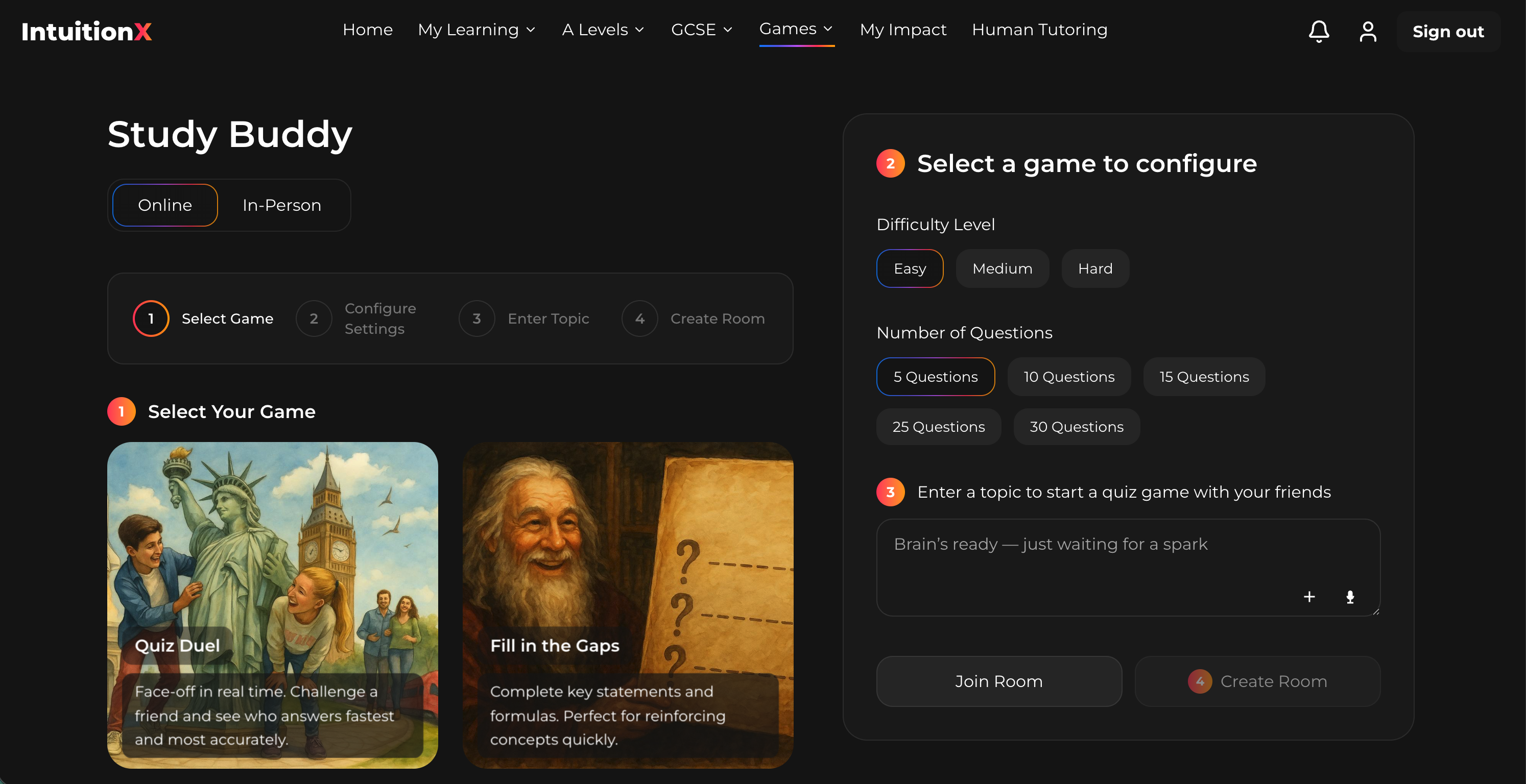
Intuitionx helps you diagnose your knowledge gaps, set meaningful goals, and work through material using Socratic questioning, the same method used by the world's best educators. Backed by Sir Anthony Seldon and built with academics who earned Firsts from Oxford and Cambridge, it gives every learner access to elite-level learning support regardless of background or budget. If you are serious about making self-directed study work for you, Intuitionx is where to start.
FAQ
What is self-directed learning in simple terms?
Self-directed learning is the process of taking control of your own education by identifying what you need to learn, choosing how to learn it, and assessing your own progress. It is structured, intentional, and learner-led rather than teacher-led.
How is self-directed study different from just studying alone?
Studying alone is simply the absence of others. Self-directed study is an active process involving goal-setting, resource selection, strategy choice, and self-evaluation. You can study alone passively or self-direct your learning with full intention.
Does facilitated SDL really produce better results?
A 2025 prospective study of 119 medical students confirmed that facilitated SDL produces better outcomes than purely self-paced learning. A tutor or mentor prevents misconceptions and keeps the learner on track without removing their autonomy.
What is the biggest mistake self-directed learners make?
Skipping the evaluation stage is the most common and costly error. Recognising material feels like knowing it, but only active self-testing, such as flashcards, practice questions, or explaining concepts aloud, confirms genuine understanding.
Do employers value self-directed study?
Employers and university admissions officers view self-directed study as a strong signal of initiative, intellectual independence, and self-discipline. These qualities are consistently rated among the most desirable attributes in candidates.