

TL;DR:
- Independent learning is a skill developed through deliberate scaffolding, involving planning, management, and reflection without constant adult support. Establishing structured environments, age-appropriate routines, and a gradual release framework helps children build confidence and metacognitive skills effectively. Using strategies like process praise, reflection rituals, and tailored tools for developmental stages fosters genuine independence in learners.
Independent learning is defined as a child's ability to plan, manage, and reflect on their own study without constant adult direction. It is not a natural trait children are born with. It is a skill built through deliberate, scaffolded teaching. Research confirms that independent learning requires metacognitive skills like self-monitoring, planning, and reflection, none of which develop automatically. The good news? With the right strategies, any parent or educator can help children learn independently, building confidence, resilience, and a genuine love of learning that lasts far beyond the classroom.
How to help children learn independently: setting the right foundations
Before a child can work alone, the conditions around them need to be right. A properly organised study environment with planners, whiteboards, folders, and timers reduces distractions and aids focus. This matters more than most parents realise. A cluttered kitchen table with a phone nearby is not a study space. A designated corner with everything a child needs, and nothing they do not, signals that learning time is serious.

Routines are equally important. When a child sits down at the same time each day, in the same place, with a checklist of what to cover, their brain shifts into focus mode faster. Think of it as a pre-flight checklist for the mind.
Attention spans vary significantly by age, and your time blocks should reflect that:
- Ages 5 to 7: 10 to 15 minutes of focused work, then a short break
- Ages 8 to 11: 15 to 20 minutes, with a 5-minute movement break
- Ages 12 and above: 20 to 30 minutes, following the Pomodoro Technique of focused sprints and structured rest
The Pomodoro Technique, originally developed by Francesco Cirillo, uses timed intervals to prevent mental fatigue. For younger children, simply setting a visual timer on the desk achieves the same effect without any formal system.
Pro Tip: Use a physical sand timer rather than a phone timer for younger children. It removes screen temptation and gives them a visual cue of time passing, which builds their awareness of pacing.
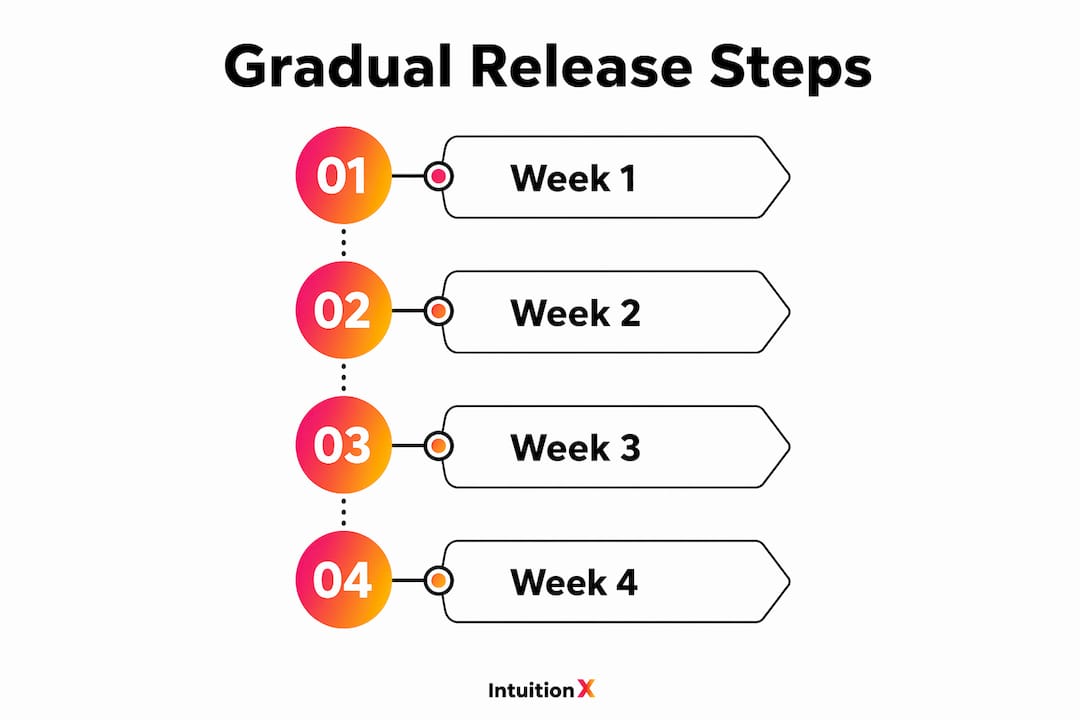
What does a gradual release approach look like in practice?
The most common mistake adults make is withdrawing support too quickly. Confusing independent learning with learning alone is a well-documented pitfall. True independence is built through a phased process where adult support fades gradually as the child's competence grows.
The Gradual Release framework offers a clear four-week model for this transition:
- Week 1: Joint goal-setting and supervised work. Sit with your child and agree on what they will study and why. Work through the first task together, modelling how to break it down and check understanding.
- Week 2: Midpoint check-ins. Your child starts the session alone, then you review progress halfway through. Ask questions rather than giving answers. "What have you figured out so far?" works better than "Let me show you."
- Week 3: Independent start, joint review. The child works through the full session independently. You review at the end, focusing on process rather than just results.
- Week 4: Child-led sessions with minimal oversight. The child plans, executes, and reflects on their own session. Your role shifts to occasional encouragement and a brief weekly check-in.
This 4-week Gradual Release framework is not rigid. Some children need six weeks. Others move faster. The point is that the scaffolding is always intentional and always fading.
| Week | Adult role | Child's responsibility |
|---|---|---|
| Week 1 | Leads and models | Participates and observes |
| Week 2 | Checks in at midpoint | Starts independently |
| Week 3 | Reviews at end | Works through full session |
| Week 4 | Weekly overview only | Plans and leads entirely |
Pro Tip: Keep a simple shared notebook where your child writes one sentence at the end of each session: "Today I worked on X and found Y tricky." This builds the habit of reflection before you formally introduce exit rituals.
Which strategies build motivation and metacognitive skills?
Motivation and self-awareness are the twin engines of self-directed learning. Without them, even the best study environment produces a child who stares at the page waiting for someone to tell them what to do next.
Growth mindset and metacognition are the core drivers of independent study. Reframing difficulty as "not yet" rather than "can't" is not just positive thinking. It changes how a child approaches obstacles. When a child says "I can't do this," gently redirect: "You can't do this yet. What's one small part you could try?" That single shift in language builds persistence over time.
Providing choice within boundaries is another powerful lever. Allowing children to choose their study environment or the order in which they tackle subjects increases engagement and ownership. The boundaries keep them on track. The choice gives them agency. Both matter.
Here are four strategies that directly build autonomy and metacognition:
- Process-based praise: Focus on effort and strategy, not results. "I noticed you re-read that section when you got stuck" is more powerful than "Well done, you got it right." Praising effort and process sustains intrinsic motivation far longer than outcome-based feedback.
- Exit rituals: Spend five minutes after each session asking: "What worked today? What would you do differently?" This brief post-task reflection is where metacognitive growth actually happens.
- Ask three before me: Before a child asks an adult for help, they must try three things first: re-read the question, check their notes, and attempt an answer. This technique encourages problem-solving and reduces learned helplessness.
- Muddiest point: At the end of a session, ask your child to name the one thing they are least clear on. This trains them to interrogate their own understanding rather than assuming they have grasped everything.
"An effective independent learner does not just complete tasks. They interrogate their own understanding, identify exactly where confusion sits, and attempt to resolve it before seeking help." — adapted from research on self-directed learning
For further reading on how questioning techniques support this kind of thinking, the Intuitionx guide on effective questioning techniques is worth exploring.
How should strategies change at different developmental stages?
A five-year-old and a fifteen-year-old are not just different in knowledge. They are different in how they process time, manage frustration, and understand their own thinking. Strategies for independent study must reflect this.
| Age group | Recommended approach | Key tools |
|---|---|---|
| Ages 5 to 7 | Short tasks (10 min), parent nearby, visual checklists | Picture checklists, sand timers, sticker charts |
| Ages 8 to 11 | Task chunking, choice of subject order, midpoint check-ins | Written checklists, planners, Pomodoro timer |
| Ages 12 to 14 | Self-planned sessions, weekly review with adult | Digital or paper planner, revision timetable |
| Ages 15 and above | Full autonomy coaching, goal-setting, self-assessment | Self-directed learning guides, study apps |
Age-appropriate adjustments such as visual checklists for younger children and self-paced calendars for teenagers significantly improve the effectiveness of independent learning programmes. The tools change, but the underlying principle does not: start with more support and reduce it as confidence grows.
For children with additional needs such as ADHD or dyslexia, the same phased approach applies, with two key modifications. First, keep time blocks shorter for longer. A child with ADHD may need 10-minute blocks well into secondary school. Second, make the structure more visible. Written checklists, colour-coded folders, and physical timers externalise the organisation that neurotypical children can manage internally.
Pro Tip: For teenagers who resist parental involvement, shift from checking their work to asking about their process. "How did you decide to approach that?" feels collaborative rather than supervisory, and it builds the metacognitive habit you are aiming for.
For parents of teenagers specifically, the Intuitionx resource on teen learning workflow offers practical methods tailored to that age group.
Key takeaways
Independent learning is a taught skill, not an innate trait, and it develops most reliably through phased scaffolding, process-based praise, and age-sensitive tools.
| Point | Details |
|---|---|
| Scaffold before stepping back | Use the Gradual Release framework to reduce support over four weeks, not all at once. |
| Match time blocks to age | Younger children need 10 to 15 minutes; older learners benefit from 20 to 30-minute Pomodoro sessions. |
| Praise process, not outcomes | Effort-focused feedback builds resilience and sustains motivation over time. |
| Build metacognition deliberately | Exit rituals and "Ask three before me" teach children to monitor their own understanding. |
| Adapt for developmental stage | Visual checklists suit younger children; autonomy coaching and self-planned sessions suit teenagers. |
What I have learned about building truly independent learners
I have seen a lot of well-meaning adults get this wrong in the same way. They set up a beautiful study space, explain the plan, and then either hover anxiously or disappear entirely. Neither works. Independence is not a switch you flip. It is a muscle you train, and like any muscle, it needs progressive resistance, not sudden overload.
The most counterintuitive lesson I have taken from watching children develop as learners is this: the more you resist the urge to rescue them from confusion, the faster they grow. Confusion is not a sign that your approach is failing. It is the moment learning is actually happening. Your job is to stay close enough to support, but far enough away to let them work through it.
I would also push back on the idea that motivation is something children either have or lack. In my experience, motivation follows competence. When a child feels genuinely capable of managing their own learning, even in small ways, the motivation to keep going appears almost automatically. That is why the early weeks of any independence-building effort should be designed for success, not challenge.
Finally, be patient with yourself as much as with your child. Micromanagement is usually driven by anxiety, not bad intentions. Recognising that is the first step to letting go.
— Angus
How Intuitionx supports independent learners
Building independent learning habits takes time, and having the right support makes all the difference. Intuitionx is a 24/7 Socratic AI tutor built on Oxbridge-level pedagogy, designed to guide children through their thinking rather than hand them answers. It models the very habits this article describes: asking questions, encouraging reflection, and building metacognitive confidence one session at a time.
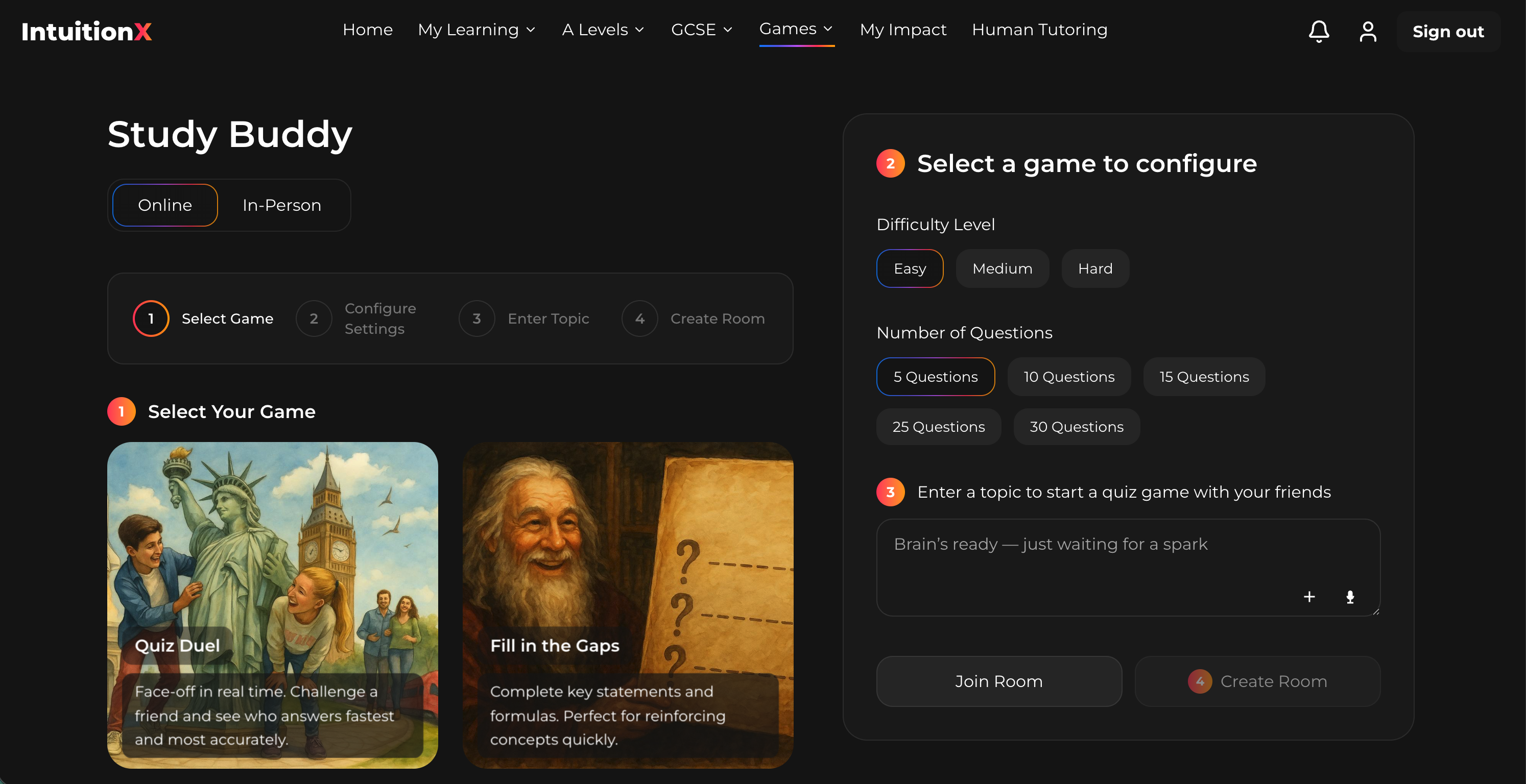
Whether you are a parent looking to support your child's study habits or an educator seeking a tool that genuinely builds independent thinking, Intuitionx meets learners where they are. Backed by Sir Anthony Seldon and built in partnership with the International Rescue Committee, it is education that works for everyone. Start learning with Intuitionx today.
FAQ
What is independent learning in children?
Independent learning is a child's ability to plan, manage, and reflect on their own study with decreasing adult support. It is a taught skill built through scaffolded guidance, not a trait children naturally possess.
At what age can children start learning independently?
Children as young as five can begin practising independent learning in short, structured bursts of 10 to 15 minutes with a parent nearby. The level of independence increases gradually as attention spans and self-regulation skills develop.
How do I stop my child from relying on me for every answer?
Introduce the "Ask three before me" rule: your child must re-read the question, check their notes, and attempt an answer before asking for help. This builds problem-solving habits and reduces learned helplessness over time.
Does independent learning work for children with ADHD or dyslexia?
Yes, with adjustments. Keep time blocks shorter for longer, use visual checklists and colour-coded folders, and externalise the structure that other children manage internally. The Gradual Release framework applies equally well with a slower pace.
How is independent learning different from just leaving a child to study alone?
Independent learning requires adult scaffolding that fades gradually as competence grows. Leaving a child entirely alone without that phased support often leads to frustration and disengagement rather than genuine self-direction.