
TL;DR:
- Supporting nervous learners requires identifying root causes and providing tailored, evidence-based strategies.
- Improving assessment literacy and practicing graded exposure help build confidence and resilience.
- Focus on developing capability and a growth mindset rather than solely reducing anxiety.
Nervous learners face more than just butterflies before an exam. Inside ordinary classrooms, 91% of students report feeling nervous about asking questions, while 80% describe themselves as bored and disengaged. The hidden barriers are real: confusion about what assessments actually require, fear of getting things wrong in front of peers, and a nagging sense that support is always reactive rather than preventative. This article breaks down proven, evidence-based strategies that parents and teens can start using right now, from identifying root causes to building the kind of durable academic confidence that lasts far beyond the next test.
Table of Contents
- How to identify what causes a learner's anxiety
- Improving assessment literacy for academic confidence
- Techniques to counter avoidance and build resilience
- Comparing key approaches: What works best for nervous learners?
- A fresh perspective: Why supporting nervous learners means more than just reducing anxiety
- How IntuitionX can help you support nervous learners
- Frequently asked questions
Key Takeaways
| Point | Details |
|---|---|
| Clarify anxiety sources | Pinpoint if anxiety is caused by learning difficulties or school pressures for more effective support. |
| Demystify assessments | Teach students to understand briefs, criteria, and feedback to boost confidence and reduce stress. |
| Avoid avoidance patterns | Encourage small, safe steps into challenging tasks rather than letting students skip them. |
| Combine strategies for best results | A mix of mechanics, CBT, and targeted supports works better than a single approach for nervous learners. |
How to identify what causes a learner's anxiety
Once you appreciate that support must be tailored, the next step is understanding what's really driving a learner's nervousness.
Academic anxiety rarely appears in isolation. It often sits alongside other conditions, and without identifying the real cause, even the most well-intentioned support can miss the mark entirely. A teenager who avoids homework might be anxious. Or they might have undiagnosed dyslexia. Or both. The overlap is far more common than most people realise.
Behavioural signs to watch for include:
- Avoidance: Repeatedly "forgetting" assignments, pretending to be ill on exam days, or shutting down when asked about schoolwork.
- Perfectionism: Spending three hours on a single paragraph, refusing to submit work unless it feels flawless, or abandoning tasks at the first sign of difficulty.
- Physical complaints: Headaches, stomach aches, or fatigue that reliably appear on school mornings or before assessments.
- Emotional withdrawal: Becoming tearful, irritable, or unusually quiet around academic topics.
These signs can look identical whether the cause is anxiety, ADHD, a learning disorder, or a combination. That is precisely why evaluation matters. As research from Child Mind Institute explains, anxiety and underlying learning difficulties can mask each other, and getting a proper evaluation is essential to guiding the right support.
"Clarifying what's really driving the anxiety, whether that's anxiety itself or an underlying learning difficulty, ensures support is targeted rather than generic. These conditions frequently overlap and disguise each other."
Early identification is not just useful; it is critical. The longer a nervous learner's anxiety goes unaddressed or misidentified, the more deeply ingrained their avoidance patterns become. What starts as occasional hesitation can solidify into a habitual response that feels impossible to shift. Parents who are supporting anxious teens will recognise that the earlier you catch the real driver, the easier it is to build effective support around it.
Getting an evaluation through a school's SENCO (Special Educational Needs Co-ordinator) or an independent educational psychologist is a practical first step. From there, you have a foundation to build real, personalised strategies rather than guessing.
Improving assessment literacy for academic confidence
With the source of anxiety identified, we can turn to a core mechanism for building confidence: demystifying assessments.
Here's something that surprises many parents. A huge proportion of academic anxiety is not really about ability at all. It's about confusion. Students frequently don't understand what a question is asking, what the marking criteria actually reward, or how to use feedback constructively. When everything feels mysterious and high-stakes at the same time, anxiety thrives.
Assessment literacy is the skill of understanding how assessments work: how to read a brief, how to interpret marking criteria, and how to apply feedback to improve. Research shows that targeted assessment support dramatically improves students' understanding, reduces anxiety, and raises academic self-efficacy.
| Support strategy | Impact on anxiety | Impact on confidence | Accessibility |
|---|---|---|---|
| Teaching students to read briefs | High | High | Easy to implement at home |
| Unpacking marking criteria together | High | Very high | Requires some subject knowledge |
| Structured feedback review sessions | Medium | High | Can be done with any marked work |
| Practice with past papers | Medium | High | Freely available for most subjects |
Simple home routines can make a significant difference. Try sitting with your teen after any marked piece of work and asking three questions: What did the teacher reward most? What did they suggest improving? What would you do differently? That process alone builds the habit of reflective, strategic thinking rather than emotional reaction to a grade.
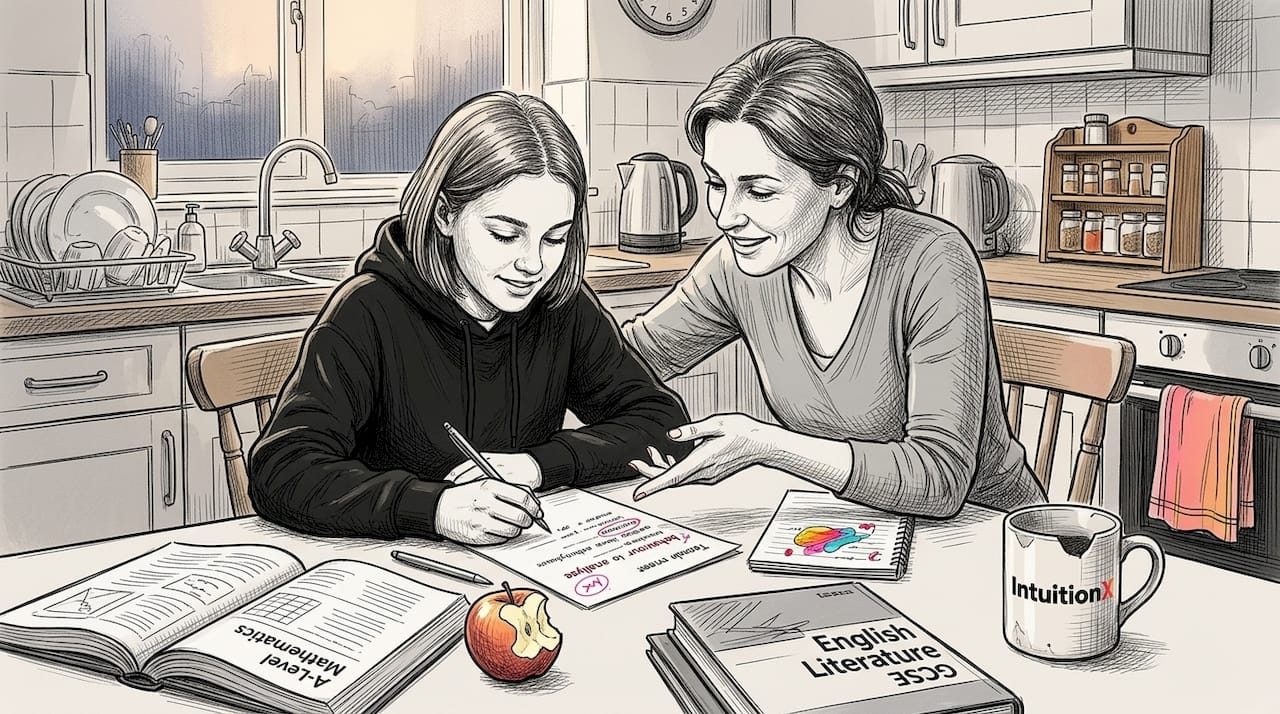
Pro Tip: Encourage your teen to annotate their assignment brief before they start writing. Underlining key command words like "analyse," "evaluate," or "compare" removes a huge source of confusion and gives them a concrete plan before they write a single sentence.
For teens working towards A Levels, active learning for A levels is closely tied to assessment literacy, because knowing how to think about a subject is inseparable from knowing how to demonstrate that thinking effectively. Similarly, if your teen studies English literature, understanding assessment strategies for literature can transform their relationship with essays from dreaded obligations to manageable, structured tasks.
Assessment literacy also builds something deeper: academic identity. When students understand the rules of the game, they start to feel like they belong in academic spaces rather than being permanently on the outside, hoping not to be caught out.
Techniques to counter avoidance and build resilience
While assessment clarity lays the foundation, everyday strategies are needed to break the cycle of avoidance.
Avoidance is one of the most powerful reinforcers of anxiety in existence. Every time a student avoids a challenging task and feels relief, their brain learns that avoidance works. Over time, the urge to avoid becomes stronger and the anxiety threshold drops. This is a well-documented cycle, and breaking it requires a specific, evidence-based approach.
"The goal is not to eliminate discomfort but to help learners tolerate it while remaining engaged. Graded exposure, done gradually and with support, is one of the most powerful tools available."
The principle behind this is straightforward: graded exposure and task-splitting help students face feared situations incrementally rather than all at once. Here's how to build a practical exposure ladder for a nervous learner:
- Identify the feared situation specifically. Is it reading aloud in class? Submitting work online? Asking a teacher a question? Being specific matters enormously.
- Rate the fear from 1 to 10. This gives both you and your teen a shared language for discussing anxiety without it feeling overwhelming.
- Break the feared situation into smaller steps. For example, before asking a teacher in class, practise by asking a parent, then a trusted friend, then sending an email to the teacher, then speaking to the teacher one-to-one.
- Take one step at a time, with celebration. Each small success genuinely matters. Don't rush.
- Expect some discomfort and plan for it. The goal is to tolerate the anxiety, not eliminate it before engaging.
There is an important distinction parents need to understand here. Validating your teen's feelings ("I know this feels really hard") is essential. But validating the avoidance itself ("It's fine, you don't have to do it") is counterproductive. The difference is subtle but transformative. Empowering fears by removing all challenge teaches young people that they cannot cope. They can. They just need the right scaffolding.
Research confirms that CBT-based interventions are significantly more effective than mindfulness-only or broadly eclectic approaches when it comes to reducing youth anxiety in school settings. Cognitive Behavioural Therapy tools, including graded exposure, thought challenging, and behavioural experiments, give students practical skills rather than simply asking them to "breathe and relax."
For parents looking to support active engagement strategies at home, these graded approaches align closely with how confident learners naturally develop resilience: by doing hard things repeatedly until they stop feeling impossible.
Comparing key approaches: What works best for nervous learners?
To decide which support to prioritise, it helps to see how the main options stack up against each other.
Not all approaches to academic anxiety are equal. Some feel good but produce limited results. Others have strong evidence behind them but require more initial effort. Here's an honest comparison to help you make an informed decision.
| Approach | Evidence strength | Best suited for | Limitations |
|---|---|---|---|
| CBT-based strategies | Strong | Moderate to severe anxiety | Requires consistency and practice |
| Assessment literacy support | Strong | Confusion-driven anxiety | Needs subject-specific knowledge |
| Mindfulness programmes | Moderate | Mild anxiety, general wellbeing | Less effective alone for school anxiety |
| General reassurance | Weak | Short-term comfort only | Can reinforce avoidance if overused |
| Removing all academic pressure | Very weak | None recommended | Worsens long-term confidence |
Research confirms that CBT-based universal interventions produce small but significant reductions in anxiety, while mechanical strategies like assessment literacy directly target the confidence gaps that fuel academic nervousness. The best outcomes come from combining preventative approaches for the whole class or family with more targeted support for students whose anxiety is more severe.
What should you try first? It depends on the learner's profile:
- Primarily confused and overwhelmed? Start with assessment literacy. Clarity removes a huge portion of the anxiety immediately.
- Avoiding specific situations (presentations, exams, asking questions)? Start with graded exposure and task-splitting.
- Generally anxious across all areas? Seek a proper evaluation and consider CBT-based support from a trained professional.
- Mildly nervous but engaged? Reassurance, structure, and celebrating small wins may be enough.
Choosing the right starting point matters because trying the wrong strategy first can feel discouraging. If a student is primarily confused about assessments, teaching them to breathe deeply before an essay will not address the real problem. Match the strategy to the cause, and you'll see results far more quickly. For broader strategies for academic success, it's worth exploring how these evidence-based methods layer together across different subjects.
A fresh perspective: Why supporting nervous learners means more than just reducing anxiety
There is a conversation happening in education that we feel strongly about, and it's not always a comfortable one.
Much of the current focus on student wellbeing is centred on reducing anxiety as a feeling. Breathing exercises, mindfulness apps, pastoral check-ins. These all have their place. But there is a risk that by focusing almost entirely on symptom management, we inadvertently send young people a troubling message: that their anxiety is the enemy, and success means feeling calm.
We don't believe that. And the evidence doesn't support it either.
The students who go on to achieve genuine academic confidence are rarely the ones who stopped feeling nervous. They're the ones who learned to act despite feeling nervous. There is a world of difference between those two outcomes. One is about elimination; the other is about capability.
Over-accommodation is a real and underappreciated risk. When parents remove every challenge, negotiate every deadline, or consistently intervene before a student has a chance to struggle, they are protecting feelings at the cost of developing skills. And skills are precisely what nervous learners need most. The ability to decode an assessment brief, break down a daunting task, or persist through a confusing topic: these are learnable. They build real confidence, not the fragile kind that crumbles the moment circumstances change.
What nervous learners genuinely need is a sense of capability and belonging in academic spaces. That comes from succeeding at hard things, even imperfectly. It comes from understanding how learning works and feeling that the rules are transparent rather than arbitrary. It comes from developing a relationship with challenge that says "this is difficult, and I can handle difficult."
Transforming academic engagement is ultimately about this shift in identity. Not "I am an anxious student" but "I am a learner who sometimes finds things hard." That reframe is possible. It takes consistency, the right strategies, and a support system that believes in raising expectations gently rather than lowering them indefinitely.
How IntuitionX can help you support nervous learners
Putting all of these strategies into practice is one thing. Having the right support structure around a nervous learner makes everything more sustainable. That's exactly where IntuitionX comes in.

IntuitionX is a 24/7 Socratic AI tutor built on Oxbridge-level expertise, designed to guide nervous learners through exactly the kind of structured, confidence-building process this article describes. From breaking down assessment criteria to scaffolding complex tasks into manageable steps, IntuitionX works as a thinking partner that asks the right questions rather than just giving answers. It doesn't write essays for students; it helps them think, understand, and grow. Available any time a teen needs support, without the fear of judgement that holds so many nervous learners back in classrooms, IntuitionX turns academic stress into genuine capability. Try it today.
Frequently asked questions
How can parents tell if their teen's anxiety is academic or something else?
Look out for patterns tied specifically to school tasks, assessments, or classroom situations, and seek a proper evaluation to distinguish between academic anxiety, learning disorders, and general stress, since these frequently overlap and disguise each other.
Is avoiding stressful situations ever the right support strategy?
Avoidance is counterproductive in the long run. Graded exposure and task-splitting are far more effective approaches, helping nervous learners build genuine resilience by tolerating discomfort while staying academically engaged.
What's a simple way to boost a nervous learner's sense of academic confidence?
Start by demystifying assessment criteria and feedback together. Teaching students to interpret criteria and use feedback constructively directly targets the confidence gap that drives so much academic anxiety.
Are school-based mindfulness programmes effective for nervous learners?
They offer some benefit for general wellbeing, but CBT-based programmes are significantly more effective for reducing school-related anxiety, particularly for students whose nervousness is moderate to severe.