
TL;DR:
- Most families prefer eclectic homeschooling, combining methods like classical or traditional approaches for flexibility. Structured methods tend to produce higher test scores, especially for academically ambitious students. Starting with a familiar, flexible approach and adapting over time leads to better success than overthinking the initial choice.
Homeschool methods are defined as the educational frameworks parents use to organise, structure, and deliver learning at home. The most effective types of homeschool methods for most families are eclectic, classical, and traditional approaches, because each offers a different balance of structure and flexibility. Curriculum brands like Sonlight and Ambleside Online have built entire programmes around these philosophies, and research bodies like the National Home Education Research Institute (NHERI) confirm that home-educated students consistently outperform their peers. Whether you are new to homeschooling or reconsidering your current approach, understanding the full range of available methods is the clearest path to a confident choice.

What are the most popular homeschool methods used by families?
Eclectic homeschooling is the most popular approach, used by approximately 36% of homeschool families, followed by classical education at 21%. That gap tells you something important: most families do not commit rigidly to one philosophy. They mix and match to fit their children and their own teaching style.
Here is a quick overview of the most widely used homeschool teaching styles and the families they suit best:
- Eclectic: Blends multiple methods intentionally. Suits families who want flexibility and have more than one child with different learning needs.
- Classical: Follows the Trivium (grammar, logic, rhetoric stages). Suits families who value rigorous academic structure and great books.
- Traditional/school-at-home: Mirrors conventional school with textbooks and timetables. Suits families new to homeschooling who want a familiar framework.
- Charlotte Mason: Uses living books, nature study, and narration. Suits families who want a literature-rich, gentle approach.
- Montessori homeschooling: Centres on prepared environments and hands-on learning. Suits younger children and families who prioritise independence.
- Unschooling: Follows the child's curiosity with no fixed curriculum. Suits highly self-motivated learners and families comfortable with open-ended learning.
- Unit studies: Teaches all subjects through one central theme. Suits families who want integrated, project-based learning at home.
- Waldorf: Ties learning to developmental stages and the arts. Suits families who want creativity woven into every subject.
No single method is universally superior. The right choice depends on your child's learning style, your teaching preferences, and your family's daily rhythm.
How do structured homeschool methods produce strong academic results?
Structured approaches like traditional and classical homeschooling are defined by textbooks, fixed schedules, and regular assessments. Students following these methods score 15–30 percentile points higher than national public school averages on standardised tests. That is a substantial gap, and it reflects the power of consistent, measurable progress.
Classical homeschooling organises learning around the Trivium. The grammar stage (roughly ages 5–10) focuses on absorbing facts and foundational knowledge. The logic stage (ages 10–12) trains children to reason and question. The rhetoric stage (ages 12–18) teaches students to express ideas persuasively. Curriculum providers like Classical Conversations and Memoria Press have built structured programmes around this model.
Traditional homeschooling, sometimes called school-at-home, mirrors the conventional classroom. Parents use graded textbooks, lesson plans, and assessments from publishers such as Abeka or Bob Jones University Press. Traditional homeschool is often the entry point for families new to home education, because the format feels familiar and reduces the initial planning burden.
The challenge with structured methods is sustainability. A highly organised curriculum can feel exhausting if your natural teaching style is more relaxed. Misalignment between method and parent temperament leads to burnout faster than any curriculum flaw.
Pro Tip: Before committing to a structured programme, spend two weeks tracking how you naturally organise your day. If you rely on lists and schedules, classical or traditional methods will feel natural. If you prefer spontaneity, a rigid timetable will drain you within a term.
What is eclectic homeschooling and why is it so popular?
Eclectic homeschooling is defined as the intentional borrowing from multiple methods to build a customised programme that fits family goals. Intentional eclecticism is distinct from curriculum hopping. Curriculum hopping means switching approaches reactively when something feels hard. Intentional eclecticism means choosing elements from different philosophies with a clear purpose.
A family might use Classical Conversations for history and Latin, a Montessori approach for maths with manipulatives, and Charlotte Mason living books for literature. Each choice serves a deliberate goal. The result is a programme that fits the child rather than forcing the child to fit the programme.
Eclectic methods work especially well for families with multiple children at different stages. You can apply a structured approach for an older child who thrives with deadlines, while using a more child-led method for a younger sibling who learns best through play. Experienced homeschoolers typically evolve toward eclectic approaches as their confidence grows, which explains why it is the most widely used style overall.
Pro Tip: Identify your three core family values before mixing methods. If you value academic rigour, creativity, and outdoor learning, choose one method that serves each value. That gives your eclectic plan a spine, not just a collection of random resources.
How do child-led methods like unschooling, Montessori, and Charlotte Mason differ?
Child-led and philosophy-based methods sit at the opposite end of the spectrum from traditional schooling. They share a belief that children learn best when they are genuinely curious, not when they are compliant.
Unschooling is legal across all US states and decentralises learning entirely to the child's curiosity. There is no fixed curriculum, no timetable, and no formal assessments. A child obsessed with trains might spend months studying engineering, geography, and history through that single lens. The parent's role is to facilitate resources, not to direct learning.
Montessori homeschooling creates a "prepared environment" where children choose their own activities from carefully selected materials. The method, developed by Dr Maria Montessori, emphasises hands-on learning, independence, and uninterrupted work periods. At home, this typically means dedicated shelves of tactile materials, freedom of movement, and minimal direct instruction.
The Charlotte Mason method, developed by British educator Charlotte Mason in the late 19th century, uses "living books" (narrative, author-led texts rather than dry textbooks), nature journals, short lessons of 15–20 minutes, and narration (asking the child to retell what they have learned). Ambleside Online is the most widely used free Charlotte Mason curriculum, and it remains popular with families who want a literature-rich education without a heavy price tag.
| Method | Structure level | Learning driver | Best suited to |
|---|---|---|---|
| Unschooling | Very low | Child's curiosity | Self-motivated, independent learners |
| Montessori | Low to moderate | Child's choice within prepared materials | Young children, tactile learners |
| Charlotte Mason | Moderate | Living books and nature | Literature-loving families, gentle learners |
| Classical | High | Trivium stages | Academically ambitious families |
| Traditional | High | Textbook and timetable | New homeschoolers, structured learners |
The key difference across these methods is not content but control. Unschooling gives the child near-total control. Classical gives the curriculum near-total control. Every other method sits somewhere between those two poles.
How can parents choose and adapt homeschool methods to fit their family?
Choosing a homeschool method starts with self-awareness, not curriculum browsing. Parents should identify their teaching style and family values before selecting a method, because a mismatch between parent temperament and chosen approach is the leading cause of early burnout. Your child's learning style matters enormously, but so does yours.
Use this checklist to identify your starting point:
- Assess your organisation style. Do you plan weeks in advance or prefer day-by-day flexibility?
- Identify your child's learning preferences. Does your child thrive with clear goals and deadlines, or with open-ended exploration?
- Define your non-negotiables. What subjects or skills must your programme cover regardless of method?
- Set a realistic daily time budget. Some methods require two hours of active teaching; others require far less.
- Trial before committing. Run a four-week pilot with your chosen method before purchasing a full year's curriculum.
Consistency and regular assessment are the strongest predictors of homeschool success, regardless of which philosophy you choose. A moderately good method applied consistently outperforms an excellent method applied erratically. Tracking progress monthly, even informally, keeps you honest about what is working.
Parents should also view their chosen homeschool style as a flexible framework that shapes priorities rather than a rigid set of rules. Most families who start with one method find themselves adapting it within the first year. That is not failure. That is good teaching. Understanding your child's learning style early gives you a significant head start in making those adaptations confidently.
Key takeaways
The most effective homeschool method is the one that aligns with both your child's learning style and your own teaching temperament, applied with consistency and regular review.
| Point | Details |
|---|---|
| Eclectic is the most popular | Around 36% of families use eclectic methods, blending approaches intentionally rather than randomly. |
| Structured methods raise test scores | Students in classical and traditional programmes score 15–30 percentile points above public school averages. |
| Child-led methods need the right fit | Unschooling, Montessori, and Charlotte Mason work best when matched to genuinely self-motivated or tactile learners. |
| Parent style matters as much as child style | Misalignment between your teaching temperament and your chosen method leads to burnout, not better outcomes. |
| Consistency beats philosophy | Regular assessment and steady application predict success more reliably than any single educational philosophy. |
Why I think most parents overthink choosing a homeschool method
Most parents I speak with spend months agonising over which method to choose before they have taught a single lesson. I understand the anxiety. The stakes feel high, and the options feel endless. But the research is clear: success depends more on consistent application than on picking the philosophically correct approach.
My honest view is that the traditional versus unschooling debate is largely a distraction for most families. The families who thrive are not the ones who found the perfect method on day one. They are the ones who started somewhere sensible, paid attention to what their child actually responded to, and adjusted accordingly. That is just good teaching, whatever you call it.
The parent's teaching style is the variable most guides underplay. I have seen families abandon excellent classical curricula not because the method failed, but because the parent found daily Socratic dialogue exhausting. The method was right for the child. It was wrong for the teacher. Both matter equally.
My practical advice: start with traditional or a light eclectic blend for your first term. It gives you structure while you learn what your child needs. Then adapt. Most experienced homeschoolers end up somewhere eclectic anyway. You might as well plan for that evolution from the start rather than treating every adjustment as a setback.
— Angus
How Intuitionx supports your homeschool planning
Choosing a method is only the first step. Putting it into practice, day after day, across multiple subjects and learning styles, is where most families need genuine support.
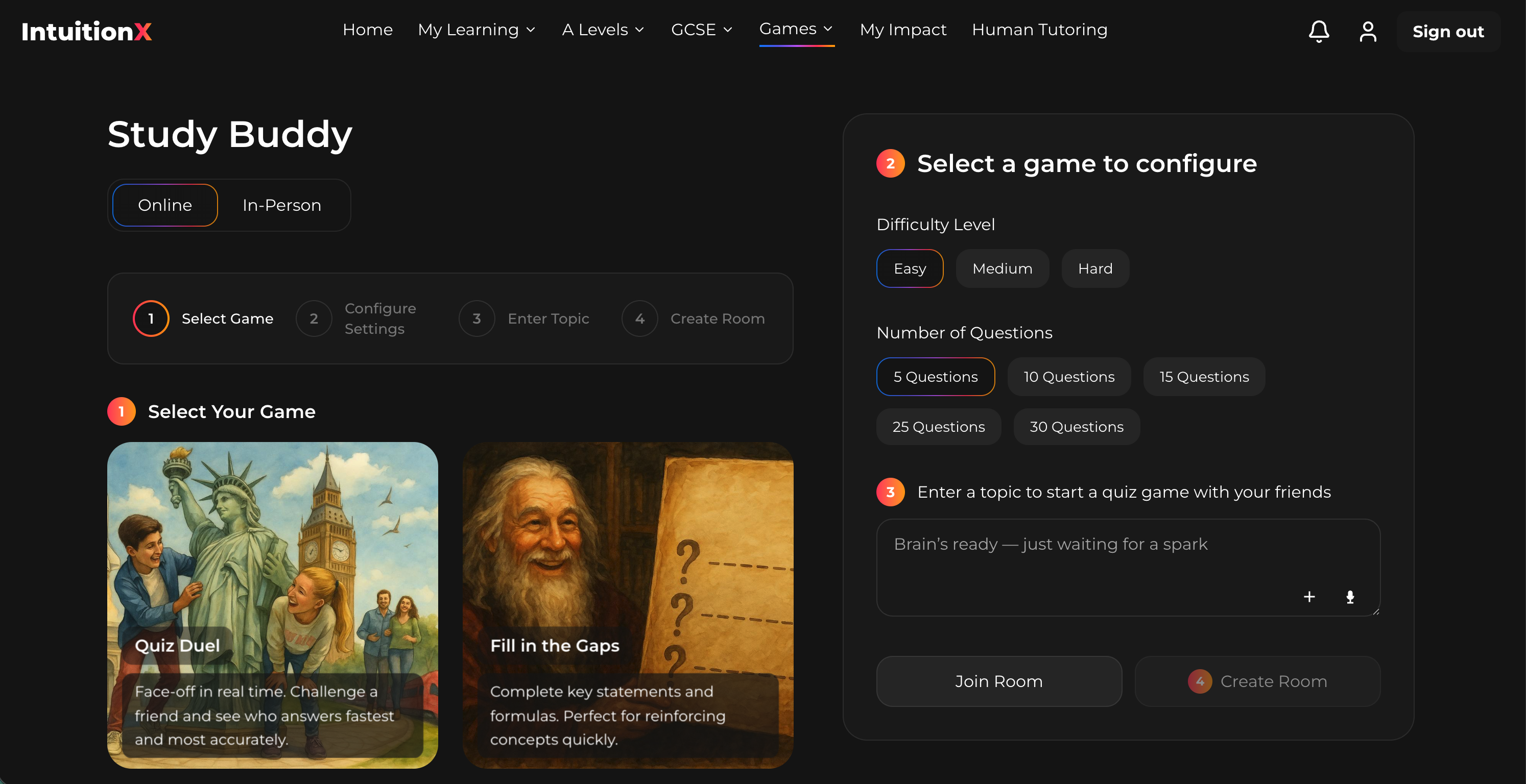
Intuitionx is a 24/7 Socratic AI tutor built on Oxbridge-level pedagogy, designed to work alongside any homeschool method you choose. Whether you are running a classical programme, a Charlotte Mason curriculum, or a fully eclectic blend, Intuitionx adapts to your child's pace and asks the questions that build real understanding rather than just delivering answers. Sir Anthony Seldon, described by the BBC as "one of Britain's leading educationalists", has backed Intuitionx directly. You can explore how it fits your at-home learning workflow or start your child's personalised learning plan today at Intuitionx.
FAQ
What is the most popular homeschool method in 2026?
Eclectic homeschooling is the most widely used approach, adopted by around 36% of homeschool families. It involves intentionally combining elements from multiple methods to suit individual family needs.
Do homeschooled students perform better academically?
Students in structured homeschool programmes, particularly classical and traditional methods, score 15–30 percentile points above national public school averages on standardised tests. Consistency of application is the key driver of that performance gap.
Is unschooling legal in the UK and US?
Unschooling is legal across all US states as a recognised form of home education. In the UK, home education is legal but local authorities may request evidence that education is taking place; fully unstructured approaches require careful documentation.
How do I know which homeschool method suits my child?
Start by assessing your child's learning preferences and your own teaching style. Families who value structure tend to succeed with classical or traditional methods, while those who prefer flexibility often thrive with eclectic or Charlotte Mason approaches.
What is the difference between Charlotte Mason and Montessori homeschooling?
Charlotte Mason uses living books, narration, and nature study with short, focused lessons. Montessori centres on a prepared physical environment and child-chosen hands-on activities. Charlotte Mason is more literature-led; Montessori is more materials-led.