

TL;DR:
- By 2026, high-dosage tutoring, combined with AI-assisted hybrid models, will shape effective and scalable academic support. Proper programme design, with frequent sessions, small groups, and tutor consistency, is essential for measurable student gains. Policy shifts are embedding these evidence-based practices into public education, emphasizing quality, accountability, and data governance.
The future of academic tutoring in 2026 is defined by a proven model called high-dosage tutoring, combined with AI-assisted hybrid delivery that together produce measurable learning gains for students at every level. High-dosage tutoring is the practice of providing frequent, small-group academic support at least three times per week, sustained over a full semester or longer. Research from the Overdeck Family Foundation and Stanford University confirms this model works. Organisations like the National Tutoring Authority and FutureEd are now shaping how schools, families, and policymakers adopt it. The trends in academic tutoring point clearly in one direction: personalised, evidence-based, and increasingly digital.
What does the evidence say about high-dosage tutoring?
High-dosage tutoring produces 1 to 2 months of additional learning in a single academic year. That finding comes from randomised trials involving over 27,000 K-12 students, with effect sizes of 0.06 to 0.09 standard deviations. Those numbers may sound modest, but in educational research, they represent a consistent, replicable gain across diverse student populations. That is the kind of evidence policymakers and school leaders need before committing public funds.
The structural requirements for this model are well established. According to the National Tutoring Authority, effective programme design calls for at least three sessions per week, groups of no more than three to four students, and sustained delivery across a full semester. Frequency and group size matter more than tutor credentials or cost. In fact, lower-cost programmes at around $1,200 per student perform as well as premium programmes costing $2,000 when these structural elements are followed. That is a significant finding for schools working within tight budgets.
One factor that is often overlooked is relational continuity. Tutor-switching during programmes correlates directly with weaker student outcomes. When a student builds a working relationship with one tutor over weeks and months, instructional momentum builds. Disrupting that relationship resets progress. Schools and families should treat tutor consistency as a non-negotiable design element, not an administrative convenience.
Pro Tip: When evaluating any tutoring programme, ask specifically about tutor continuity policies. A programme that rotates tutors frequently is likely to underperform, regardless of how polished its marketing materials appear.
How is AI reshaping academic support delivery?
Hybrid tutoring is the model most likely to define edu tech in 2026. It combines scheduled sessions with a human tutor alongside structured computer-assisted learning days, reducing cost while preserving the relational element that drives engagement. Stanford University research found that programmes reducing human tutor contact from four days to two, supplemented with two AI-supported days, achieved strong student outcomes. The catch is that human motivation remains indispensable.
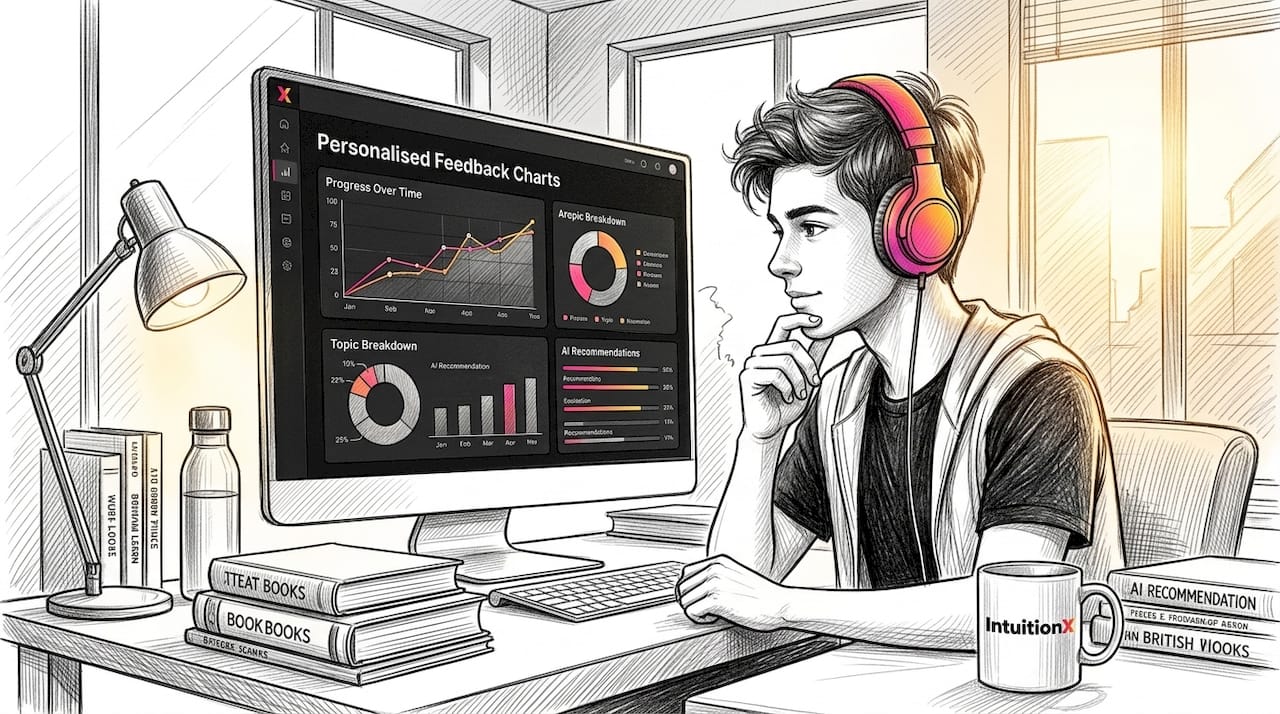
AI tools cannot replace the role a tutor plays in encouraging a reluctant student to open a laptop and engage. Stanford's research is clear: without human support, student engagement with AI platforms drops sharply, and the potential gains evaporate. This is why the online tutoring future is not purely automated. It is a partnership between technology and people, where each plays a distinct role.
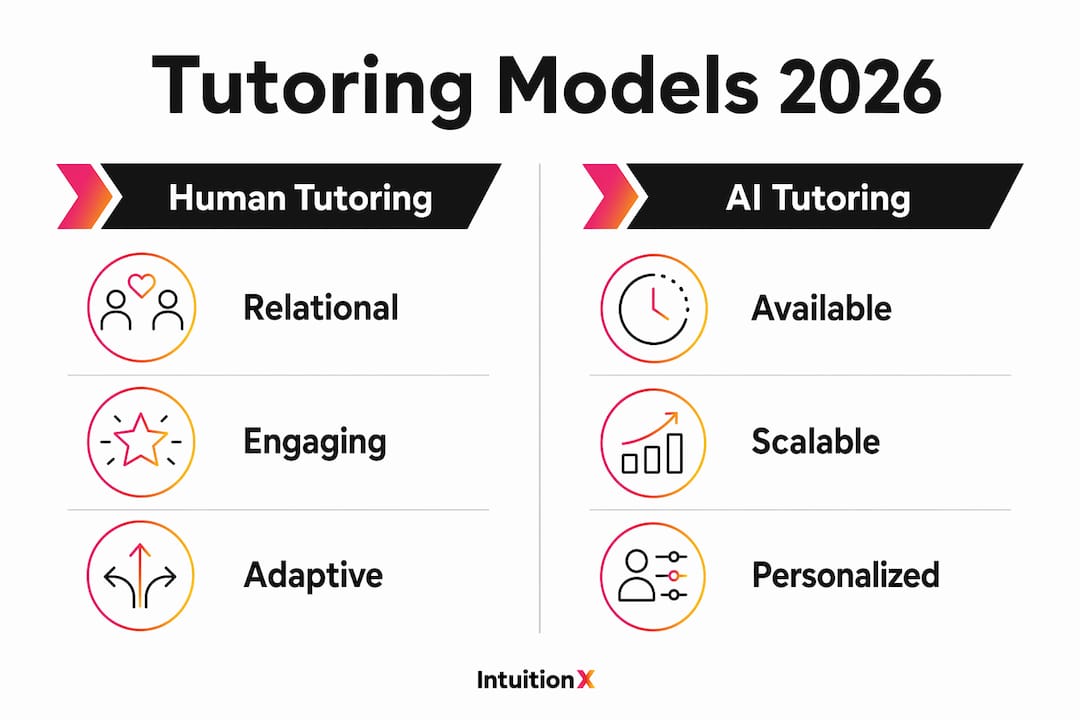
Here is how the two elements compare in practice:
| Element | Human tutor | AI-assisted learning |
|---|---|---|
| Motivation and encouragement | High | Low |
| Personalised feedback at scale | Limited | High |
| Curriculum alignment | Strong | Variable |
| Availability | Restricted by schedule | 24/7 |
| Cost per session | High | Low |
The ethical dimension of AI in education is also gaining urgency. Emerging AI governance frameworks for 2026 focus on four themes: privacy, transparency, fairness, and human-centred design. School leaders adopting AI tutoring tools need to evaluate these platforms the same way they would assess any edtech procurement, scrutinising data governance and algorithmic transparency alongside instructional quality. Families should ask providers directly how student data is stored and used.
- AI tutoring tools work best when a human tutor actively encourages students to use them between sessions
- Governance questions around privacy and data use must be addressed before any AI platform is adopted in schools
- Curriculum alignment between AI content and classroom teaching significantly improves outcomes
- Human tutors remain the primary source of motivation, particularly for younger or disengaged students
Pro Tip: Before adopting any AI tutoring platform, request a clear data privacy policy and ask whether the tool's content is aligned to your national or regional curriculum. Generic AI that scrapes the internet is not the same as a purpose-built academic support tool.
For a deeper look at how these two approaches compare, the digital vs human tutoring debate is worth exploring in full.
What role does policy play in tutoring's future?
Tutoring is no longer a pandemic recovery measure. By 2026, 41 tutoring-related bills have been introduced across 19 US states, aiming to embed and fund tutoring permanently within public education systems. This shift from emergency intervention to statutory provision is one of the most significant academic support innovations of the decade. It signals that governments now accept the evidence and are prepared to fund it at scale.
These bills are not vague aspirations. They include statutory definitions of high-dosage tutoring, codified quality metrics, and pilot funding for AI-assisted delivery models. FutureEd's legislative tracker shows that policymakers are moving tutoring into law with specific fidelity requirements attached to public funding. That means providers who cannot demonstrate adherence to evidence-based design will be excluded from state contracts.
| State initiative | Key feature | Funding focus |
|---|---|---|
| High-dosage tutoring bills (19 states) | Statutory definition of dosage and group size | Public school integration |
| AI-assisted delivery pilots | Hybrid model funding | Cost-effective scaling |
| Quality metric codification | Fidelity to research standards | Provider accountability |
For families and educators, this policy shift has a practical implication. Tutoring provision attached to public funding will increasingly be held to a research standard. That is good news for students, because it filters out low-quality providers. It also means that privately funded tutoring, which currently operates without these standards, will face growing scrutiny from parents who are better informed about what effective tutoring actually looks like.
How do virtual and afterschool tutoring compare to in-school programmes?
Virtual tutoring is as effective as in-person delivery across multiple studies, and it removes two significant barriers: geography and travel time. A student in a rural area can access the same quality of support as one in a city centre, provided the programme design follows evidence-based principles. This is one of the most important virtual learning advancements of recent years, and it directly challenges the assumption that face-to-face tutoring is inherently superior.
Afterschool programmes are also producing results that rival in-school models. Step Up Tutoring achieved a 22 percentage point increase in maths outcomes, with 92% of parents recommending the programme. Canopy Education reports 11 months of academic progress delivered within six months. These are not marginal gains. They demonstrate that where tutoring occurs matters far less than how it is structured and sustained.
The practical considerations for families choosing between settings include:
- In-school tutoring offers curriculum alignment and removes the need for additional travel, but availability is often limited by school staffing
- Afterschool programmes provide flexibility and can reach students who are not flagged for in-school intervention, but attendance consistency is harder to maintain
- Virtual tutoring maximises access and tutor choice, but requires reliable internet and a distraction-free environment at home
The evidence is clear that families and educators should prioritise programme design over delivery mode. A well-structured virtual programme will outperform a poorly designed in-person one every time.
Pro Tip: If you are choosing between tutoring settings, focus your questions on session frequency, group size, and tutor continuity. These three factors predict outcomes more reliably than whether sessions happen in school, at home, or online.
Key takeaways
The future of academic tutoring in 2026 is determined by programme design quality, not delivery format, and AI works best as a complement to human tutors rather than a replacement.
| Point | Details |
|---|---|
| High-dosage tutoring works | Three or more weekly sessions in small groups produce 1 to 2 months of additional learning per year. |
| Tutor continuity is non-negotiable | Switching tutors mid-programme correlates with weaker outcomes; consistency builds momentum. |
| AI complements, not replaces, humans | Hybrid models work when human tutors actively support student engagement with AI platforms. |
| Policy is embedding tutoring permanently | 41 bills across 19 US states are codifying high-dosage tutoring with quality standards attached to funding. |
| Design beats delivery mode | Virtual and afterschool programmes match in-school outcomes when evidence-based principles are followed. |
Why I think we are at a turning point for tutoring
I have watched the tutoring sector oscillate between enthusiasm and scepticism for years. What feels different in 2026 is the convergence of three things that rarely align: strong research evidence, political will, and genuinely useful technology. That combination does not come along often.
What concerns me, though, is the gap between what the evidence recommends and what most students actually receive. The research on high-dosage tutoring is unambiguous. Yet the majority of tutoring provision, whether private or publicly funded, still does not meet the basic structural requirements of frequency, group size, and continuity. Families are paying for something that looks like tutoring but does not perform like it.
The AI question is even more nuanced. I have seen platforms marketed as AI tutors that are, in practice, essay-writing tools. They bypass the learning process entirely. The role of human insight in personalised learning cannot be automated away, and any platform that claims otherwise is selling convenience, not education. The ethical governance frameworks emerging in 2026 are a step in the right direction, but enforcement remains weak.
My honest advice to parents: stop asking which tutoring platform has the best interface. Start asking how often your child will meet the same tutor, in how small a group, and for how many weeks. Those three questions will tell you more about likely outcomes than any feature list. And if a provider cannot answer them clearly, that is your answer.
— Angus
How IntuitionX is built for the future of tutoring
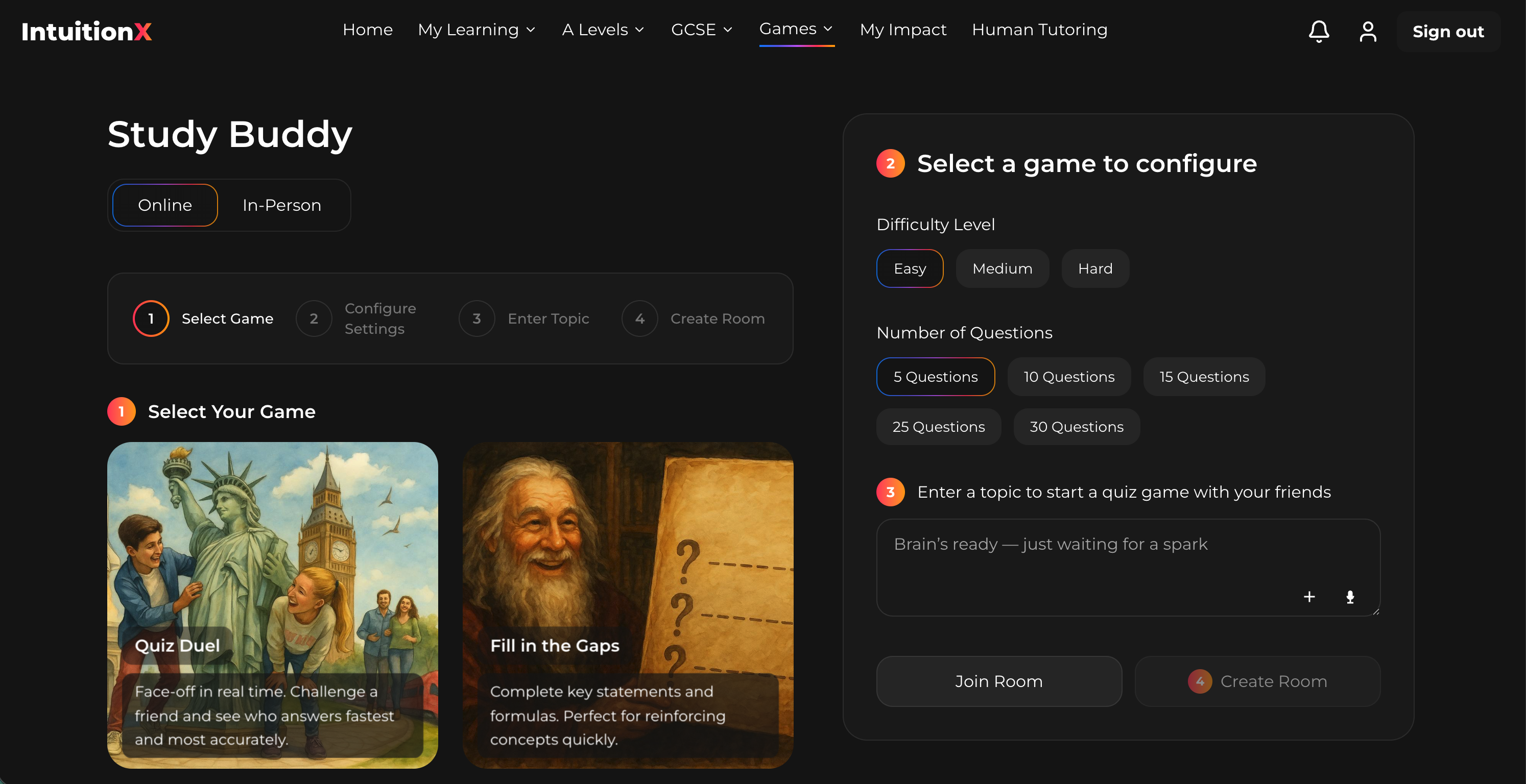
IntuitionX is designed around exactly the principles this article describes. Its Socratic AI model, Omniscience, does not write essays for students. It asks questions, challenges thinking, and builds genuine understanding, the way an Oxbridge tutor would. It is available 24/7, which means students get the frequency that high-dosage tutoring research demands, without the cost of a private tutor charging up to $150 an hour.
Backed by Sir Anthony Seldon, described by the BBC as one of Britain's leading educationalists, IntuitionX combines the rigour of elite academic training with the accessibility of a digital platform. Whether you are a student preparing for A Levels, a parent looking for evidence-based support, or an educator seeking a trustworthy AI tool, start learning with IntuitionX today and experience what genuinely personalised academic support feels like.
FAQ
What is high-dosage tutoring?
High-dosage tutoring is a structured academic support model involving at least three sessions per week in groups of no more than three to four students, sustained over a full semester. Research shows it produces 1 to 2 months of additional learning per year.
Is virtual tutoring as effective as in-person?
Multiple studies confirm that virtual tutoring produces comparable outcomes to in-person delivery, while removing barriers such as geography and travel. Programme design quality matters more than the delivery format.
How does AI fit into the future of academic tutoring?
AI tools work best as a complement to human tutors in hybrid models, handling personalised feedback and availability while human tutors provide motivation and relational continuity. AI alone, without human support, tends to produce low student engagement.
What should parents look for in a tutoring programme?
Parents should prioritise session frequency, group size, and tutor continuity above all other factors. A programme meeting at least three times per week with the same small group and the same tutor consistently outperforms more expensive but less structured alternatives.
Why is tutoring policy changing in 2026?
Governments are shifting tutoring from a pandemic recovery tool to a permanent educational intervention, with 41 bills introduced across 19 US states codifying high-dosage tutoring standards and attaching quality requirements to public funding.