
TL;DR:
- Building exam confidence involves consistent practice, healthy routines, and moment-by-moment anxiety management to perform well under pressure. Active recall and timed practice reduce exam-day anxiety by strengthening memory and familiarity with exam conditions. Supporting students through routines and evidence-based techniques helps them trust their preparation and approach exams with resilience.
Exam confidence is defined as a student's trust in their own preparation and ability to perform under pressure. It is not the absence of nerves. It is the ability to stay focused, recall information, and work through problems even when anxiety is present. The most effective ways to boost exam confidence combine structured practice, mental regulation techniques, and physical self-care. Students who use active recall and timed practice alongside breathing exercises and consistent sleep routines consistently outperform those who rely on last-minute revision alone. This article gives both students and parents a clear, evidence-based plan.
1. Ways to boost exam confidence through active recall and practice testing
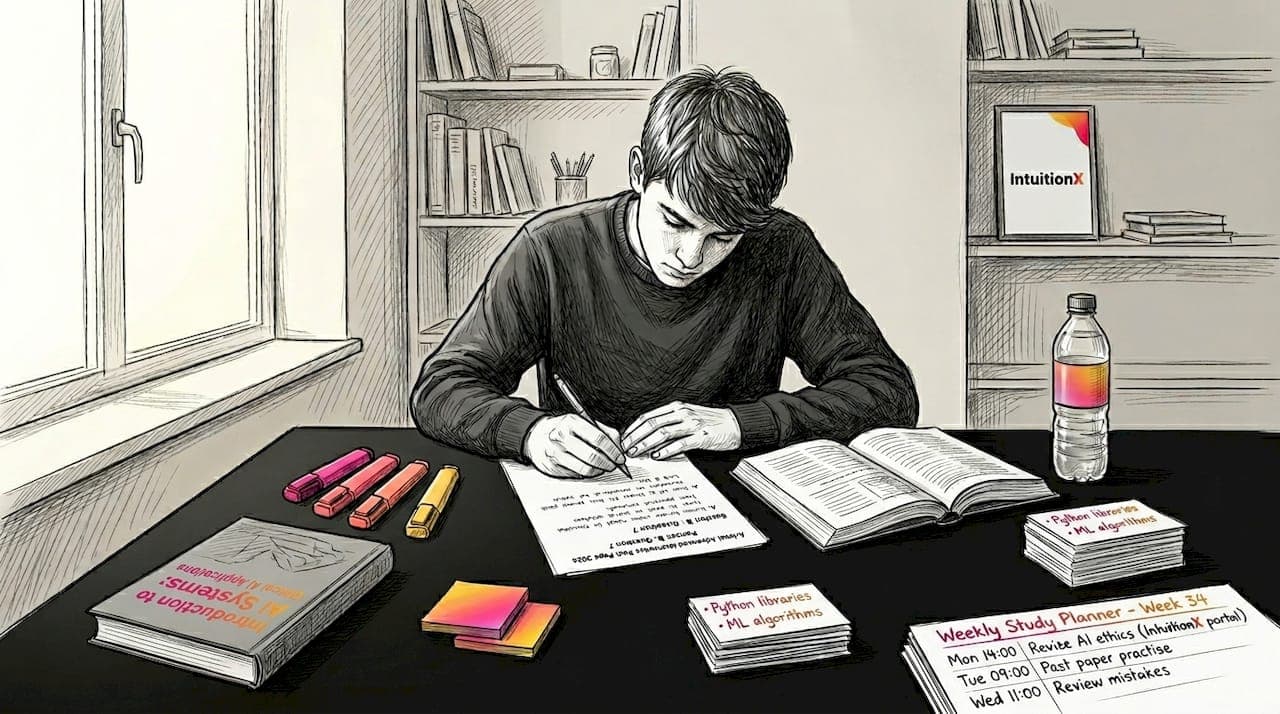
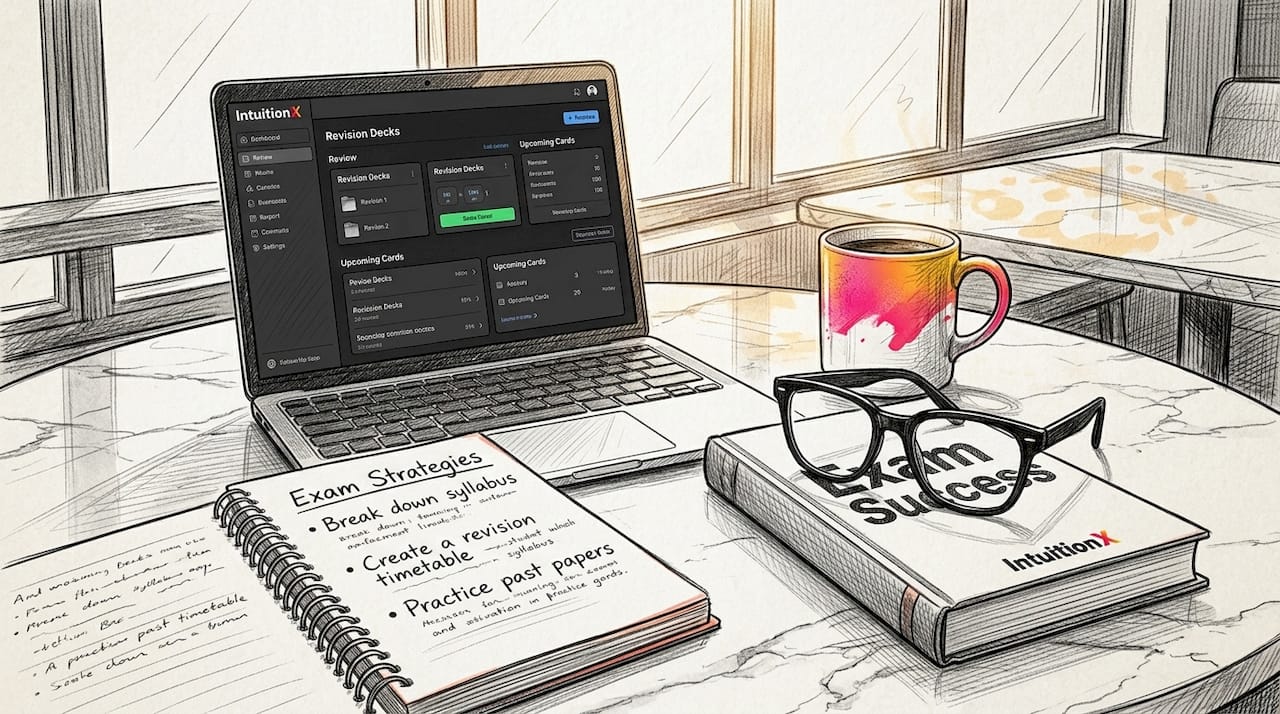
Active recall is the single most effective study method for building real exam confidence. It forces your brain to retrieve information rather than passively re-read it, which strengthens memory pathways and makes knowledge feel solid under pressure. Practice testing with spaced repetition builds both knowledge and retrieval confidence, meaning you walk into the exam room knowing you have already done this before.
Timed practice tests are particularly powerful because they simulate the pressure of the real exam. When you have sat through a mock paper under exam conditions, the actual test feels familiar rather than threatening. Familiarity reduces anxiety. That is the mechanism. Reviewing your mistakes afterwards, without self-judgement, is where the real learning happens. Each error is a data point, not a verdict.
Chunking study sessions into 20-minute blocks with short breaks prevents burnout and keeps focus sharp across longer revision periods. This approach, sometimes called the Pomodoro method, is backed by attention research and works particularly well for students who struggle to sustain concentration.
Spaced repetition tools such as Anki allow you to revisit material at scientifically timed intervals, reinforcing memory before it fades. The key principle is this: confidence comes from repeated successful retrieval, not from reading the same notes over and over.
Pro Tip: Set a timer and attempt a full past paper in silence before you feel ready. The discomfort of doing it early is far less damaging than the shock of exam conditions on the day itself.
2. Use the 4-7-8 breathing method to calm nerves instantly
Controlled breathing is one of the fastest ways to reduce physiological anxiety before and during an exam. The 4-7-8 method, developed by Dr Andrew Weil, involves inhaling for four counts, holding for seven, and exhaling for eight. This activates the parasympathetic nervous system and lowers heart rate within minutes.
Reframing anxiety as excitement is a technique supported by research from Harvard Business School. The physiological state of anxiety and excitement are nearly identical. Telling yourself "I am excited" rather than "I am terrified" redirects that arousal energy into focus rather than panic. It sounds simple. It works.
"Treat each question independently. A brief breathing reset of a few seconds, eyes closed, deep breaths, can restore focus and clarity when panic rises during an exam." — IAS officer Divya Mittal
The key insight here is that anxiety is best managed moment by moment, not eliminated wholesale. Students who try to suppress nerves entirely often find they return harder. Students who acknowledge the feeling, breathe through it, and move on perform far better.
Pro Tip: Write a three-step micro-protocol on your pencil case: Stop. Breathe. Next question. Having it written down means you do not have to remember it when your mind goes blank.
3. Skim the paper first and tackle easy questions first
The order in which you approach exam questions has a measurable effect on your confidence during the paper. Skipping blank questions and returning to them later is a strategy recommended by Ohio State University's Dennis Learning Center, because anxiety is typically at its worst at the start of an exam.
Skimming the entire paper in the first two minutes gives your brain a map of what is ahead. You identify the questions you know well, which immediately reduces the sense of threat. Tackling those first builds momentum and reminds you that you do know this material.
When you hit a difficult question, do not fixate. Mark it, move on, and return later. By the time you come back, your brain has often processed the problem in the background. This is not a trick. It is how working memory actually functions under time pressure.
4. Prioritise sleep, nutrition, and aerobic exercise
Physical self-care is not optional preparation. It is the biological foundation of exam performance. Sleep consolidates memory, regulates mood, and restores the prefrontal cortex function you need for complex reasoning. A student who revises for an extra hour at midnight and loses sleep is almost certainly worse off than one who stops at 10pm and sleeps well.
Thirty minutes of moderate aerobic exercise significantly reduces test anxiety symptoms and improves cognitive inhibitory control in students with high test anxiety. This means a morning run or a brisk walk before an exam is not a distraction from preparation. It is preparation. The effect is acute, meaning it works even on the morning of the exam itself.
Nutrition matters too. A breakfast that combines complex carbohydrates and protein, such as porridge with eggs, provides sustained energy without the blood sugar crash that follows sugary cereals. Hydration is equally overlooked. Even mild dehydration impairs concentration and increases the perception of stress.
- Sleep at least seven to nine hours the night before an exam
- Eat a balanced breakfast with protein and slow-release carbohydrates
- Do 30 minutes of moderate exercise, such as a walk, jog, or cycle, on the morning of the exam
- Avoid caffeine overload, which amplifies anxiety symptoms
- Promote self-care routines consistently in the weeks before exams, not just the night before
5. How parents can support their child's exam confidence
Parents have more influence over exam confidence than they often realise. The most effective parental support focuses on systems and routines rather than grades and outcomes. Protecting exam systems via routines reduces children's anxiety far more reliably than pep talks about doing well.
Practical steps parents can take include:
- Set consistent sleep and meal times in the two weeks before exams
- Help your child rehearse exam logistics: the route to the venue, what to pack, what time to leave
- Arrive at least 10 minutes early on exam day to avoid last-minute problems and allow mental preparation
- Celebrate small achievements during revision, not just final results
- Avoid discussing exam pressure, grades, or comparisons with siblings or peers during revision breaks
The last point is worth emphasising. Conversations that centre on outcomes rather than effort actively increase anxiety. A parent who says "you have worked hard and you are prepared" does more for confidence than one who says "this exam really matters for your future." Both may be true. Only one helps.
For parents supporting A Level students specifically, the A Level exam preparation guide from Intuitionx covers revision planning and emotional support in detail.
6. Build a pre-exam routine that removes uncertainty
Uncertainty is one of the primary drivers of exam anxiety. A pre-exam routine removes as many unknowns as possible, which frees up mental energy for the exam itself. Confidence under pressure derives more from process adherence and routine than from any last-minute effort to feel calm.
A strong pre-exam routine includes: packing your bag the night before, knowing exactly where you are going and how long it takes to get there, eating a proper breakfast, and arriving early enough to settle without rushing. None of these are glamorous. All of them work.
The night before, avoid starting new material. Trust what you have already learnt. Reviewing a summary sheet or flashcards is fine. Attempting to learn new content the evening before an exam increases anxiety and rarely improves performance. Trusting your preparation and following a process-based strategy is the more reliable path.
7. Reframe negative self-talk before it takes hold
Negative self-talk is the internal voice that says "I am going to fail" or "I never remember anything under pressure." Left unchallenged, it becomes a self-fulfilling prophecy. The psychological term for this is cognitive distortion, and it is one of the most common barriers to exam performance.
Cognitive behavioural therapy (CBT) techniques are the gold standard for addressing this. NICE has conditionally recommended five CBT apps, including ThinkNinja, for helping young people notice feelings and challenge negative thoughts. These tools work best alongside guidance from a parent, teacher, or counsellor rather than in isolation.
For students who do not need clinical support, a simpler approach works well. When a negative thought appears, name it: "That is anxiety talking." Then replace it with a process statement: "I have prepared. I will work through this question by question." This is not toxic positivity. It is a practical redirect from unhelpful rumination to useful action.
8. Avoid the common pitfalls that destroy confidence
Several behaviours that feel like preparation actually undermine confidence. Recognising them is the first step to avoiding them.
| Pitfall | Why it backfires |
|---|---|
| Last-minute cramming | Creates stress and false confidence; new material rarely sticks under pressure |
| Avoiding practice papers | Removes the familiarity that reduces exam-day anxiety |
| Comparing answers with peers | Introduces doubt and second-guessing after the exam has ended |
| Reacting emotionally to hard questions | Wastes time and triggers a spiral of anxiety mid-paper |
| Misreading anxiety as inability | Arousal is normal and manageable; treating it as failure compounds the problem |
Cramming and revising new material close to exam time can increase anxiety rather than reduce it. The students who feel most confident on exam day are almost always those who stopped adding new content two to three days before and spent that time reviewing what they already knew.
9. Use structured digital support to build study confidence
Digital tools can support exam confidence when used correctly. The distinction is between tools that do the thinking for you and tools that train you to think better. Generic AI that writes essays on demand bypasses the retrieval practice that builds real confidence. Socratic AI tutors that ask questions, challenge reasoning, and guide students to their own answers do the opposite.
For students who want to overcome study anxiety through structured revision, the quality of the tool matters enormously. A platform built on evidence-based pedagogy and memory science will produce different outcomes than one built on internet scraping. The revision techniques that actually work are those grounded in retrieval, spacing, and interleaving, not passive re-reading or AI-generated summaries.
Key takeaways
Exam confidence is built through consistent practice, physical self-care, and moment-by-moment anxiety management rather than any single technique.
| Point | Details |
|---|---|
| Active recall beats passive revision | Timed practice tests under realistic conditions build retrieval confidence and reduce exam-day anxiety. |
| Aerobic exercise reduces anxiety acutely | Thirty minutes of moderate exercise on exam morning improves cognitive control and lowers anxiety symptoms. |
| Routines remove uncertainty | Pre-exam routines covering logistics, sleep, and nutrition free up mental energy for the exam itself. |
| Manage anxiety, do not suppress it | Breathing resets and cognitive reframing work better than trying to eliminate nerves entirely. |
| Parental support focuses on systems | Parents who protect routines and avoid outcome-focused pressure reduce their child's anxiety most effectively. |
What I have learned about confidence and exams
I have spent years watching students prepare for high-stakes exams, and the pattern that stands out most is this: the students who perform best are rarely the ones who studied the most in the final week. They are the ones who built a process and trusted it.
Confidence is not a feeling you manufacture the night before. It accumulates through weeks of deliberate practice, small wins, and honest self-assessment. A student who has sat ten timed practice papers knows what it feels like to work under pressure. That knowledge is irreplaceable.
The anxiety piece is where I see the most misunderstanding. Students and parents alike often treat nerves as a sign that something has gone wrong. They have not. Arousal before a high-stakes event is biological and normal. The goal is not to feel calm. The goal is to feel capable despite the nerves. That distinction changes everything about how you prepare.
Parents, your role is more logistical than motivational. The child who arrives rested, fed, and on time, with their bag packed the night before, is already ahead. The conversation on the way to the exam should be about anything other than the exam. That is not avoidance. That is good strategy.
— Angus
How Intuitionx helps students build real exam confidence

Intuitionx is a 24/7 Socratic AI tutor built on Oxbridge-level pedagogy and memory science. Unlike generic AI that produces answers on demand, Intuitionx asks the questions that train your brain to retrieve, reason, and recall. That is the mechanism behind real exam confidence.
Whether you are a student working through past papers or a parent looking for structured support, Intuitionx provides the kind of guided, interactive revision that builds lasting knowledge. Sir Anthony Seldon, described by the BBC as one of Britain's leading educationalists, backs the platform. Start learning with Intuitionx today and experience the difference that Oxbridge-quality tutoring makes to exam readiness.
FAQ
What is the fastest way to reduce exam anxiety?
A brief breathing reset of a few seconds, eyes closed and taking deep breaths, can restore focus and clarity almost immediately. Combining this with a simple micro-protocol such as stop, breathe, and move to the next question is one of the most reliable in-exam techniques available.
Does exercise actually help with exam performance?
Yes. Thirty minutes of moderate aerobic exercise reduces test anxiety symptoms and improves cognitive inhibitory control, even when performed on the morning of the exam itself.
How can parents help without adding pressure?
Parents reduce anxiety most effectively by focusing on routines rather than results. Consistent sleep schedules, proper meals, and helping rehearse exam logistics all reduce uncertainty without adding performance pressure.
Is last-minute revision helpful or harmful?
Reviewing existing notes briefly is fine, but attempting to learn new material close to exam time increases anxiety and rarely improves performance. Trusting your preparation and following a process-based routine is the more reliable approach.
What study method builds the most exam confidence?
Active recall combined with timed practice tests under realistic conditions is the most effective method. It builds both knowledge and the retrieval confidence that makes exam conditions feel familiar rather than threatening.