

TL;DR:
- A homeschool curriculum checklist helps parents select, organize, and track educational progress based on their child's needs and legal requirements. It involves assessing the child's current skills, evaluating curriculum options, and planning the year's scope and sequence to prevent gaps and repetition. Verifying state laws and integrating record-keeping from the start ensures legal compliance and effective documentation.
A homeschool curriculum checklist is a structured evaluation tool that helps parents select, organise, and track their child's education from assessment through to daily scheduling. Without one, most parents default to buying whatever looks appealing, only to discover three months in that the material is the wrong level, the wrong style, or simply unsustainable. The 4-pillar planning approach used by experienced homeschooling families covers assessment, goals, curriculum selection, and scheduling in that exact order. Getting this sequence right is the single biggest factor in whether your first year feels manageable or chaotic.
1. What should a homeschool curriculum checklist include?

A complete educational checklist for homeschool covers four core areas: your child's current level, your legal obligations, your curriculum evaluation criteria, and your annual schedule. Each area depends on the one before it. You cannot choose curriculum sensibly until you know your child's actual skill level. You cannot build a schedule until you know what the curriculum demands each week.
The checklist format matters too. A written checklist forces you to slow down and evaluate rather than impulse-buy. Curriculum connects what to learn with how and when to teach it, and a checklist keeps that connection visible throughout the year.
2. How to assess your child's learning needs first
Assessment is the foundation of any curriculum planning guide worth following. Many parents assume their child is working at grade level, but grade level is a school-system construct. Your child may be two years ahead in reading and a year behind in maths. Both facts matter enormously for curriculum selection.
Start with these assessment methods:
- Standardised diagnostic tests such as the CAT4 (Cognitive Abilities Test) give a baseline across verbal, quantitative, and spatial reasoning.
- Portfolio review: gather recent work samples across subjects and look for patterns in confidence and gaps.
- Observation: note where your child loses focus, asks questions spontaneously, or finishes tasks quickly. These are learning style signals.
- Conversation: ask your child directly what they find boring, hard, or exciting. Their answers are data.
Matching curriculum to learning style is not optional. A child who learns best through discussion and debate will disengage from a purely worksheet-based programme within weeks. A child who needs visual structure will struggle with open-ended, unschooling-style approaches.
Pro Tip: Run a short diagnostic in each core subject before you look at a single curriculum catalogue. Your results will immediately rule out half the options on the market.
3. Key criteria for your curriculum evaluation checklist
A 10-question checklist is the standard framework for evaluating curriculum fit. The rule is simple: if more than three questions come back as "no" or "not sure," the curriculum needs supplementing or is the wrong choice entirely. That threshold saves parents from months of frustration.
Work through these criteria systematically:
- Level match: Does the curriculum align with your child's assessed skill level, not just their age?
- Learning style fit: Does the teaching method suit how your child actually processes information?
- Schedule compatibility: Can you realistically deliver this curriculum given your available hours each week?
- Parent bandwidth: Does it require significant teacher preparation, or is it more self-directed?
- Engagement type: Does it rely heavily on screen time, textbooks, or hands-on activities? Does that match your child's preferences?
- Flexibility: Can you skip, reorder, or compress units without the whole programme falling apart?
- Progress tracking: Does the curriculum include built-in assessments, or will you need to source your own homeschool assessment tools?
- Support materials: Are answer keys, teacher guides, and supplementary resources included?
- Budget: What is the total cost including consumables, replacement workbooks, and any required online subscriptions?
- Completeness: Does it cover the subjects your state requires, or will you need to add separate programmes?
The checklist items "matches assessment/level," "fits learning style," "works for your schedule," and "within budget" are the four non-negotiables. Everything else is secondary.
Pro Tip: Before committing to a full year's purchase, run a sample week using free trial materials or borrowed copies. If three or more checklist criteria fail during that trial, walk away.
4. Planning your homeschool year with scope and sequence
Scope and sequence are the two most misunderstood terms in homeschool planning. Scope defines what topics and skills you will cover across the year. Sequence defines the order and timing. Together, they prevent the two most common planning failures: gaps in knowledge and pointless repetition.
The process runs in five steps: list your subjects, identify the key topics within each, order those topics logically, assign time blocks to each unit, and build in review weeks. Most parents skip the review weeks. That is a mistake. Mastery requires revisiting material, not just covering it once.
| Planning element | What it means | Practical example |
|---|---|---|
| Scope | All topics covered in a subject across the year | Year 5 maths: fractions, decimals, percentages, geometry |
| Sequence | The order topics are taught | Fractions before decimals; decimals before percentages |
| Time blocks | Weeks allocated per unit | Fractions: 4 weeks; decimals: 3 weeks |
| Review weeks | Scheduled consolidation periods | One review week per half-term |
| Mastery checks | Assessments before advancing | Short test at end of each unit before moving on |
A curriculum map that includes learning objectives, materials, and mastery checks gives you a live document to track pacing. Without it, you will reach december and realise you are three units behind with no plan for catching up.
Your homeschooling lesson planner should translate the scope and sequence into a weekly and daily schedule. Block your core subjects in the morning when concentration is highest. Leave afternoons for project work, reading, or catch-up sessions. Build one flexible day per week into the schedule from the start.
5. What legal requirements belong on your checklist
Homeschool legal requirements vary significantly by state and must be verified directly with your state Department of Education, since rules change frequently. Treating last year's blog post as your legal guide is a genuine risk.
Your legal compliance checklist should cover:
- Notification: Does your state require you to file a notice of intent before you begin?
- Required subjects: Which subjects are mandated? Ohio, for example, requires instruction in six core subjects including English arts, maths, science, history, government, and social studies.
- Assessment type: Does your state require standardised testing, portfolio review, or a professional evaluation?
- Record-keeping: What documentation must you retain and for how long?
- Reporting deadlines: When must you submit reports or portfolios, and to whom?
State requirements can be surprisingly specific. Vermont's 16 V.S.A. §166b mandates that a parent-report portfolio includes at least four distinct dated work samples per subject along with a written progress summary. That is not a suggestion. It is a statutory minimum.
Key principle: Build your record-keeping system before you start teaching, not after. The most practical homeschool checklists link curriculum selection directly to evidence collection, so you are gathering compliant documentation from day one.
Verify your state's current rules at the official Department of Education website. Do not rely on homeschool advocacy groups alone, as their information can lag behind legislative changes.
Key takeaways
A complete homeschool curriculum checklist covers child assessment, legal compliance, curriculum evaluation, and annual scheduling in that order, with each step informing the next.
| Point | Details |
|---|---|
| Assess before you choose | Identify your child's actual skill level across subjects before selecting any curriculum. |
| Use the 3-fail threshold | If more than three checklist criteria fail during a trial week, the curriculum is the wrong fit. |
| Build scope and sequence first | Map topics, order, and time blocks before writing a weekly schedule to avoid gaps. |
| Verify legal requirements directly | Check your state Department of Education for current notification, subject, and reporting rules. |
| Integrate record-keeping from day one | Design your documentation system at the planning stage, not retrospectively. |
What I have learnt from watching parents build their first checklist
The checklist is not the hard part
Most parents I speak with assume the checklist itself is the challenge. It is not. The hard part is being honest during the assessment phase. Parents routinely overestimate their child's level because they want to believe their child is ahead. They also underestimate their own available teaching hours each week. Both errors produce a curriculum that looks great on paper and collapses by week six.
The sample week test is the single most underused tool in homeschool planning. Simulating a typical week with your chosen curriculum before committing reveals lesson length, teaching style compatibility, and your child's genuine engagement level. It costs you one week. It saves you hundreds of pounds and months of frustration.
The other mistake I see constantly is treating scope and sequence as optional. Detailed scope and sequence plans are the difference between a child who builds genuine mastery and one who covers the same ground repeatedly without ever consolidating it. Write the plan. It does not need to be perfect. It needs to exist.
Finally, do not build your checklist around the curriculum you want. Build it around your child's assessment results, your legal obligations, and your realistic weekly capacity. The curriculum comes last. Every time a parent reverses that order, they regret it.
— Angus
Intuitionx and your homeschool planning
Planning a homeschool year is genuinely complex, and having the right support makes a measurable difference to outcomes. Intuitionx is a 24/7 Socratic AI tutor built on Oxbridge-level pedagogy, designed to work alongside your curriculum planning and keep your child actively engaged in learning rather than passively consuming content.
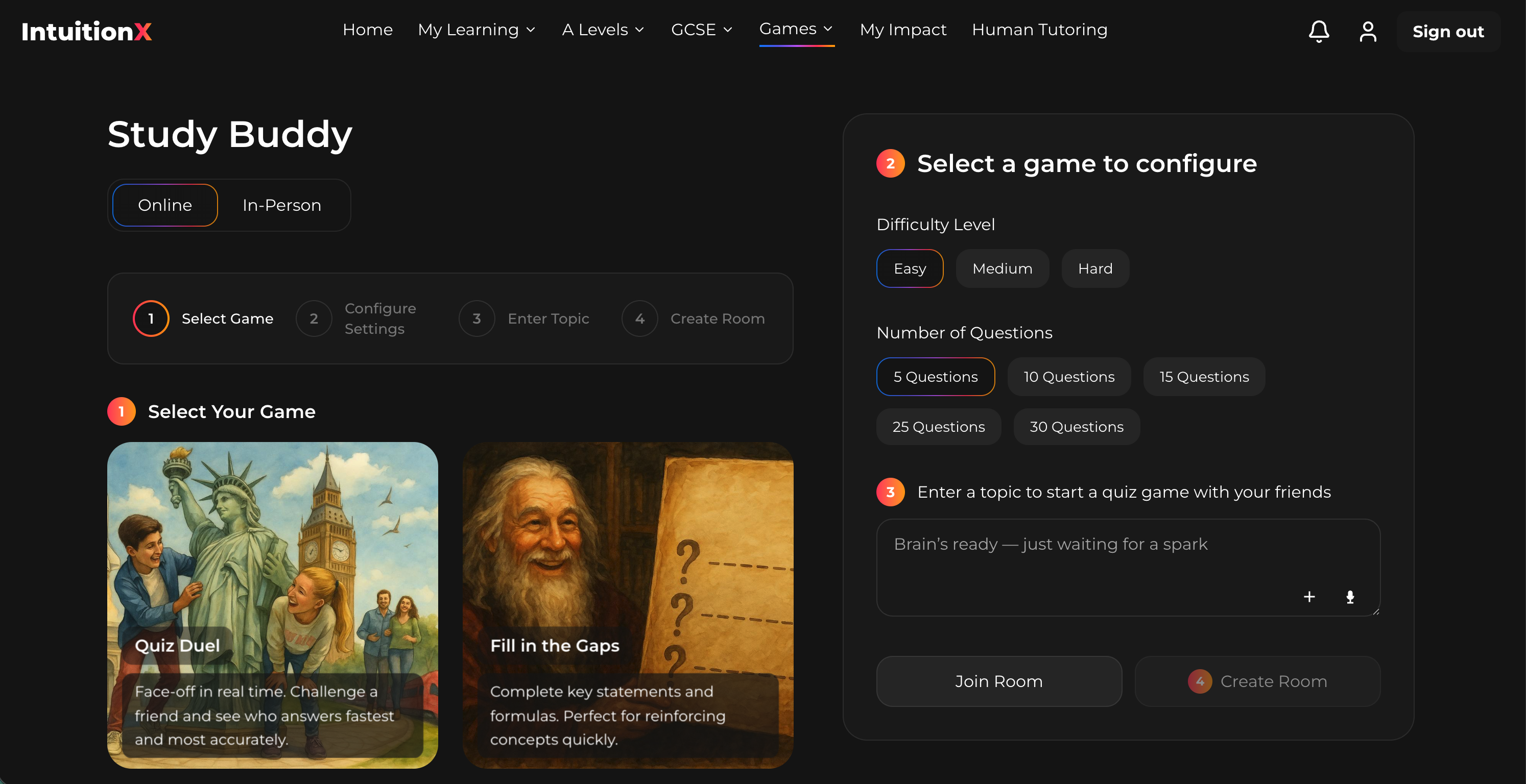
Backed by Sir Anthony Seldon, described by the BBC as "one of Britain's leading educationalists," Intuitionx brings the kind of personalised, questioning-led learning that wealthy families pay up to $150 an hour for in private tutoring. You can explore the platform and see how it supports your homeschool curriculum alongside your existing checklist and schedule. Every subscription also contributes to educational programmes for children in crisis through Intuitionx's agreement with the International Rescue Committee.
FAQ
What is a homeschool curriculum checklist?
A homeschool curriculum checklist is a structured evaluation tool parents use to assess curriculum options against their child's level, learning style, legal requirements, and schedule. It prevents mismatched purchases and keeps planning systematic.
How do I know if a curriculum is the right fit?
Use the 10-question evaluation framework. If more than three criteria return a "no" or "not sure," the curriculum is likely unsuitable or will need significant supplementing before it works for your child.
What legal requirements do I need to check?
Legal requirements vary by state and cover notification, required subjects, assessment type, and record-keeping. Always verify current rules directly with your state Department of Education.
What is scope and sequence in homeschool planning?
Scope defines all the topics you will cover in a subject across the year. Sequence defines the order and timing of those topics. Together they prevent knowledge gaps and ensure your child builds skills in a logical progression.
How do I assess my child's current level before choosing curriculum?
Use a combination of standardised diagnostic tests, portfolio review of recent work, and direct observation of where your child engages or struggles. Matching curriculum to actual skill level, rather than age or grade, is the most reliable predictor of success.