

TL;DR:
- Educational checklists for families help parents monitor and support their children's learning in developmental, academic, and routine areas. They should include progress in all four core domains, align with school standards, and be reviewed weekly to adapt to the child's evolving needs. Effective use involves building routines, involving children in the process, and evolving the checklist as skills develop.
Educational checklists for families are structured tools that help parents monitor and support their children's learning development and daily routines at home. Think of them as a practical map: they show you where your child is, where they need to go, and what you can do right now to help. Resources like Fayette County's School Readiness Checklist, Iowa's Academic Standards Family Guides, and K12's home learning checklists each take a different angle, but all share the same goal. They turn vague parental worry into clear, manageable steps.
1. What key areas should educational checklists for families cover?
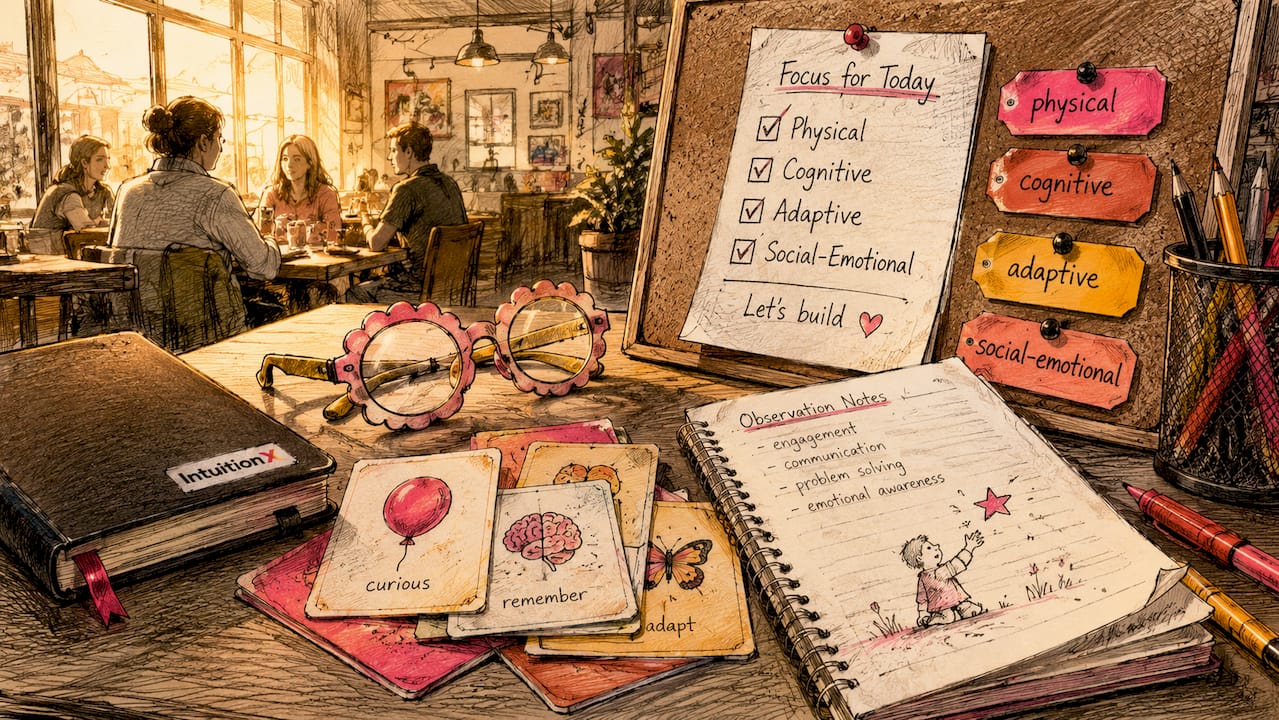
The most effective family learning guides cover four core domains. Miss one, and you get an incomplete picture of your child's progress.
Developmental domains are the foundation. School readiness spans physical, cognitive, adaptive, and social/emotional development, grouped across areas like general knowledge, maths, language, social skills, self-help, and health. A checklist that only tracks reading and maths misses the child entirely.
Academic standards alignment is the second layer. Iowa's Department of Education publishes ten grade-specific Family Guides covering ELA, mathematics, and science from kindergarten through to secondary school. These guides tell you exactly what your child's teacher is working towards, so your support at home reinforces rather than contradicts school.
Routine and environment form the third layer. A checklist for kids' education should include items like learning space setup, device readiness, and daily schedule structure. These are not soft extras. They are the conditions that make learning possible.
Reflection and independence complete the picture. A checklist that only tracks tasks without asking "did my child understand this?" misses the point. Building in a brief reflection step closes the loop and keeps progress moving forward.
- Physical development: gross and fine motor skills, health habits
- Cognitive development: problem-solving, memory, curiosity
- Social and emotional skills: self-regulation, communication, peer interaction
- Self-help skills: independence with daily tasks, organisation
- Academic expectations: grade-level targets in core subjects
- Routine management: consistent schedules, distraction-free study space
- Technology readiness: reliable devices, internet access, digital literacy
Pro Tip: Start with just three to five checklist items per domain. A shorter checklist used consistently beats a long one abandoned after a week.
2. How do popular educational checklists differ and complement each other?
Not all academic checklists for families serve the same purpose. Choosing the right one depends on your child's age, stage, and specific needs.
| Checklist | Primary focus | Best suited for | Key strength |
|---|---|---|---|
| Fayette County School Readiness | Developmental domains before school entry | Parents of children aged 4–5 | Broad developmental coverage |
| Iowa Academic Standards Family Guides | Grade-level academic expectations | Parents of K–12 students | Standards alignment by subject |
| Massachusetts DESE Family Guides | Grade and content area learning targets | Parents wanting curriculum detail | Updated annually with supporting videos |
| Utah Parent Center Transition Checklist | Preschool to kindergarten transition | Families of children with special needs | Year-long IEP collaboration focus |
| K12 Home Learning Checklist | At-home environment and routine setup | Families supporting online learners | Practical environment and independence tips |
The Fayette County and Utah Parent Center checklists both address early transitions, but they serve different families. Fayette County covers all children entering school. The Utah Parent Center's checklist spans a full year before school entry and places heavy emphasis on working with IEP teams and special education coordinators. For families with children who have additional learning needs, the Utah approach is the more thorough starting point.
The Iowa and Massachusetts guides sit at the opposite end. They are not about readiness. They are about ongoing academic expectations, grade by grade. Massachusetts DESE's Family Guides cover all grades and content areas, updated in may 2026, and include supporting videos. These guides help parents understand what educators are teaching, not replace the teaching itself.
K12's checklist occupies a unique space. It focuses on the physical and logistical conditions for learning rather than academic content. Used alongside a standards-based guide, it creates a complete picture.
3. How can families effectively implement and personalise educational checklists?
A checklist only works if it fits your family's actual life. Here is a practical approach that works across age groups and learning styles.
Step 1: Set up your learning environment first. K12 guidance recommends separating environment setup from ongoing study support. Ergonomic furniture, good lighting, minimal distractions, reliable internet, and a headset for video lessons are one-time setup tasks. Treat them as a separate checklist before you touch academic content.
Step 2: Build a consistent daily routine. Routines reduce the mental effort of starting. A written daily schedule, even a simple one, removes the daily negotiation about when homework happens.
Step 3: Apply the QDPI cycle. The Family Learning Lab's QDPI Learning Framework structures learning as Question, Discover, Practice, and Inform. Apply this to your checklist: ask your child what they want to know, let them explore, practise together, then reflect on what they learned. This cycle sustains engagement far better than passive task completion.
Step 4: Monitor progress routinely, not just once. Two-layer checklist design combines standards alignment with routine verification. Check in weekly, not just at the end of term. Small, frequent reviews catch gaps early.
Step 5: Calibrate your involvement. Effective at-home support balances structure with child independence. Your checklist should include a column for "child does independently" versus "needs parent support." Over time, the goal is to move items from the second column to the first.
Pro Tip: Review your checklist with your child, not just for them. Children who help shape their own learning plans show stronger motivation and follow-through.
4. Which checklist formats and tools work best for different families?
The format of your checklist matters as much as its content. A beautifully designed printable that never gets printed helps no one.
Digital versus printable checklists each have real advantages. Digital tools like shared Google Docs, Notion, or dedicated apps allow you to update items in real time and share progress with teachers. Printable checklists work better for younger children who benefit from physically ticking a box. Many families use both: a printed daily routine checklist for the child and a digital tracker for the parent.
Age-appropriate formats make a significant difference:
- Preschool and early primary: picture-based checklists with simple tick boxes; focus on self-help and social skills
- Primary school (ages 7–11): short written checklists with three to five daily tasks; mix of academic and routine items
- Secondary school (ages 11–16): student-led checklists with reflection prompts; include study skills, exam preparation, and independence goals
- Sixth form and A Level: detailed A Level preparation checklists covering subject-specific targets and revision schedules
Technology readiness items deserve their own section in any checklist for families supporting online learning. Check device battery life, software updates, login credentials, and internet speed before the school week begins. These are not exciting tasks, but a failed login five minutes before a lesson is a significant disruption.
Budget considerations are real. Iowa's Family Guides, Massachusetts DESE's resources, and K12's checklists are all free. The Utah Parent Center's materials are also freely available. You do not need to spend money to access high-quality educational resources for parents.
5. What are common pitfalls and expert tips for maximising checklist effectiveness?
Most families do not fail because they chose the wrong checklist. They fail because of how they use it.
Pitfall 1: Last-minute preparation. The Utah Parent Center stresses that transition planning should span the year before school entry, the summer, and the weeks immediately prior. Starting a school readiness checklist in the final week of August is too late. The same principle applies to any major academic transition.
Pitfall 2: Overloading the checklist. A checklist with 40 items is not a checklist. It is a source of anxiety. Focus on the five to ten items that will have the greatest impact on your child's learning right now. You can always add more once habits are established.
Pitfall 3: No reflection step. The Family Learning Lab's QDPI model shows that checklists including a reflection step sustain motivation and engagement more effectively than those that do not. Add a simple end-of-week question: "What went well? What was hard? What do we try differently next week?"
Pitfall 4: Treating the checklist as a rigid rulebook. A checklist is a guide, not a contract. If an item consistently causes conflict or stress, remove it or reframe it. The goal is learning progress, not checklist completion.
"Family Guides help parents understand learning expectations by grade and content but do not replace actual instruction. They map what families can support at home." — Massachusetts DESE
For families supporting children with additional needs, early collaboration with school SENCO teams and IEP coordinators is the single most effective step you can take. Build that collaboration into your checklist as a recurring item, not a one-off task.
Key takeaways
The most effective educational checklists for families combine developmental milestones, academic standards, and routine management into a single, regularly reviewed system.
| Point | Details |
|---|---|
| Cover all four domains | Include developmental, academic, routine, and reflection items for a complete picture. |
| Match checklist to stage | Use school readiness tools for early years and standards-based guides for older children. |
| Apply the QDPI cycle | Structure learning as Question, Discover, Practice, and Inform to sustain engagement. |
| Review weekly, not termly | Frequent small check-ins catch learning gaps far earlier than end-of-term assessments. |
| Balance support and independence | Track which tasks your child owns independently and aim to grow that list over time. |
Why I think most families are using checklists backwards
Most parents I speak with treat a checklist as a pass/fail test. Either the child can do the thing, or they cannot. That framing misses the entire point.
The most useful checklist I have seen in practice is one that a parent and child built together on a Sunday evening, revised the following Sunday, and abandoned entirely by week four because the child no longer needed it. That is success. The checklist did its job and became redundant.
The families who get the most from structured learning guides are the ones who treat them as living documents. They add items when a new challenge appears. They remove items when a skill is genuinely embedded. They use the reflection step not to judge their child but to adjust their own approach.
The other thing I would push back on is the idea that checklists are primarily for younger children. A well-designed checklist for a 16-year-old preparing for GCSEs or A Levels is one of the most powerful tools a parent can offer. Not because it tells the teenager what to do, but because it gives them a framework to manage their own learning. That shift from parental control to student ownership is where real academic confidence grows.
Start simple. Stay consistent. Let the checklist evolve with your child.
— Angus
How Intuitionx supports families beyond the checklist
Checklists tell you what to work on. Intuitionx helps your child actually work through it.

Intuitionx is a 24/7 Socratic AI tutor built on Oxbridge-level pedagogy, designed to ask the right questions rather than hand over answers. While 73% of UK students are not actively engaged in learning, Intuitionx uses memory science and personalised dialogue to keep children genuinely curious. It tracks progress, adapts to each learner, and gives parents visibility into where their child is thriving and where they need more support. Backed by Sir Anthony Seldon and partnered with the International Rescue Committee, Intuitionx is built for families who want more than a worksheet. Try Intuitionx today and see what engaged learning actually looks like.
FAQ
What are educational checklists for families?
Educational checklists for families are structured tools that help parents track and support their children's learning across developmental, academic, and routine domains. They translate school expectations into practical, home-based actions.
How do I choose the right checklist for my child's age?
Use school readiness checklists like Fayette County's for children aged 4–5, standards-based Family Guides from Iowa or Massachusetts for primary and secondary pupils, and transition-focused tools from the Utah Parent Center for children with additional needs.
How often should I review our family's learning checklist?
Weekly reviews are more effective than termly ones. Frequent check-ins catch gaps early and allow you to adjust your approach before small difficulties become larger problems.
Should my child be involved in completing the checklist?
Yes. Children who help shape their own learning plans show stronger motivation. Involve your child in reviewing the checklist, especially from primary school age onwards, to build ownership and independence.
Are good educational checklists expensive?
No. Iowa's Academic Standards Family Guides, Massachusetts DESE's Family Guides, K12's home learning checklists, and the Utah Parent Center's transition resources are all freely available online.