

Securing a Socratic artificial intelligence tutor that delivers genuine conceptual understanding rather than mere answer automation is a priority for institutions and parents alike. Most platforms either fixate on surface-level quiz answers, lock advanced explanation features behind high subscription tiers, or restrict access to narrow subject or language coverage. This comparison details pricing, teaching depth and integration flexibility across six AI tutoring solutions so you can choose the one that matches your curriculum needs and budget without overlooking accessibility or pedagogical quality.
Table of Contents
- IntuitionX
- Education AI Platform
- Edvisor
- ProfessorMe
- askKira
- Teachmate AI
- Finding the Right Educational AI Platform for You
IntuitionX
At a Glance
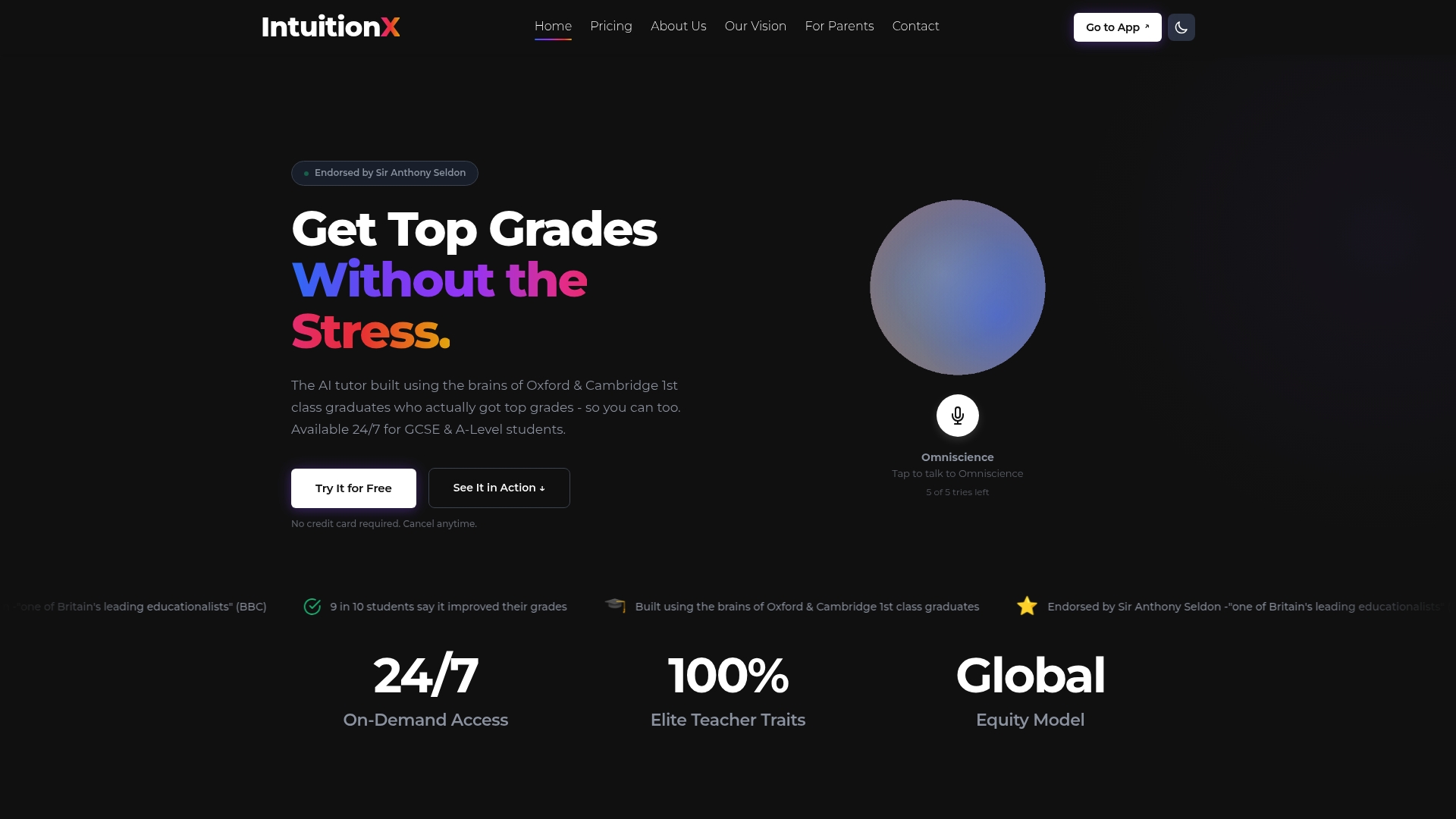
A 24/7, Oxbridge-pedigree Socratic AI tutor built to teach for understanding rather than to produce answers. IntuitionX combines adaptive study paths, on-demand chat and voice sessions, and a public commitment to fund education in crisis zones.
Core Features
The platform uses a Socratic teaching model with multiple AI companions tailored to different learning styles, plus personalised subject selection and adaptive learning paths.
Content is authored by graduates from Oxford and Cambridge, and students get progress tracking, quizzes and interactive study sessions to check mastery.
Their core conversational agent, Omniscience, is positioned as the main learning companion for sustained practice and memory-based revision.
Key Differentiator
The defining feature is tutors modelled on elite educators that teach to understand using Socratic methods, not just answer questions. That pedagogy informs every interaction, from question prompts to the sequencing of revision exercises.
Pros
-
Built on subject material created by Oxford and Cambridge graduates, so syllabus alignment and explanation depth are noticeably stronger than generic tutoring bots.
-
The Socratic approach promotes conceptual reasoning; sessions push students to explain and justify answers rather than accept solutions passively.
-
Available around the clock, which suits evening study for busy GCSE and A-Level students or revision during school holidays.
-
Progress tracking with quizzes helps identify weak topics and turn them into short, targeted practice sessions rather than long, unfocused study blocks.
-
The company states it commits 10% of revenue to educational programmes in crisis zones, adding a social impact angle that matters to many parents.
Cons
- Subscription tiers range from £29 to £250 per month, which the product data indicates may be unaffordable for some families; price remains the main barrier for broader access.
Who It's For
Students preparing for GCSEs and A-Levels who want expert-level explanations and a structured, question-led way of learning. Parents who value pedagogy and social impact will favour this over generic essay-writing AIs.
Unique Value Proposition
The vendor advertises a funding pact that channels a portion of revenue into crisis education programmes. That claim means your subscription can be framed as tuition plus philanthropic support, which changes the household cost conversation for families who prioritise giving back.
Real World Use Case
A pupil stuck on mechanics uses guided Socratic prompts with Omniscience to convert conceptual confusion into step-by-step reasoning. Short, targeted quizzes reveal only two subtopics need revision, turning several unfocused hours into three 20-minute sessions with measurable improvement.
Pricing
Plans start at £29 per month for the Scholar plan and rise to £250 per month for the Legend plan, according to the vendor. There are tiered features and access levels that reflect the price range.
Website: https://intuitionx.ai
Education AI Platform
At a Glance
Starts at £9.99 per month for curriculum-only plans; full platform access is quoted on request when schools want tailored deployment. The platform bundles curriculum, assessments and learning pathways focused on computational thinking, programming and robotics for UK exam levels.
Core Features
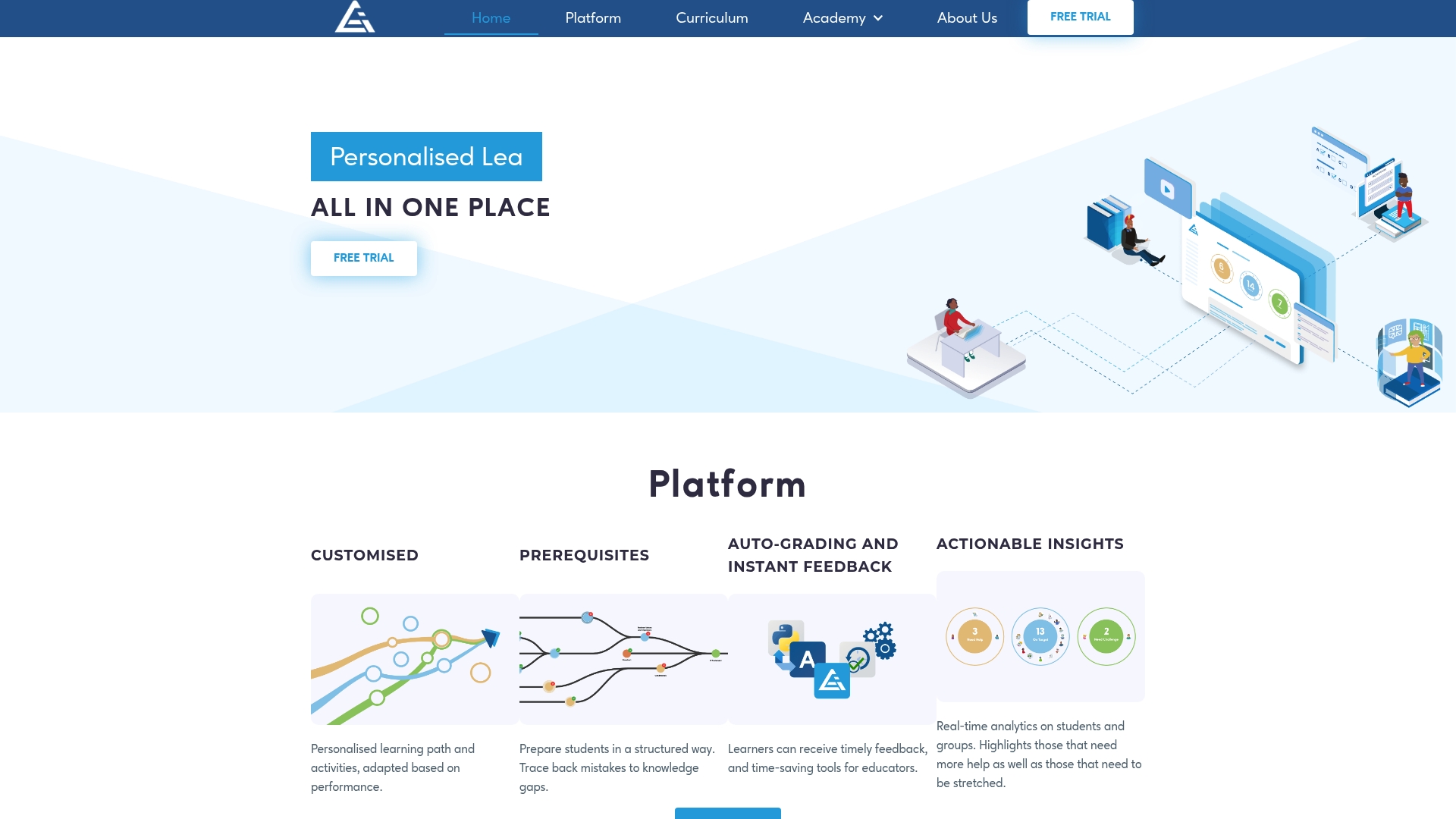
Personalised learning paths adapt content and activities to each pupil based on performance and progression. The system offers auto grading and instant feedback so learners see their mistakes straight away and teachers save marking time.
Classroom dashboards deliver real time analytics on individual and group progress, letting teachers spot misconceptions quickly. A structured curriculum runs from primary building blocks through GCSE and beyond with progressive, exam-aligned material.
Key Differentiator
The product combines AI driven personalisation with a STEM curriculum specifically mapped to UK exam expectations. That pairing means the platform is not just adaptive content; it ties adaptive lessons to exam-ready outcomes for computing and robotics.
Pros
-
Highly customisable pathways help pupils work at the right level without extra teacher planning; I found the sequencing sensible and pace controls practical.
-
Curriculum alignment reduces syllabus guesswork for teachers preparing GCSE classes; lesson sequences and assessment items match common topic progressions.
-
The teacher dashboard brings class-level diagnostics into a single view, making targeted interventions faster during lessons.
-
Multiple editions for School and Home use let institutions separate classroom licences from independent learner subscriptions, which simplifies procurement.
-
The interface is straightforward for both staff and pupils, which cuts onboarding time in my trial run to a single lesson.
Cons
-
The vendor provides little public detail on how the platform links to common school systems; integration appears limited or undocumented in marketing material.
-
Pricing transparency is partial; the £9.99 figure covers only curriculum plans and does not represent full site access or school deployment costs.
-
Resources and examples lean heavily to UK curricula; international schools will find gaps for other exam boards.
When It May Not Fit
If your school relies on a detailed management information system and expects out of the box single sign on or MIS synchronisation, this platform may require extra development or an integration project. If you need globally mapped curricula, the UK focus will feel narrow.
Who It's For
Teachers, heads of computing and MATs seeking a single platform to teach computational thinking, coding and robotics across primary and secondary phases. Also suitable for parents wanting a structured progression for independent learners preparing for GCSE computing.
Real World Use Case
A secondary school ran a blended computing programme using the platform for lesson work and homework. Pupils worked through adaptive modules, teachers used class diagnostics to rearrange tuition groups, and revision units mapped directly to GCSE topics for targeted exam preparation.
Pricing
Curriculum-only plans start at £9.99 per month for individual access. Full site licences and bespoke school deployments are available but require a tailored quote from the vendor.
Website: https://educationai.co.uk
Edvisor
At a Glance
The vendor advertises instructor accounts as free and student plans from $15 for access to 30+ AI tools, with classroom integration often completed within 48 hours or three meetings across two weeks and no additional setup cost. This mix of fast deployment and low per-student entry is the clearest commercial signal.
Core Features
- AI-generated readings tailored to course objectives that instructors can edit and assign directly to modules.
- Automated grading for quizzes and short answers plus instant feedback for students to act on straight away.
- Interactive multimedia textbooks and an in-class real-time AI Q&A and translation tool for multilingual cohorts.
Key Differentiator
Edvisor positions itself on highly customisable, learning-objective aligned content that deploys quickly into existing systems. The combination of editable AI-generated materials and explicit LMS support targets lecturers who want tailored course content without long integration projects.
Pros
-
Quick onboarding. The product claims classroom integration in hours or a few meetings across weeks, which reduces procurement friction for busy departments.
-
Wide toolset for educators covering content creation, assessment authoring, grading and student engagement in one place, cutting down context switching between separate apps.
-
Accessibility and data handling are included as part of the platform, and there is built-in plagiarism and AI abuse detection to help with academic integrity.
-
Readings are highly customisable so module leads can align material to specific learning outcomes rather than rely on generic summaries.
Cons
-
Independent evaluation is sparse; there are limited third-party reviews available and most evidence is institutional testimony.
-
The platform still relies on AI outputs, which introduces the usual risks around accuracy and bias that require human oversight during assessment design.
-
LMS compatibility can vary by campus. Some bespoke or older systems may need extra integration work before feature parity is reached.
When It May Not Fit
If your procurement requires independently validated study results or third-party efficacy research, Edvisor’s public evidence base may feel thin. Large institutions that demand audited accuracy for high-stakes assessment should plan for sustained human review. Campuses with heavily customised LMS setups should budget for integration effort.
Who It's For
Lecturers, module leads and higher education course designers who want to add AI-assisted readings and automated assessment without long vendor projects. It suits departments keen to free staff hours on marking and provide quicker feedback to students.
Real World Use Case
According to the vendor, university professors use Edvisor to generate tailored readings, automate quiz grading and deliver immediate feedback, saving hours each week and improving student retention and satisfaction. That reported outcome is the kind of operational benefit departments cite in pilot reports.
Pricing
As noted above, student access starts at $15 and instructors are listed as free. Institutions are offered custom pricing for campus licences and larger deployments, so expect negotiated terms for whole-school rollouts.
Website: https://edvisor.ai
ProfessorMe
At a Glance
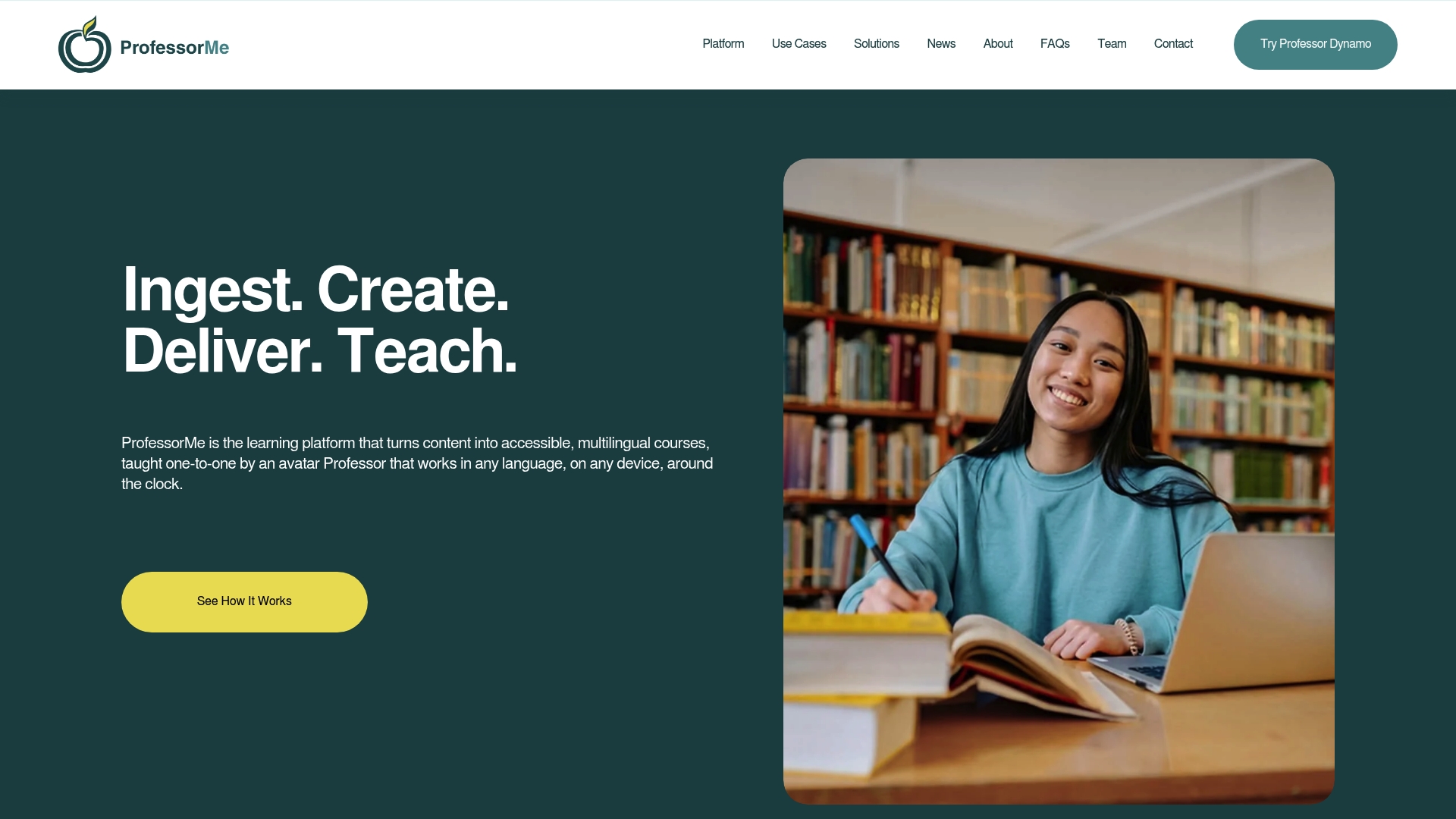
A multilingual AI Professor delivers one-to-one teaching around the clock, available in any language and on any device. ProfessorMe pairs that capability with automated course generation and content ingestion so institutions can convert existing materials into taught courses rapidly.
Core Features
ProfessorMe centralises content ingestion, course creation, delivery and learner support in one environment.
- Bulk ingestion of lectures, videos and manuals to populate courses quickly.
- Automated course, script and narration generation via BabbleMouth from short descriptions.
- One-to-one multilingual tutoring through the AI Professor, with auto-transcription and chapter splitting.
- Personalised recommendations and progress tracking powered by a Knowledge Graph.
Key Differentiator
The defining feature is the always-on, multilingual tutor that teaches learners individually while adapting material for neuro inclusive needs. That one-to-one teaching model makes ProfessorMe less a content repository and more a conversational tutor layered on top of an LMS.
Pros
-
Supports multilingual and neuro inclusive learning, widening access for diverse cohorts and learners with different needs.
-
Automates course production, which reduces time-to-competency when existing content is already available for ingestion.
-
Designed to let organisations pilot a programme before full deployment, helping teams test impact without large upfront hires.
-
Private, governed access controls are present, which helps institutions manage compliance and controlled rollout.
-
Useful for NGOs and resource constrained contexts where round-the-clock, local-language support matters most.
Cons
-
Public detail on pricing and customisation is limited, so procurement teams must request commercial terms to assess total cost of ownership.
-
As an emerging platform, it may offer fewer out‑of‑the‑box connectors to legacy student information systems and enterprise SSO than long‑established LMS vendors.
-
Buyer commentary supplied with the product data highlights strong AI teaching but lists few hard limitations, which makes independent verification of maturity harder for cautious buyers.
When It May Not Fit
If your organisation requires extensive, prebuilt integrations with a complex legacy estate or a fixed published pricing schedule, ProfessorMe may not be the best immediate fit. Large universities tied to a specific MIS or enterprise clients needing detailed customisation roadmaps may prefer a vendor with widely published connector libraries.
Who It's For
Educational institutions, NGOs and training providers that need scalable, multilingual learner support will find ProfessorMe relevant. It suits teams that can pilot AI tutoring and have content ready for ingestion rather than those starting from zero content and extensive integration needs.
Real World Use Case
A university ingests its lecture recordings and handbooks, then deploys ProfessorMe to provide 24/7 personalised tutoring for an international student body. Students access chaptered audio explanations and get progress nudges in their preferred language.
Pricing
ProfessorMe does not publish public pricing in the supplied material. Procurement typically begins with a pilot or demo to scope customisation and deployment costs; speak to the vendor for licence and hosting options.
Website: https://professorme.com
askKira
At a Glance
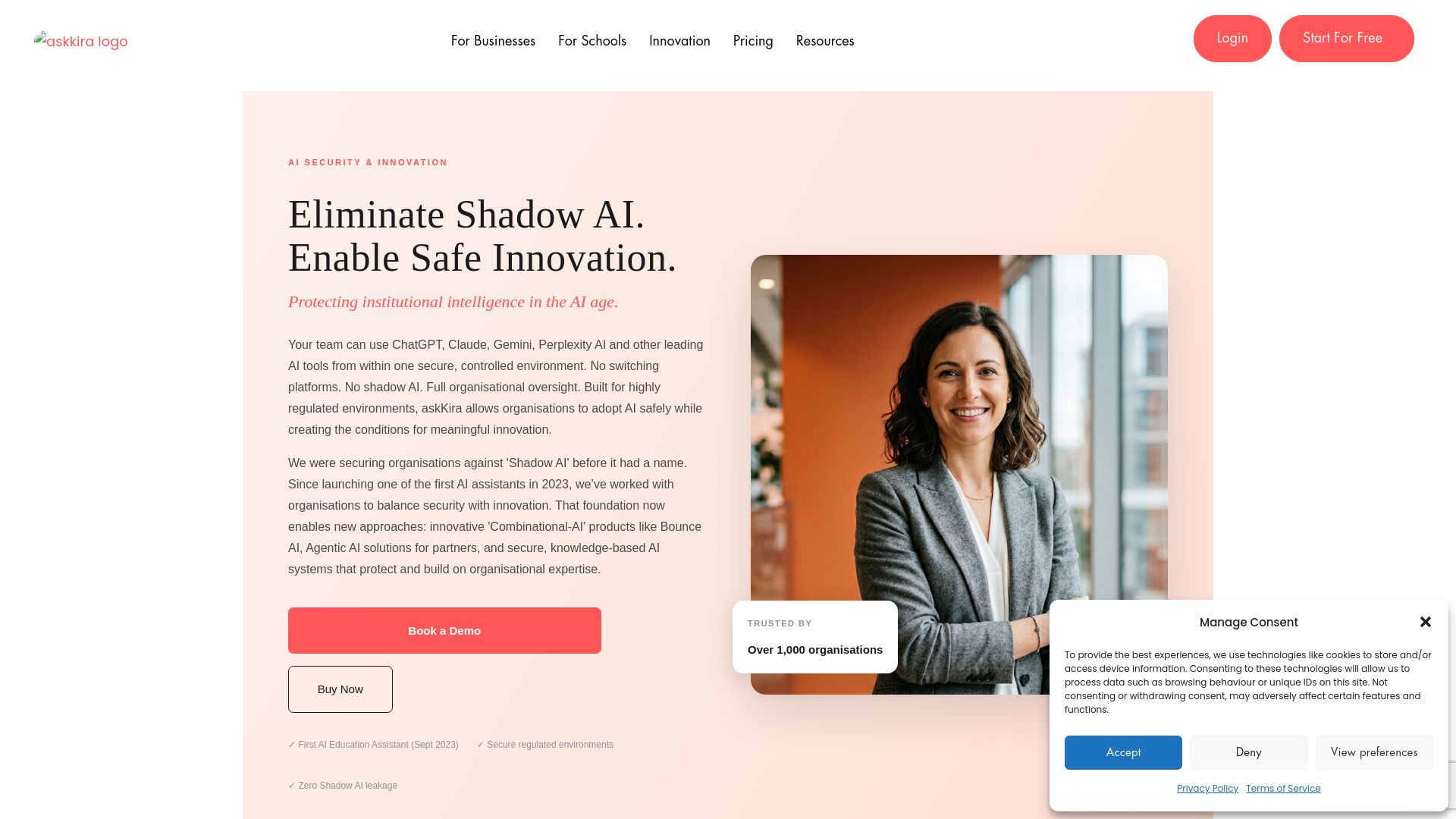
askKira's marketing materials claim organisations can be live on the platform within 72 hours with no technical setup. That rapid timeline is the most striking sell for schools and public bodies that want governed AI without long procurement cycles.
askKira also advertises that customer data is kept inside organisational boundaries and not used for external model training, a compliance claim many regulated teams cite when assessing risk.
Core Features
-
Secure, governance-first AI environments with enforced oversight and audit logs for user activity and model access.
-
Multiple models in one place, including Gemini, ChatGPT, Claude, Perplexity, so teams can pick the best engine per task without separate vendor contracts.
-
Rapid deployment promise and no-setup onboarding plus tools for custom branding and security preferences for each organisation.
-
Built-in governance assessment tools and analytics that report usage, potential shadow AI, and policy adherence.
Key Differentiator
askKira packages multi-model access with an explicit governance layer and analytics around usage and risk. The vendor emphasises UK data residency and GDPR compliance as part of that package, which positions askKira for organisations that cannot tolerate data leaving national boundaries.
That residency and compliance claim appears across their materials and is the primary reason regulated institutions look at the product first.
Pros
-
Provides clear organisational control over who can access which model and what data is permitted, so institutional IP stays within defined boundaries rather than leaking to public APIs.
-
Built to stop shadow AI. The platform centralises model use so staff do not resort to unmanaged consumer tools during high-pressure tasks.
-
Rapid onboarding reduces the time between procurement and impact, useful for term-time needs in schools or short public sector projects.
-
Multi-model access avoids vendor lock-in and lets teams A/B engines for scoring, explanation quality, or text style without juggling separate contracts.
-
Analytics and governance assessments give compliance teams evidence to present to senior leaders or auditors.
Cons
-
The vendor provides little public detail on specific third-party integrations beyond core model access, which makes technical fit checks harder without a demo.
-
Pricing is listed but appears to require direct consultation for enterprise scoping, so small IT teams may find comparison shopping awkward.
-
Effective use requires an organisational commitment to governance processes. That means policy work, training and ongoing oversight rather than a turn-key drop-in.
-
Advanced customisation may need technical support or onboarding engagement from askKira's team.
When It May Not Fit
If your team expects an out-of-the-box, self-service consumer experience for rapid experimentation, askKira's governance-first approach will feel heavy. Likewise, small departments wanting freeform model access without governance overhead will find the platform constraining.
Large enterprises with extensive existing AI estates and bespoke integrations might prefer a supplier that publishes detailed connector lists rather than arranging bespoke integration workshops.
Who It's For
Schools, academies, local authorities and public sector teams that must demonstrate GDPR-aligned controls and UK data residency will find askKira aligned to their priorities. It also suits enterprise compliance teams who need analytics and audit trails for model use.
Real World Use Case
A multi-school trust pilotled askKira to give teachers a sanctioned writing-assistant. The trust limited which models staff could call, logged every query for review, and kept student data inside the trust domain while letting teachers speed up admin tasks and personalise lesson notes.
Pricing
The vendor lists a free plan with limited interactions and paid plans starting from £5.99/month per user, with custom enterprise options for larger deployments. Pricing details beyond that appear to require a sales conversation to match governance and residency requirements to contract terms.
Website: https://askkira.com
Teachmate AI
At a Glance
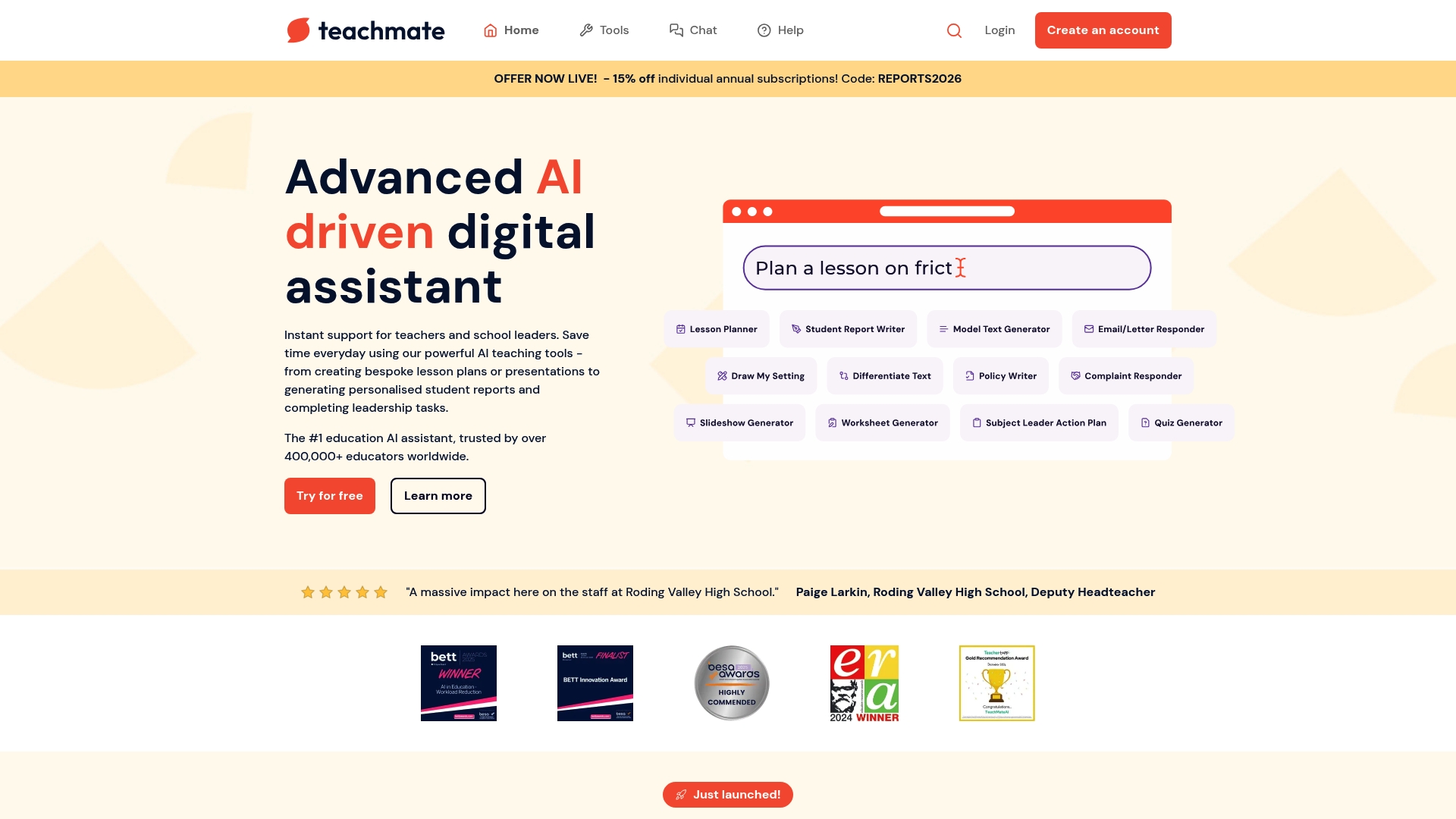
The vendor reports more than 400,000 educators use Teachmate AI, a striking reach for an education tool aimed at classroom workload. The platform mixes lesson planning, report generation and leadership automation while advertising GDPR compliance and industry recognition such as BETT awards.
Core Features
- Lesson planning tools that align with curricula and generate ready-to-use resources for weekly schemes.
- Personalised student reports and assessment automation to speed up marking and parental feedback.
- Leadership and administrative task automation for minutes, policies and inspection-ready documentation.
- Integration support for payments, analytics and authentication to work with existing school systems.
Key Differentiator
Teachmate AI packages a broad set of educator-centred functions rather than a single helper tool. Its selling point is the explicit focus on reducing teacher workload while keeping adherence to data protection standards, making it a one-stop platform for both classroom resources and senior leadership workflows.
Pros
- Very wide adoption: that user figure above suggests a large educator community and active feedback loops, which helps the product iterate on classroom needs.
- Suite breadth: lesson planning, worksheets and leadership templates appear in one place, reducing the number of separate subscriptions a school must manage.
- Data posture: GDPR compliance and an explicit emphasis on ethical AI are useful when governors or parents ask about pupil data handling.
- Flexible access: a free tier plus individual Pro and school-wide packages provides entry points for lone teachers and full-school deployments.
Cons
- Limited transparency around model training and customisation options, which makes it hard for technical leads to assess suitability for sensitive content.
- Public-facing user commentary tends to highlight impact and satisfaction rather than granular limitations, so feature edge cases are not well documented.
- Site retrieval errors reported during data checks point to possible stability hiccups at times, though those messages are external to core functionality.
When It May Not Fit
If your school operates offline for long periods or has an unreliable connection, dependence on internet access will be a practical blocker. If senior leaders require on-premise models or deep custom training, Teachmate AI's public materials do not show that capability. Teachers uncomfortable with automated drafts will need review workflows.
Who It's For
Primary and secondary school teachers, heads of department and school leaders who want to shave hours off planning and reporting. It suits single practitioners testing a Pro plan and MATs evaluating a school-wide subscription rather than institutions needing on-premise AI control.
Real World Use Case
A primary teacher uses the lesson planner and worksheet generator to prepare a week of lessons in under an hour, freeing time for intervention groups. Meanwhile, the head of school automates termly reports and safeguarding logs, reducing administrative backlog across the staffroom.
Pricing
Free tier available for basic access. Individual Pro costs £6.99/month. School packages start at £395 annually for whole-school licences and scale with pupil numbers and feature sets.
Website: https://teachmateai.com
Finding the Right Educational AI Platform for You
In this analysis, I compare IntuitionX to leading Educational AI platforms to explore the strengths and trade-offs these options offer, providing insight into their unique appeals.
The Power of Tailored AI Tutoring
IntuitionX proudly stands out for its Oxbridge-developed, Socratic-style tutoring system, ideal for GCSE and A-Level students keen to develop critical understanding rather than memorisation. Alternatively, Education AI Platform specialises in computational thinking and STEM-aligned progressions for classroom use, presenting a more curriculum-structured approach aimed at teachers and schools seeking less planning overhead.
Pricing Accessibility and Content Focus
IntuitionX operates on subscription tiers starting at £29 per month, offering, tailored guidance. In contrast, Edvisor and askKira feature lower starting price points (around $15 and £5.99 monthly respectively) but at reduced personalised interaction depths, with offerings that pivot more towards rapid classroom integration.
Best Fit Scenarios
When considering these platforms, here are some situations for each:
- IntuitionX is most suitable for students aiming for conceptual mastery under Oxbridge-grade expert direction.
- Education AI Platform serves schools or parents prioritising STEM subject fluency with minimal preparatory work.
- Edvisor fits universities or departments requiring adaptable course supplements for content consistency.
- askKira benefits organisations navigating stringent data governance and requiring minimal setup leads.
Our Pick
While IntuitionX proves for fostering critical, Socratic engagement, those with specific institutional goals such as efficiency or broader subject applicability may find additional value in competitors catering to those domains.
Comparison of Leading Educational AI Platforms
When selecting an AI-powered educational tool, educators and organisations seek platforms that combine instructional depth, usability, and adaptability to specific learning goals.
| Product | Key Differentiator | Best For | Pricing | Limitation |
|---|---|---|---|---|
| Intuitionx | Socratic teaching using elite educator methods | GCSE and A-Level students | £29 to £250 per month | Higher cost tiers may limit access |
| Education AI | Focused on UK STEM exam curriculum and teacher analytics | UK schools specialising in STEM subjects | £9.99 per month and up | Limited information on MIS integration |
| Edvisor | Editable readings aligned with course objectives | Higher education lecturers | $15 per student monthly | Limited third-party evaluation evidence available |
| ProfessorMe | Multilingual, personalised AI tutoring | NGOs and resource-constrained institutions | Not disclosed | Limited published integration details |
| askKira | Governance-focused multi-model AI access | Organisations demanding strong compliance | £5.99 per month and up | Requires established governance commitment |
| Teachmate AI | Broad teacher-centric features including lesson planning | Teachers seeking workload reduction tools | £6.99/month or £395/school | May experience stability issues with connection |
Discover a Smarter Alternative to educatemeai.co.uk with IntuitionX
Many students today struggle with disengagement and are left with generic AI that only provides answers without true understanding. If you are seeking an AI tutor that goes beyond surface-level solutions and promotes deep learning through a Socratic method, IntuitionX is uniquely positioned to meet this need. With expert-crafted content from Oxford and Cambridge graduates and a powerful AI companion called Omniscience, IntuitionX helps learners build confidence and mastery.
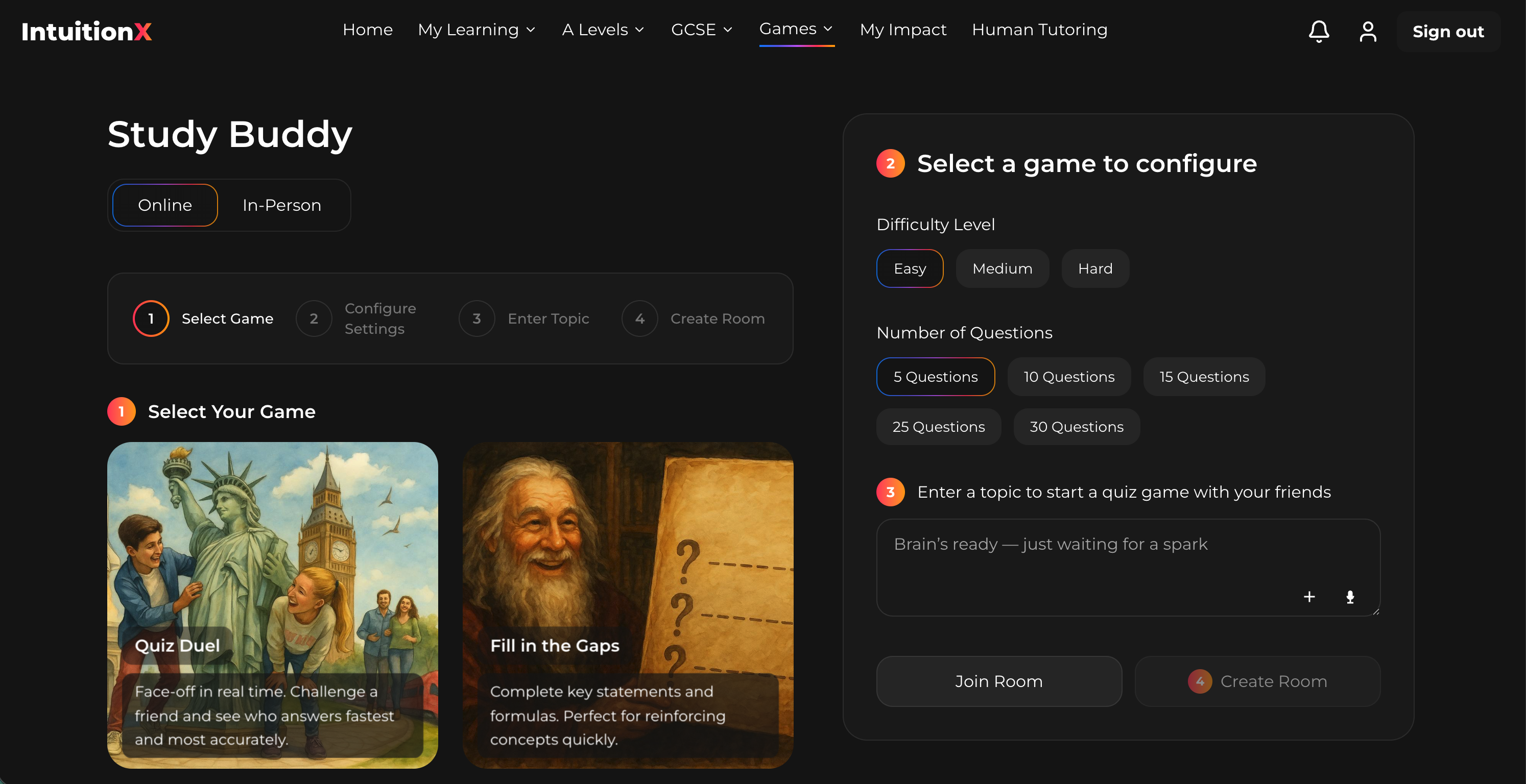
Ready to experience an AI tutor built for real understanding, 24/7 support, and a commitment to global education? Visit IntuitionX to start your journey. Take charge of your learning with personalised study paths and quiz-based progress tracking that turn confusion into clarity.
Frequently Asked Questions
What is the primary feature of IntuitionX that enhances learning?
IntuitionX offers a Socratic teaching model designed to promote understanding rather than just providing answers. This approach, rooted in pedagogy from Oxford and Cambridge graduates, helps students develop deep conceptual reasoning.
How does IntuitionX's progress tracking compare to other platforms?
IntuitionX provides detailed progress tracking with quizzes to identify weak topics, allowing for short, targeted practice sessions. This setup contrasts with other platforms that may not offer the same level of focused feedback or progress analysis.
Which alternative uses automated grading for quick feedback?
Edvisor excels in providing automated grading for quizzes and short answers, delivering instant feedback to students. While that feature supports efficient assessment, IntuitionX focuses more on in-depth understanding through its Socratic method, making it ideal for students seeking comprehensive explanations.
Does IntuitionX support students preparing for GCSEs and A-Levels?
Yes, IntuitionX is specifically tailored for students preparing for GCSEs and A-Levels, offering expert-level explanations and structured, question-led learning paths. This targeted focus makes it particularly effective for learners in those educational stages.
What pricing tiers does IntuitionX offer for its services?
IntuitionX has subscription plans ranging from £29 to £250 per month, depending on access levels and features. This tiered pricing structure allows families to choose an option that best fits their budget and learning needs.